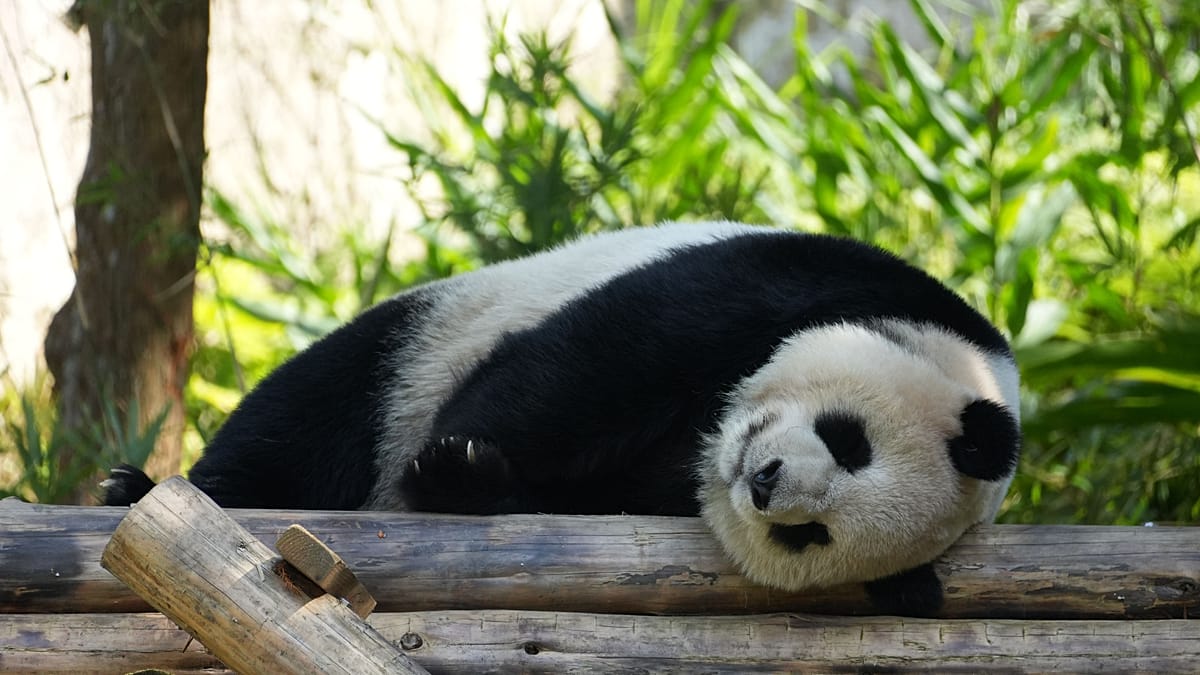
Mexican President Claudia Sheinbaum has asked Chinese President Xi Jinping for a giant panda during their meeting on the sidelines of the Asia-Pacific Economic Cooperation (APEC) summit in Shenzhen. The request is aimed at providing a companion for Xin Xin, a 36-year-old female panda at Mexico City's Chapultepec zoo, believed to be the only giant panda in the world that is not owned by China.
Xin Xin is the last descendant of a line of pandas that arrived in Mexico in 1975, when China gifted the country a pair named Ying Ying and Pe Pe. That gift was part of a diplomatic agreement symbolising friendship and cooperation, according to the Mexico City government. Since then, Mexico has been the only country outside China to retain ownership of a panda, as Beijing has shifted to loaning pandas under strict conditions.
Speaking to reporters in Shenzhen, Sheinbaum, a trained physicist and environmentalist, framed the request within the broader context of bilateral ties. "Next year marks the 55th anniversary of relations between Mexico and China, a very important date," she said. "We spoke about advancing in the field of tourism and we also asked for a panda for the Chapultepec zoo as part of this cooperation." She described the meeting as "very good, very cordial and very frank."
Panda diplomacy and its modern rules
China's practice of sending pandas abroad dates back to the 1940s, when it used the animals to strengthen diplomatic ties. Since the 1980s, however, the approach has changed: pandas are now loaned to other countries for fixed periods, with the receiving nation paying a fee that supports conservation programmes for the species in the wild. These contributions have been credited with helping pandas recover; in 2021, China removed the giant panda from its endangered species list.
For Mexico, the 1975 gift was an early example of this diplomatic tool. But the current situation is unique: Xin Xin is the only panda outside China that is not on loan. Her age—36, which is remarkable for a panda, whose typical lifespan in the wild is around 20 years—makes the search for a mate particularly urgent. If a mate is not found, the line of pandas in Mexico could end with her.
The request comes at a time when panda diplomacy has become more contentious. Earlier this year, Beijing demanded the return of two pandas it had loaned to Japan, amid a diplomatic dispute triggered by Japanese Prime Minister Sanae Takaichi's suggestion that Tokyo could intervene militarily if there were an attack on Taiwan. That episode underscores how pandas have become intertwined with geopolitical tensions.
For Mexico, the outcome of Sheinbaum's request remains uncertain. China has not publicly responded, and panda loans are typically negotiated through formal agreements. But the request itself highlights the enduring appeal of panda diplomacy, even as its rules have tightened. As Sheinbaum noted, the meeting was part of a broader effort to deepen cooperation between the two countries, with tourism and conservation as key areas of focus.
If China agrees, Xin Xin could finally have a companion, and Mexico would continue its unique status as the only country outside China to own a giant panda. For now, the world watches to see whether Beijing will extend its diplomatic goodwill to the Chapultepec zoo.