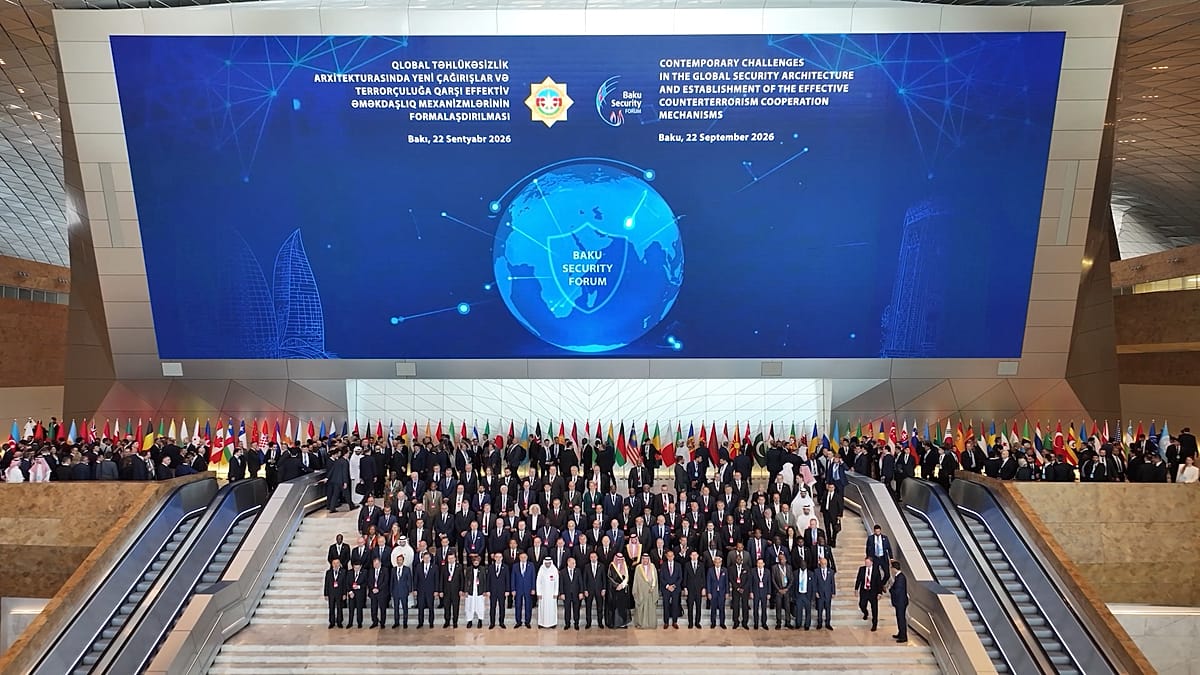
Security and intelligence officials from a range of countries convened in Baku this week for a forum dedicated to the growing challenge of cross-border threats. The gathering focused on counterterrorism, cyber attacks and the ways in which terrorist networks are adapting their operations to exploit digital tools and porous frontiers.
The choice of Baku as a venue reflects Azerbaijan's position at the crossroads of Europe, the Middle East and Central Asia — a geography that makes it both a bridge and a frontline in the struggle against transnational militancy. The forum also coincided with a broader week of high-profile events in the Azerbaijani capital, including a Formula 1 race and a major investment push, underscoring the country's ambition to project stability and openness.
Cooperation as the only viable response
Participants were united in the assessment that no single state can effectively counter the interconnected threats of terrorism, cybercrime and hybrid warfare alone. Intelligence-sharing, joint training exercises and harmonised legal frameworks were cited as essential tools. The discussions also touched on the need to anticipate how emerging technologies — from encrypted messaging to artificial intelligence — are reshaping the operational playbook of extremist groups.
The forum's emphasis on technology echoes concerns raised elsewhere in Europe. Europol and national agencies have repeatedly warned that jihadist networks are using encrypted platforms to radicalise, recruit and coordinate attacks. The same digital infrastructure that enables commerce and free expression also provides cover for malicious actors, making public-private cooperation a recurring theme in Baku.
Europe's wider security architecture
For European capitals, the Baku discussions are part of a broader re-evaluation of security policy. NATO has been vocal about the need to brace for hybrid threats, with Secretary-General Mark Rutte recently stating that Vladimir Putin is in a "bad place" as the alliance sharpens its defences. The line between counterterrorism and state-sponsored disruption is increasingly blurred, and forums like Baku offer a rare opportunity for officials from different regions to compare notes.
Migration and border security also loomed large. The European People's Party has pushed to suspend asylum rights during hybrid border attacks, a proposal that has sparked intense debate about balancing security with humanitarian obligations. Meanwhile, tragedies such as the recent Channel crossing deaths off the French coast serve as stark reminders of the human cost of unmanaged flows.
From words to actionable intelligence
The Baku forum is not a decision-making body, but its value lies in building trust between agencies that rarely share a table. Officials described the talks as frank and practical, with working groups on counterterrorism financing, cyber incident response and the return of foreign fighters. Several delegations expressed interest in follow-up bilateral meetings.
Yet scepticism remains. Critics note that previous international gatherings have produced communiqués rather than concrete results. The test will be whether the contacts made in Baku translate into faster intelligence-sharing and joint operations. For Europe, which faces threats ranging from Islamist terrorism to Russian sabotage and far-right extremism, the stakes could hardly be higher.
As the forum closed, one message resonated: borders may define maps, but they do not stop bombs, malware or radicalisation. Only sustained, cross-border cooperation — backed by resources and political will — can hope to keep pace with the evolving danger.