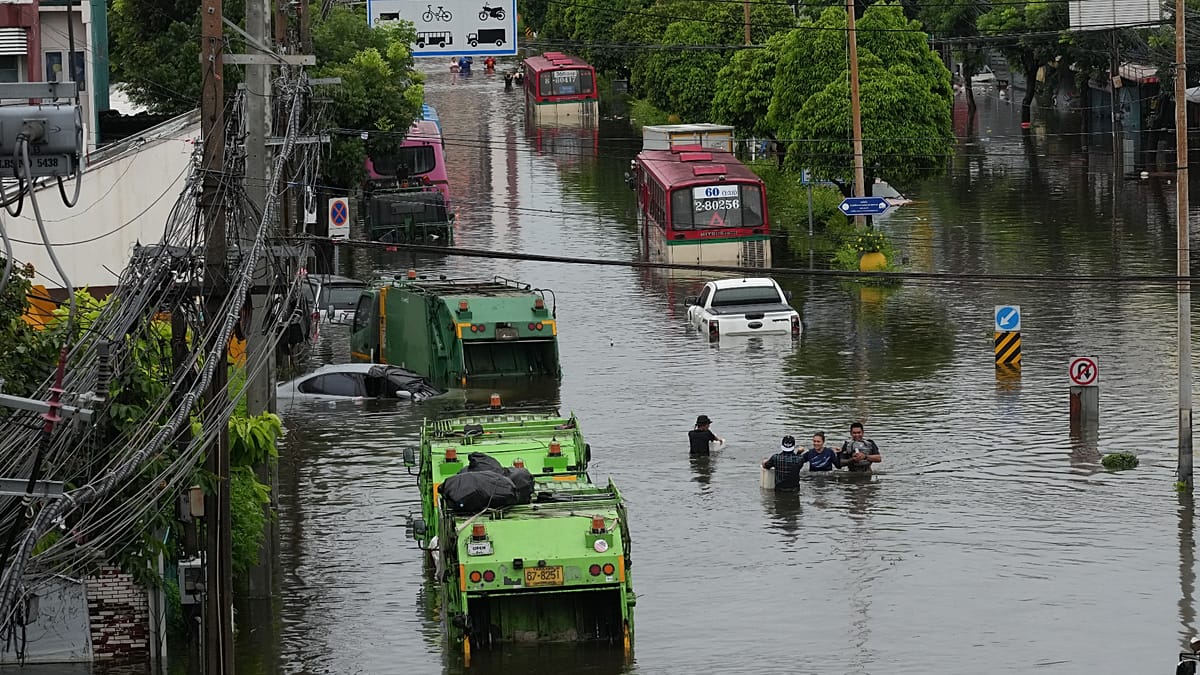
Days of relentless monsoon rain have transformed Bangkok's busy thoroughfares into murky canals, forcing schools to close, snarling traffic, and swamping shops and homes across the Thai capital. The city's drainage systems, already strained by rapid urbanisation and rising sea levels, have been overwhelmed by the sheer volume of water, leaving many districts under several centimetres of floodwater.
Authorities have opened dozens of temporary shelters in schools and temples for residents whose homes have been inundated, while emergency crews work around the clock to pump water from the worst-affected areas. The Bangkok Metropolitan Administration warned that in some low-lying neighbourhoods, water levels could take up to three days to recede fully, even if the rain lets up.
Transport chaos and business disruption
The flooding has severely disrupted the city's transport network. Several main roads are impassable, and the skytrain and metro systems have reported delays, with some stations closed as a precaution. Commuters have been forced to wade through knee-deep water, and many have abandoned cars on elevated expressways, adding to the gridlock.
Small businesses, particularly street vendors and market stalls, have been hit hard. Many have lost stock and income as customers stay home. The tourism sector, a key pillar of the Thai economy, is also feeling the impact, with some hotels reporting cancellations and tourists struggling to navigate the flooded streets.
This is not the first time Bangkok has faced such chaos. The city, built on a low-lying delta, has long struggled with flooding, and climate change is making extreme rainfall events more frequent and intense. Similar scenes have played out elsewhere in the region, and even in Europe, where a Valencia suburb recently dug out after a 96mm downpour overwhelmed its streets.
Climate resilience in question
The flooding has reignited debates about urban planning and climate resilience in Bangkok. Critics argue that decades of unchecked construction have clogged natural drainage channels, while the city's extensive canal network has been filled in or polluted. The government has pledged to invest in better flood defences, but residents are growing impatient with the slow pace of change.
For European observers, the scenes from Bangkok are a stark reminder of the challenges facing coastal cities worldwide. As European cities like Venice and Rotterdam invest in innovative flood barriers and water-adaptive architecture, Bangkok's struggles highlight the urgent need for global cooperation on climate adaptation. The heavy rains that flooded Tunis earlier this year, shutting schools and disrupting traffic, show that no continent is immune.
Meanwhile, the Thai meteorological department forecasts more rain in the coming days, offering little respite. Emergency services are on high alert, and residents are bracing for a prolonged disruption. As one local shopkeeper told reporters, "We are used to floods, but this is getting worse every year. We need real solutions, not just sandbags."