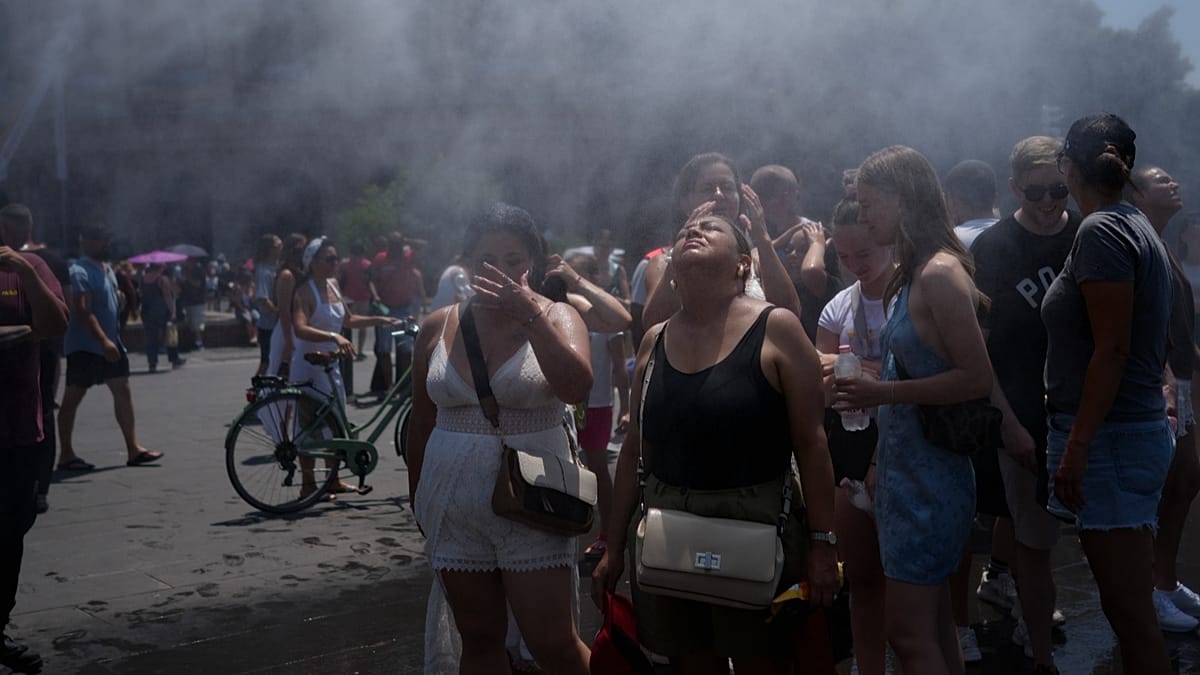
As a blistering heatwave swept across Europe, Berlin police took an unconventional approach to crowd management: they deployed a water cannon to cool thousands of Bruno Mars fans queuing outside the Olympiastadion. The concert, part of the singer's European tour, drew massive crowds under temperatures that exceeded 35°C in the German capital.
The water cannon, typically used for riot control, was repurposed to spray a fine mist over the waiting fans, offering relief from the oppressive heat. Videos shared on social media showed concertgoers cheering and waving as the cannon doused them, a rare moment of levity amid a heatwave that has strained infrastructure and public health across the continent.
Heatwave Grips Europe
Germany has been among the hardest-hit countries, with temperatures in Berlin reaching record highs for July. The heatwave, which has also affected France, Spain, and Portugal, has led to a series of emergency measures. In Paris, authorities banned alcohol sales and postponed the Pride march, while in Portugal, the IPMA warned of 43°C temperatures and tropical nights.
The use of water cannons for cooling is not unprecedented in Berlin. Earlier this month, police deployed them to cool the public during a heatwave, as reported in our coverage. However, the Bruno Mars concert incident has drawn particular attention due to the festive context.
Public Health Concerns
Health officials across Europe have warned of the dangers of extreme heat, especially for vulnerable populations. France recorded approximately 1,000 excess deaths during a recent heatwave, underscoring the severity of the situation. The debate over air conditioning has intensified as the heatwave moves east, with some cities opening cooling centers and extending public pool hours.
In Berlin, the police action was praised by many fans, though some critics questioned the use of resources. A police spokesperson said the decision was made to prevent heat-related incidents, noting that the water cannon was operated at low pressure to ensure safety.
The heatwave is expected to persist, with meteorologists predicting little relief in the coming days. As Europe grapples with the effects of climate change, such extreme weather events are becoming more frequent, prompting calls for better adaptation strategies.