The escalation in the Black Sea has revived deep unease across Europe that Russia is using food as a weapon, with the potential to trigger a migration wave and erode public support for Ukraine. The alarm was palpable at Wednesday's meeting of EU foreign ministers in Ireland, where calls for an immediate ceasefire in the region took centre stage.
“In the Black Sea, Russian strikes on grain ships could cause another worldwide food security shock,” said Kaja Kallas, the EU's High Representative for Foreign Affairs. Her Belgian counterpart, Maxime Prévot, urged a “coordinated solution” to avert what he described as a threefold disaster: a collapse in Ukraine's state revenues, a global food crisis in Africa, and an intensification of large-scale migration flows towards Europe. “The blockages of grain and energy shipments in the Black Sea are not something we can simply watch from a distance either,” he added.
Ukraine's grain lifeline under threat
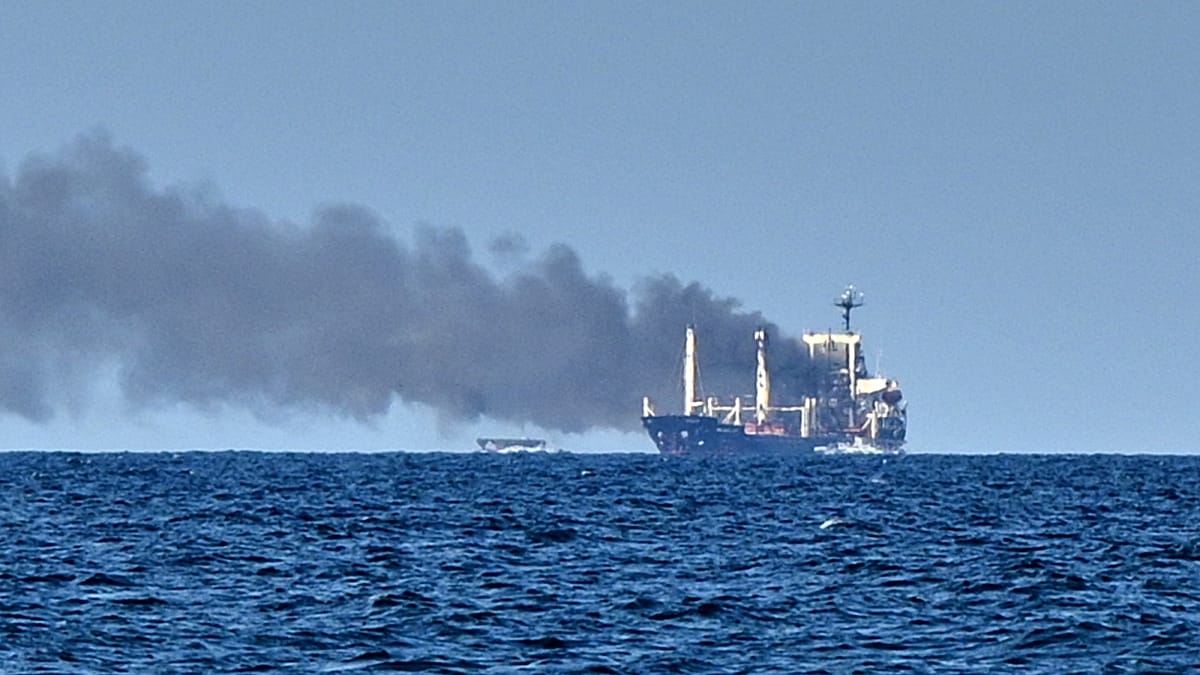
Since July, Moscow has stepped up attacks on Ukraine's ports and vessels, severely hampering its ability to sell grain to clients such as Egypt, Algeria, Tunisia, Yemen, and Indonesia. Kyiv has retaliated with drone and missile strikes on Russian ships and hubs. The renewed strikes coincide with the peak of the harvest season, leaving vast quantities of maize, barley, and wheat piling up inside the country.
Before the escalation, Ukraine exported around 6 million tonnes of agricultural and steel products monthly via the three main ports of Odesa, Chornomorsk, and Pivdenny. Now, it manages only about 4.5 million tonnes through alternative routes, as operators remain hesitant to risk the dangerous sea voyage. These so-called solidarity lanes, however, no longer benefit from the tariff-free regime that Brussels abolished after pressure from Eastern European countries.
One such route, which connects Ukrainian exports to Romania's Port of Constanța via the Danube, is also suffering from an unprecedented summer drought. Romanian Foreign Minister Oana-Silvia Țoiu expressed concern over the steady rise in global food prices and said Bucharest had discussed logistical options with Kyiv to increase transit through the solidarity lanes. “It is an essential instrument to allow proper access to affordable prices for grains across the Middle East and Africa,” she said.
Andrii Sybiha, Ukraine's foreign minister, who also attended the meeting, urged Europeans to put “pressure” on Russia to achieve a full ceasefire in the Black Sea. He stressed that the alternative routes would never “compensate fully” for the loss of sea exports.
Economic strain and financial gaps
The near-standstill at the ports has put local farmers under severe strain. Transportation costs have risen, domestic prices have fallen, and the risk of bankruptcy grows as a new planting season begins. Storage facilities are overflowing with unsold crops. The steel industry has also been hit hard.
For Kyiv, a major cereals exporter, the financial shock compounds Russia's broader escalation, including relentless drone attacks designed to sow fear among civilians and disrupt economic activity in cities. Ukraine has already asked allies to help plug a €23 billion deficit, a gap the blockade threatens to widen as public revenues shrink.
EU countries are considering amending the timeline of their €90 billion support loan to bring forward a share earmarked for 2027. But doing so would mean less money for next year and could interrupt assistance. Meanwhile, a group of countries is trying to revive the idea of tapping Russia's €210 billion immobilised assets, but the European Commission is hesitant to reopen that contentious debate. Belgium, which holds the bulk of those assets, remains staunchly opposed.
Global ripple effects and migration fears
The blockade also carries global risks: a scarcity of cereals could drive inflation in developing countries, fuel popular discontent, and encourage migration towards Europe. In Egypt, one of Ukraine's main clients, the price of bread is closely watched. Migration has long been one of Europe's most divisive issues, and the debate has grown even more heated since the crisis in Ceuta, Spain, when more than 80,000 people crossed the border from Morocco in a mass influx. That episode has already sparked a right-wing backlash against Spain's government, and the EU is still grappling with deepening migration tensions as Schengen checks spread.
These fears weigh heavily on Europeans, who have repeatedly accused Russia of weaponising food supply chains to undermine sympathy for Ukraine. As the blockade continues, the continent watches with growing anxiety, aware that the consequences could reach far beyond the Black Sea.