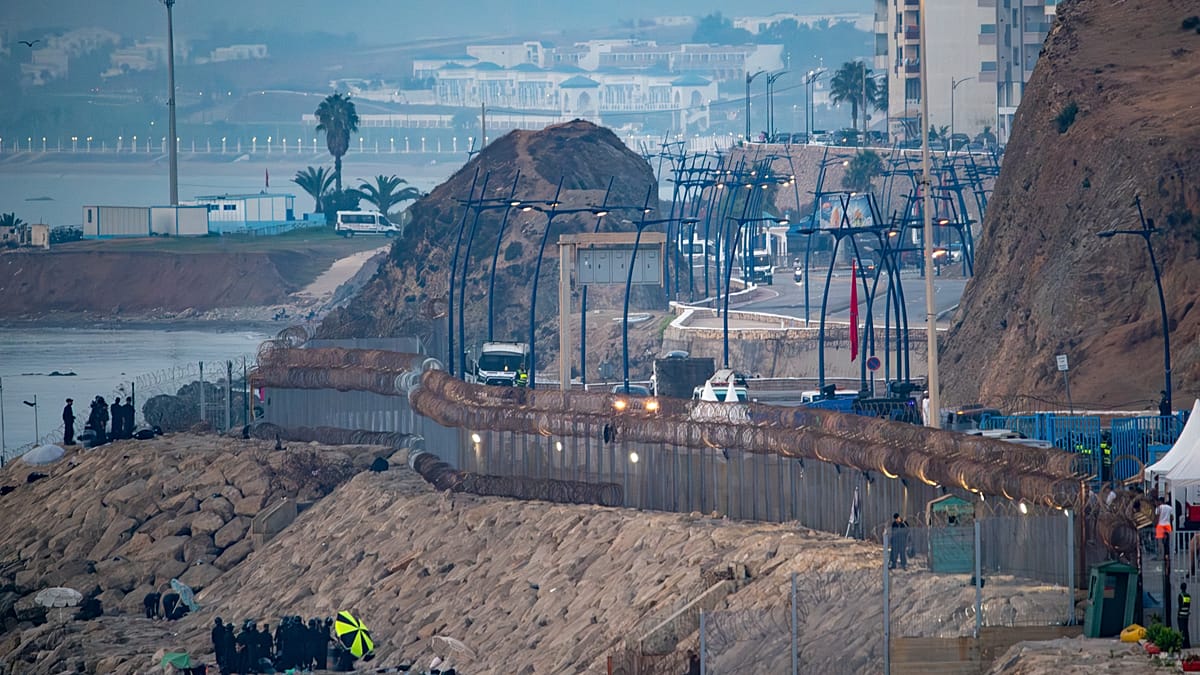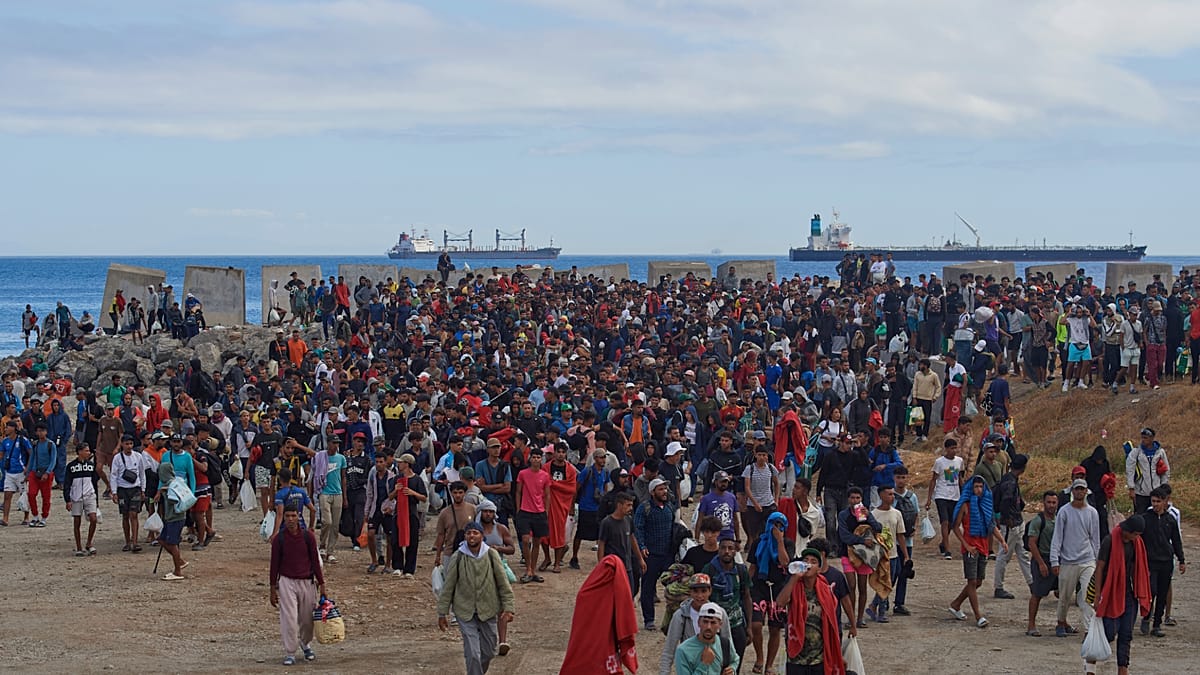
Migration has returned to the top of the European Union's agenda as Brussels resumes work after a summer that exposed the fragility of its asylum system. The immediate trigger was the crisis in Ceuta, where more than 70,000 irregular migrants crossed into the Spanish exclave on 30 July—a number exceeding all irregular entries across the entire EU external border for the whole of 2026. The event plunged Spain into political turmoil and sent a shockwave through other member states, prompting urgent discussions on how to manage the bloc's external frontiers.
The Ceuta episode has intensified pressure on the EU to implement its stricter asylum rules and accelerate deportations, but it has also revealed the weaknesses of the new Migration and Asylum Pact, which entered into force on 12 June. The pact is now facing its first real stress test, and the cracks are already visible. EU leaders are scheduled to debate migration at the European Council in October, following a series of formal and informal meetings of interior ministers and ambassadors throughout the autumn.
Schengen under strain
The most immediate consequence has been the erosion of the Schengen area, the cornerstone of European free movement. In the wake of the Ceuta crisis, Italy reintroduced air and maritime border controls with Spain for a month. Denmark and Finland went further, calling for Spain's temporary suspension from the Schengen zone, which has allowed passport-free travel since 1985. Spain retaliated with mirror measures against Italy, even copying the wording of the official notification, and extended its border checks until 7 September. Both countries later prolonged the suspension for an additional 15 days.
At an extraordinary online meeting of EU interior ministers in early August, 22 governments acknowledged that "necessary measures" might be required "to safeguard public order and address risks arising from secondary movements" of migrants, effectively endorsing a broader use of border controls. Currently, nine EU countries—Germany, Spain, Italy, Denmark, Austria, the Netherlands, Poland, France, and Sweden—plus Norway have temporarily reintroduced border checks, citing irregular migration or security threats.
"The Schengen system has become one of the main victims of the internal political dynamics and concerns by member states around migration," said Davide Colombi, a migration researcher at the Brussels-based think tank CEPS. He noted that the European Commission is choosing diplomatic approaches rather than enforcing EU law and challenging the reintroduction of border checks. The trend dates back to the 2015 refugee crisis, when member states began retaining controls, arguing that internal free movement depends on robust external border surveillance.
Solidarity in short supply
Instead of offering support, several EU countries accused Spanish Prime Minister Pedro Sánchez's government of failing to protect the bloc's external borders. This stands in stark contrast to the solidarity principle that underpins the new migration pact, which includes a mandatory mechanism to assist frontline states. The pact's "solidarity pool" requires member states to choose between relocating asylum seekers, making financial contributions, or providing personnel and operational support.
Relocation remains the most contentious element, as governments have little appetite for it and have successfully reduced the numbers for 2026, while seeking exemptions. The pool currently covers 8,878 asylum seekers from Spain, Italy, Greece, Cyprus, and Malta, who will be relocated to other member states. However, the mechanism excludes most of the irregular Moroccan migrants who entered Ceuta, as they are subject to return to their country of origin.
The system is already showing strain. Seven countries have asked Italy to take back migrants who entered the EU elsewhere and then moved irregularly, a practice known as secondary movement. Italy, in turn, has demanded additional compensation for migrants rescued at sea by NGO ships and disembarked on its shores—a request not foreseen by EU rules. A bilateral meeting between Italian Interior Minister Matteo Piantedosi and German Interior Minister Alexander Dobrindt in early September will kick off the debate on solidarity, which will continue at the Home Affairs Council in October.
The key issue will be defining the solidarity pool for 2027. Italy and Spain, despite their recent diplomatic spat, may find common ground in demanding greater contributions from other member states. The tensions around Italy's migration policies highlight the broader challenges facing the pact.
The uncertain future of return hubs
A central pillar of the EU's strategy is the return of irregular migrants, governed by a new regulation finalized in June, which is considered the strictest yet. The regulation introduces a common EU return order and obliges member states to issue return decisions to those without a right to stay. It also establishes a mechanism for mutual recognition of return decisions, allowing a decision issued in one member state to be enforced in another.
However, the most controversial aspect is the proposal to establish return hubs outside the EU, where migrants awaiting deportation would be held. This idea has gained traction among some member states, but it faces significant legal and practical hurdles. The EU's return hub push faces legal and practical hurdles, as human rights organizations argue that such facilities would violate international law and could lead to indefinite detention.
Despite these concerns, several governments, including Italy and Denmark, are pushing for the creation of such hubs, possibly in North Africa or the Balkans. The European Commission has been cautious, noting that any arrangement must comply with fundamental rights and international obligations. The debate is expected to intensify in the coming months, with the October European Council serving as a critical juncture.
The Ceuta crisis has also highlighted the need for greater cooperation with countries of origin and transit. Spain has sought to strengthen ties with Morocco, but the security council meeting called by Sánchez underscores the urgency. Meanwhile, the solidarity flotilla heading to Ceuta suggests that civil society is stepping in where governments have faltered.
As the EU grapples with these challenges, the fundamental question remains: can the bloc reconcile its commitment to free movement with the need for effective border management? The answer will shape the future of European integration and the lives of millions of migrants seeking a better life on the continent.