Around 50 boats from ports along Spain's Costa del Sol and elsewhere set sail on Saturday for Ceuta, the Spanish autonomous city on the North African coast, in a show of support following the migration crisis that has gripped the city since late July. The initiative, dubbed the Fleet of Solidarity with Ceuta, brings together roughly 120 participants under the slogan “We are all Ceuta, Spain responds as one.”
The vessels are not travelling as a single convoy; each skipper is leaving from their home port and crossing the Strait of Gibraltar independently, bound for Ceuta. Organisers have arranged up to 60 free berths in the city's harbour for the participating boats. Once in Ceuta, the group will take a guided tour of the city and attend a dinner at the Yacht Club. On Sunday, the boats are expected to sail through the waters surrounding the enclave, and later gather in the southern bay to send a message of unity “between Spaniards on both sides of the Strait,” according to the programme.
Background of the crisis
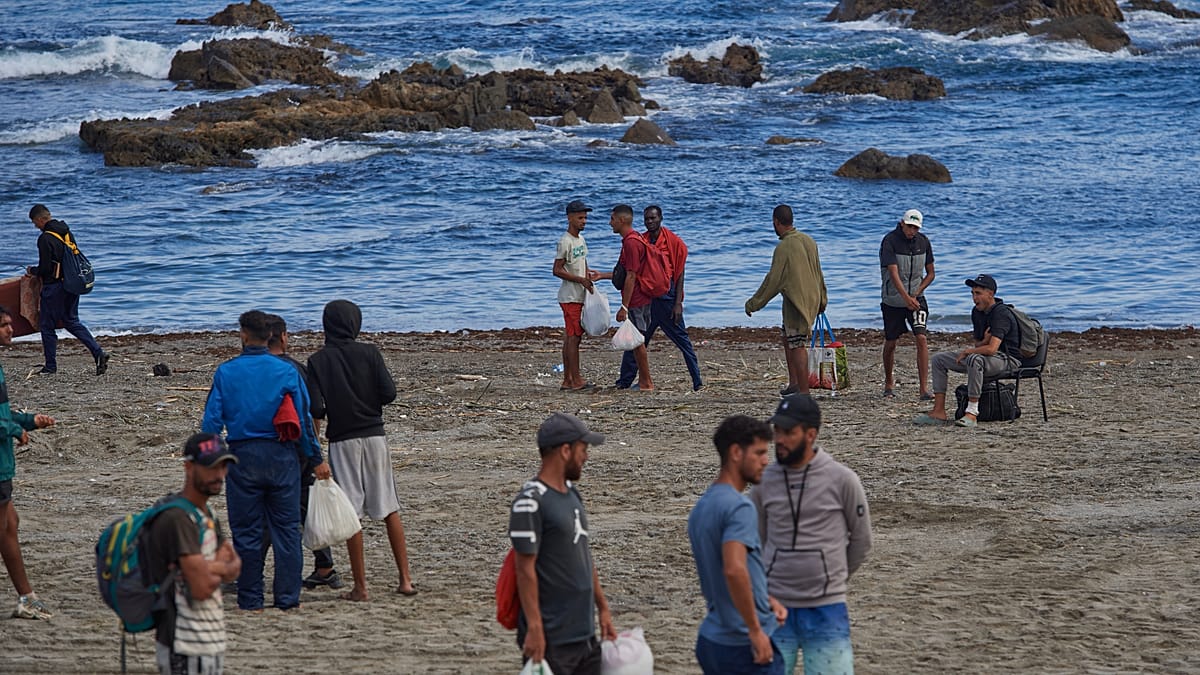
The flotilla comes after the mass arrival of migrants on 30 and 31 July, when tens of thousands of people crossed irregularly from Morocco into Ceuta, one of the most intense episodes of migratory pressure on the border in recent years. The influx overwhelmed local reception facilities and sparked days of protests in the city, with residents demanding the return of migrants to Morocco and the clearing of a makeshift camp near the Temporary Stay Centre for Immigrants (CETI), which remains overcrowded.
On Friday, hundreds of residents gathered on Trampolín beach, the latest in a series of demonstrations that have been organised largely through social media groups. The protests have at times turned confrontational, with clashes reported between demonstrators and police, as well as incidents of hostility towards journalists covering the unrest. The situation has drawn attention across Europe, with Spain calling for EU border reinforcements to help manage the pressure on its southern frontier.
For now, no new protests are scheduled for this weekend, although local sources caution that demonstrations could be called at short notice. A larger rally is planned for 2 September, organised jointly by the Provincial Federation of Neighbours' Associations (FPAV) and the association Foro Ceuta Siglo XXI.
The flotilla is intended as a counterpoint to the unrest, with organisers emphasising solidarity with Ceuta's residents and the city's role as part of Spain. The choice of a maritime demonstration is symbolic, given that Ceuta's border with Morocco has been the focal point of the migration crisis. The Strait of Gibraltar, which separates the enclave from the Spanish mainland, is a short but heavily trafficked crossing used by migrants and smugglers alike.
Ceuta and its sister city Melilla have long been flashpoints in Europe's migration policy, with their land borders representing the only physical EU frontier on the African continent. The recent surge has reignited debates in Madrid and Brussels about border management, asylum procedures, and cooperation with Morocco. The European Commission has expressed support for Spain, but concrete measures remain under discussion.
Meanwhile, the humanitarian situation in Ceuta remains delicate. The CETI is overcrowded, and aid organisations have struggled to provide adequate shelter and services. Earlier this week, locals blocked Red Cross aid convoys, highlighting the deep divisions within the community. Some residents fear the impact on public services and security, while others have called for compassion and adherence to international law.
The Spanish government has sought to ease tensions by transferring some migrants to the mainland and working with Moroccan authorities to increase border patrols. However, the underlying issues—poverty, conflict, and lack of opportunity in parts of Africa—remain unresolved, and experts warn that similar surges could recur.
As the flotilla docks in Ceuta, it serves as a reminder that the city's fate is closely tied to broader European debates on migration and solidarity. Whether the gesture will help heal local divisions or simply provide a momentary distraction remains to be seen. For now, the weekend appears calm, but the scheduled 2 September demonstration suggests that the underlying tensions have not dissipated.