BP reported a fourfold jump in third-quarter profit on Friday, as the Iran war disrupted fuel supplies and sent refining margins soaring. The British energy major's net profit attributable to shareholders reached $4.7 billion (€4.2bn) for July–September, up from $1.16 billion (€1.04bn) a year earlier, comfortably beating analyst expectations.
The company's underlying replacement cost profit—the metric investors closely watch—nearly quadrupled to $8.5 billion (€7.6bn) from $2.2 billion (€1.96bn) in the same period last year, well above the $6.2 billion (€5.55bn) forecast. That figure strips out swings in the value of oil and fuel inventories and one-off items, including $4 billion (€3.58bn) in writedowns, mostly on what BP called “transition businesses.”
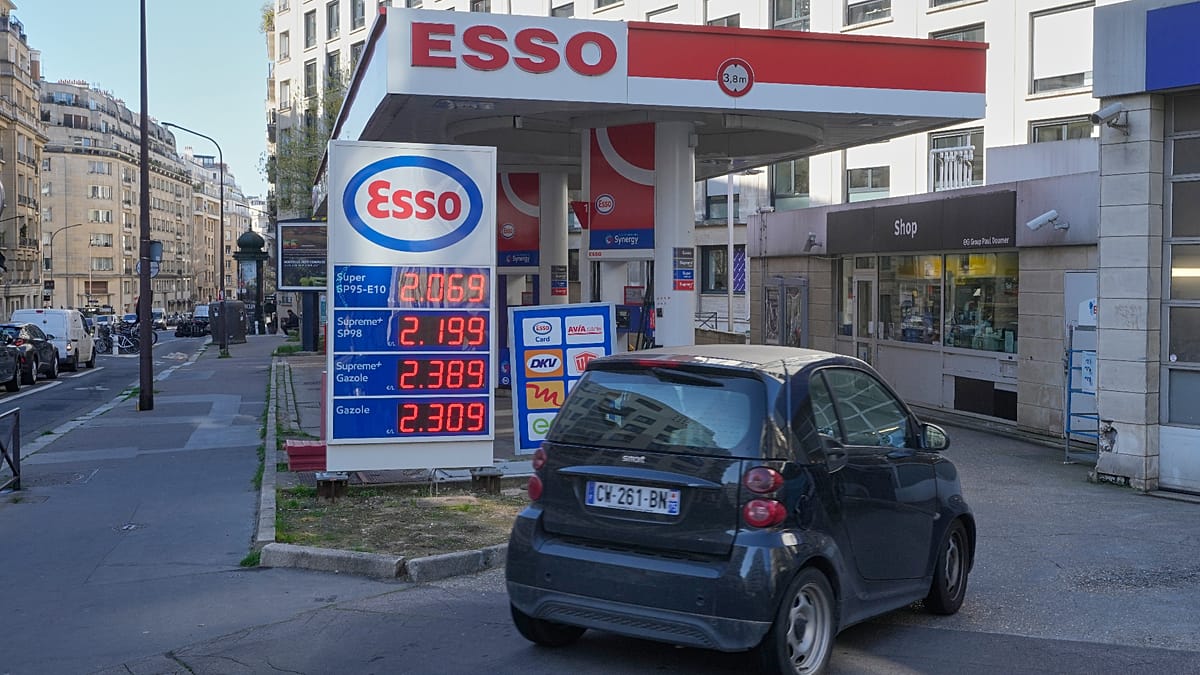
Like its European rivals Shell and TotalEnergies, BP benefited from the widening gap between what refiners pay for crude and what they earn from products like diesel. With the war choking off fuel exports from the Middle East, refineries elsewhere—particularly in Europe and the US—are profiting from tight global supplies. The EU's efforts to revive refining capacity highlight how critical this margin environment has become for the continent's energy security.
Meg O'Neill, who took over as CEO in April, described “a strong set of results, supported by the higher-price, higher-margin environment.” Her predecessor's strategy of focusing on oil and gas over clean energy has been reinforced by the war, and O'Neill is expected to double down on that approach when she presents her long-term plan on 15 December.
Debt reduction and Deepwater Horizon
BP also made significant progress on its balance sheet. Net debt fell to $13.9 billion (€12.4bn) from $22.3 billion (€19.9bn) three months earlier, helped by the suspension of share buybacks in February to channel spare cash toward debt reduction. The company said it had now met its targets for cutting debt and costs, and maintained its quarterly dividend at 8.66 cents per share.
Looking ahead, BP intends to prioritise using spare cash to settle its remaining liabilities from the 2010 Deepwater Horizon disaster, after agreeing last week to accelerate payments of the $16 billion (€14.3bn) settlement to the US state of Louisiana. The explosion and oil spill in the Gulf of Mexico killed 11 workers and has weighed on BP's finances for over a decade.
BP's shares edged up 0.3% in early trading on Friday, reflecting investor confidence in the company's near-term outlook.
Oil market outlook
Brent crude, the global benchmark, traded at around $113.6 a barrel on Friday morning, up roughly 2.5% on the week, after falling more than 6% on Monday as diplomatic efforts over the Iran war appeared to gain momentum. That is still far above the $72 per barrel before the conflict began in late February.
US benchmark West Texas Intermediate stood at around $104.2 a barrel, up about 1.5% on the week. BP has raised the oil price assumption used to value its assets, now expecting Brent to average $87 a barrel this year, up from $70, both adjusted for inflation to 2024 prices.
The company expects supply disruptions in the Middle East to persist into 2027, and refining margins to “remain elevated” in the final quarter of this year. That outlook is likely to keep pressure on European governments, which have been grappling with high fuel prices and inflation. The chemical giant BASF's recent profit upgrade underscores how the conflict is reshaping industrial economics across the continent.
For BP, the immediate challenge is to balance windfall profits with calls for greater investment in energy transition. While rivals like Shell and TotalEnergies have also posted bumper earnings, BP has been seen as lagging in its shift toward cleaner energy. O'Neill's December strategy update will be closely watched by investors and policymakers alike.