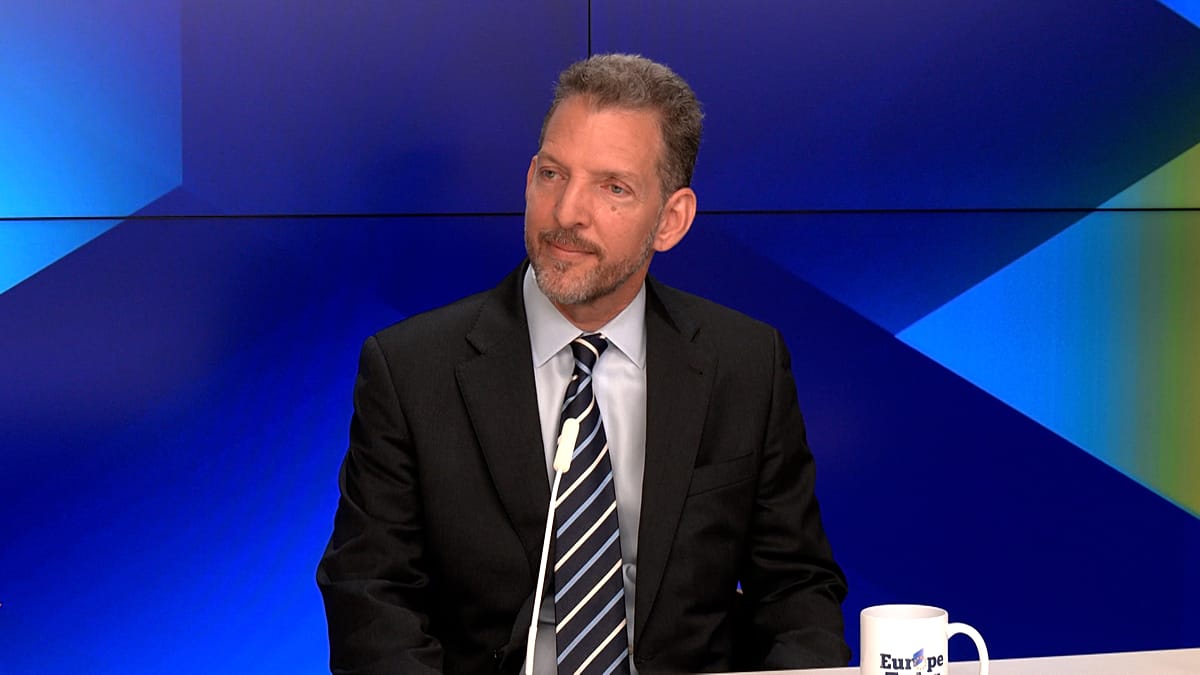
Brazil’s ambassador to the European Union, Pedro Miguel da Costa e Silva, has pushed back against the notion that Europe alone can reconstruct the international order, insisting that any new system must be built collectively by all regions. Speaking to Europe Today, da Costa e Silva stressed that while Europe will have a significant role, it cannot dominate the process.
“If we're going to rebuild something, it has to be rebuilt by everybody. Europe will have an important place at the table, but you'll need to have all other voices speaking,” he said. His remarks come after Canadian Prime Minister Mark Carney declared on Monday that the international order would “be rebuilt out of Europe,” signaling a perceived end to US-led global leadership.
Da Costa e Silva’s stance aligns with Brazilian President Luiz Inácio Lula da Silva’s foreign policy, which advocates for a stronger voice for Latin America and the Global South in international affairs. The ambassador emphasized that the world is becoming increasingly multipolar, and that no single power—whether the United States or Europe—can dictate terms.
Multilateralism Under Strain
The debate over global governance unfolds against a backdrop of rising geopolitical tensions and a fraying multilateral system. Da Costa e Silva argued that rules-based international cooperation remains essential, particularly for countries like Brazil. “Rules are fundamental to organised international life,” he said, noting that Brazil helped build these rules alongside European nations and the United States and will continue to uphold them.
His comments also touched on the recent provisional entry into force of the EU-Mercosur trade agreement, which he hailed as a victory for multilateralism in an unstable world. The deal, negotiated over 25 years between the EU and the Mercosur bloc—comprising Argentina, Brazil, Paraguay, and Uruguay—was finalized in January despite fierce opposition from European farming communities.
“I think that for countries like mine, rules are fundamental. We helped build them together with European countries and with the United States, and we're going to stand by them,” da Costa e Silva added.
However, the agreement faces significant hurdles. The European Parliament has referred it to the EU’s top court, a move that could delay or even derail final approval. Concerns have mounted in Brussels over potential concentration of quotas for products like South American beef, with some MEPs warning that Mercosur agricultural heavyweights could dominate access. Da Costa e Silva dismissed these fears as “disinformation,” insisting that “quotas are managed by both sides.”
The ambassador framed the deal as a strong signal of what Mercosur and Europe stand for: cooperation, dialogue, and multilateralism. “The deal was built on multilateralism, on the idea of cooperation, on the ideal of dialogue of working together,” he said.
This debate over global order comes as European leaders grapple with shifting alliances and security challenges. The recent European Leaders Seek New Security Order as US Disengagement Looms highlights the continent’s search for a more autonomous role. Meanwhile, the Trump Orders 5,000 US Troops Out of Germany, Deepening Transatlantic Rift underscores the erosion of traditional transatlantic ties, making Carney’s suggestion of European leadership both timely and contentious.
Da Costa e Silva’s intervention serves as a reminder that any new global architecture must accommodate diverse perspectives. As the EU and Mercosur navigate the legal and political obstacles ahead, the broader question remains: can a truly inclusive multilateral order emerge from the current fragmentation?