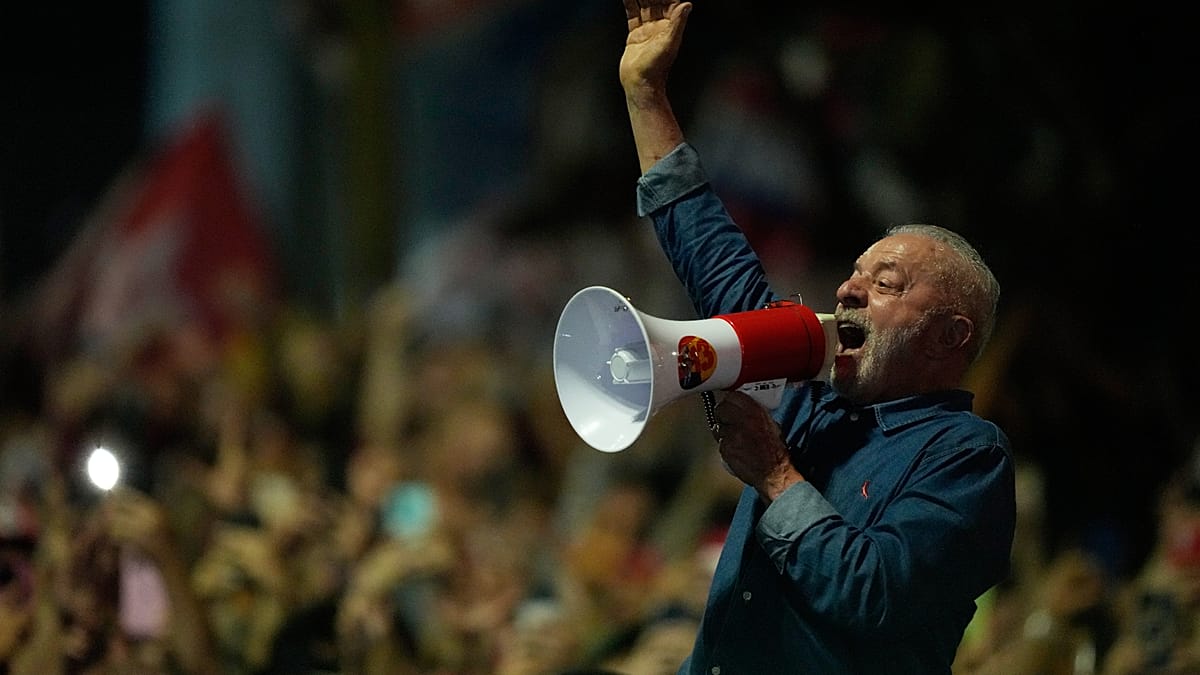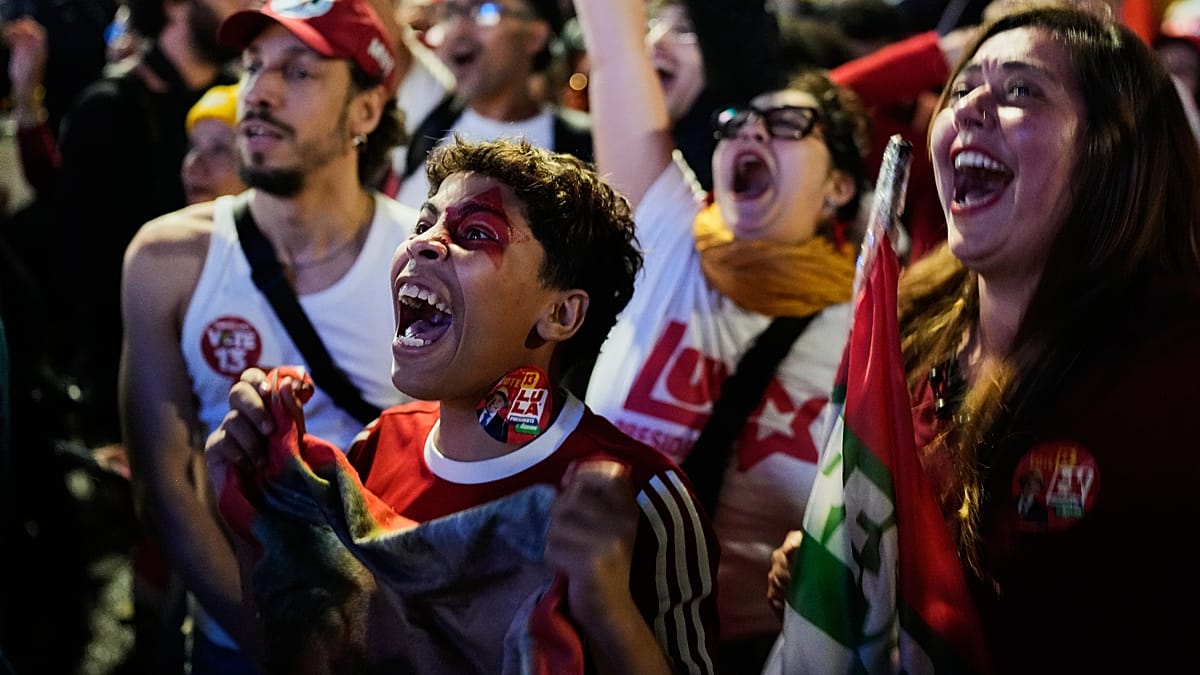
From Copacabana to Paulista Avenue, Brazilians poured onto the streets on Sunday night as the country's electoral authority confirmed Luiz Inácio Lula da Silva had defeated incumbent Jair Bolsonaro in a razor-thin runoff. The result, which gives Lula a fourth term in office, triggered an outpouring of emotion in cities across the country, with supporters embracing strangers, waving red flags and chanting for democracy.
In Rio de Janeiro, crowds gathered near the iconic Christ the Redeemer statue, while in São Paulo, the country's financial capital, thousands marched along the central Avenida Paulista, a traditional gathering point for political demonstrations. Similar scenes unfolded in Brasília, Salvador and Recife, where young and old alike celebrated what many described as a victory for democratic institutions over the far-right populism of Bolsonaro.
A narrow margin, a divided nation
The final count gave Lula 50.9 percent of the vote against Bolsonaro's 49.1 percent, a margin of just over two million ballots. The result underscores a deeply polarized electorate, with Bolsonaro's support concentrated in the agricultural south and Lula's base in the industrial north-east. Analysts note that the narrowness of the victory will complicate Lula's task of governing a country that remains sharply split.
Bolsonaro has not yet conceded, and his allies have signaled they may challenge the result. In a brief statement, his communications minister said the campaign would "use all legal means" to contest the outcome, echoing unsubstantiated claims of electoral fraud that Bolsonaro has repeated for months. International observers, including delegations from the European Union and the Organization of American States, have reported no evidence of irregularities.
The European Union's foreign policy chief, Josep Borrell, congratulated Lula on his victory, calling it "a triumph for democracy in Latin America." In Berlin, a government spokesperson said Germany looked forward to working with the new administration on climate and trade, while French President Emmanuel Macron tweeted his congratulations, stressing the importance of "shared challenges" such as protecting the Amazon rainforest.
What Lula's return means for Europe
Lula's victory has significant implications for Europe, particularly in the areas of trade and environmental policy. During his previous terms (2003–2010), Brazil was a key partner in EU-Mercosur trade negotiations, and Lula has pledged to revive the stalled agreement, which Bolsonaro had sidelined. European diplomats in Brussels have cautiously welcomed the prospect of renewed talks, though they note that Lula will need to balance domestic industrial interests with the EU's demands for stricter environmental safeguards.
On climate, Lula has promised to reverse the surge in Amazon deforestation under Bolsonaro, a commitment that resonates strongly in European capitals, where the rainforest is seen as a critical buffer against climate change. The EU's recent anti-deforestation law, which requires importers to prove their supply chains are not linked to forest destruction, could either become a point of friction or a catalyst for cooperation, depending on how Lula's government implements its environmental agenda.
For European investors, the change in Brasília may bring a more predictable regulatory environment. Bolsonaro's erratic economic policies and frequent attacks on institutions had unsettled markets, while Lula's team has signaled a return to more orthodox fiscal management, though his social spending plans have raised concerns about inflation. The Brazilian real strengthened against the euro in early trading on Monday, a sign of market optimism.
The celebrations in Brazil's streets were not limited to the big cities. In the Amazonian state of Pará, voters who had traveled by canoe to cast their ballots were seen dancing on riverbanks, while in the north-eastern city of Fortaleza, a carnival-like atmosphere prevailed. The scenes echoed the determination of voters who braved long distances to participate in the runoff.
Yet the mood was tempered by the knowledge that Bolsonaro's supporters remain numerous and vocal. In several towns, rival demonstrations took place, and social media was filled with accusations of fraud. Lula, in his victory speech, called for unity, saying, "It is time to lower the weapons and rebuild the country. We are one people, one nation."
The international reaction has been swift. Beyond Europe, leaders from the United States, China and Argentina have all congratulated Lula. The United Nations Secretary-General António Guterres, a Portuguese national, praised the "peaceful and orderly" election. For Europe, the focus now shifts to how Lula will engage on the global stage, particularly in the context of the war in Ukraine, where Brazil has maintained a neutral stance that has frustrated some EU member states.
As the celebrations subside, the hard work of governing begins. Lula faces a daunting agenda: reviving an economy hit by high inflation, reducing inequality, and healing a fractured society. His ability to deliver will be watched closely not only in Brasília but also in Brussels, Berlin and Paris, where the hope is that a stable, democratic Brazil can once again become a reliable partner.