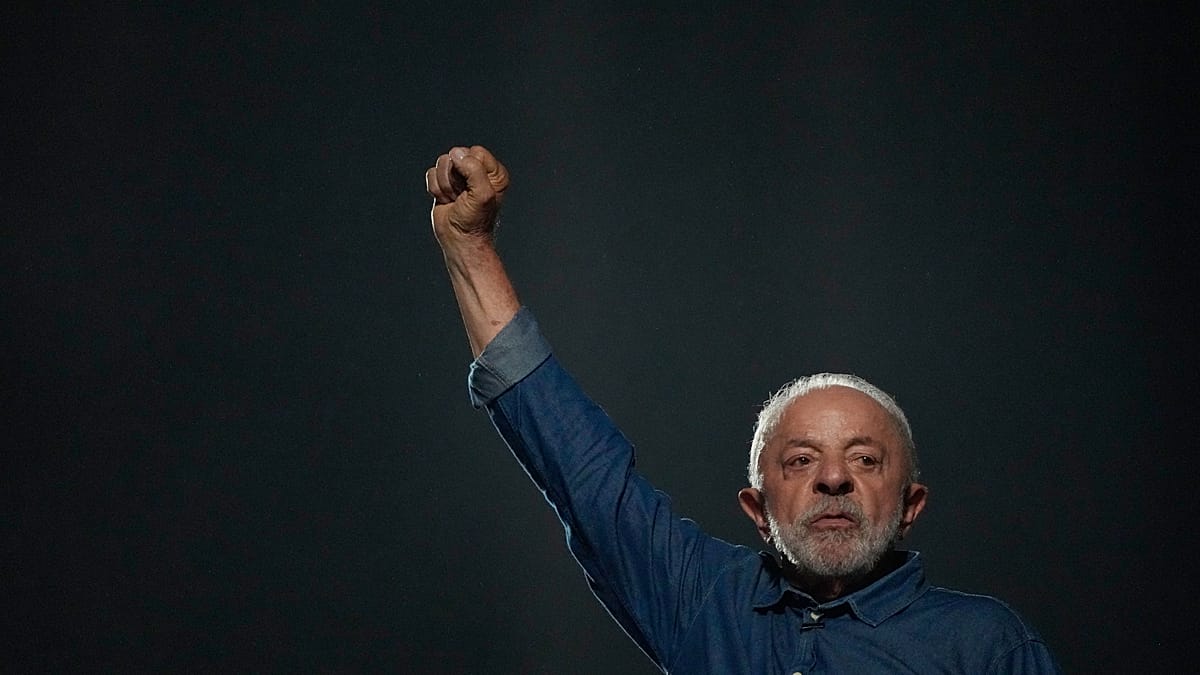
In a dramatic reversal of fortune, Luiz Inácio Lula da Silva has been re-elected president of Brazil, overcoming a first-round deficit that had seemed insurmountable. His victory in the runoff marks a personal and political triumph, crowning a career that began in a metalworking shop and led to the highest office in the land.
Lula, who turns 81 on Tuesday, addressed supporters with characteristic humility and ambition. "I owe this to you. I have always thought that God has been very generous to me, because there are so many people better prepared than I am, so many people with more diplomas than I have, so many people who have read more books than I have," he said in his victory speech. He promised "the best term" any president has ever served in Brazil's history.
The comeback was historic: since Brazil reintroduced direct presidential elections in 1989 with a two-round system, no candidate who trailed after the first round had ever won the second. Lula, leader of the Workers' Party (PT), broke that pattern, just as he had broken barriers his entire life.
From poverty to power
Born on 27 October 1945 in Garanhuns, in the north-eastern state of Pernambuco, Lula was the seventh child of illiterate farmers. His family moved to São Paulo when he was seven, and by 14 he was enrolled in a metalworking course. Before that, he had worked as a street vendor, shoeshine boy, and dye-shop assistant. A workplace accident cost him a finger, earning him the disparaging nickname "nine fingers" among opponents.
His rise was forged in the labour movement. As a union leader in the late 1970s, he organised strikes that challenged the military dictatorship and laid the groundwork for the founding of the Workers' Party in 1980. The PT became the main force of the Brazilian left after democratisation, with Lula as its standard-bearer.
After losing presidential bids in 1989, 1994, and 1998, he finally won in 2002, becoming the first trade unionist and manual worker to enter the Palácio do Planalto. His first term saw the introduction of the Bolsa Família social programme and the Zero Hunger initiative, which helped lift millions out of poverty. He left office with approval ratings above 50% and was re-elected in 2006 with a record 58 million votes.
His legacy on hunger is particularly notable: in 2014, under his successor Dilma Rousseff, Brazil was removed from the UN's Hunger Map, a direct result of the social policies Lula championed.
A defender of multilateralism
Lula has long positioned himself as a champion of diplomacy and a rules-based international order. In a speech to the UN General Assembly in September 2026, he declared: "War is not the continuation of politics by other means. It is the total failure of politics. In an interdependent world, to lead is to reconcile the interests of the homeland with those of humanity."
But his career has not been without scandal. The Car Wash investigation and subsequent trials, led by judge Sérgio Moro (who later served as justice minister under Jair Bolsonaro), temporarily sidelined him. Yet Lula's political resurrection—culminating in this fourth term—underscores his enduring appeal among Brazilians who remember the progress made under his watch.
His victory has sparked nationwide street celebrations, even as Bolsonaro contests the result. The runoff itself drew voters from Amazon canoes to Rio queues, reflecting the high stakes of the election. For Europe, Lula's return signals a renewed partnership on climate, trade, and multilateral cooperation—a shift from the Bolsonaro years.
As Lula prepares to take office, he faces a deeply divided nation and a challenging economic climate. But if his past is any guide, he will not shy away from the fight. "I want to tell you that I am enormously proud," he told the crowd. "I am the only president of the Republic, a metalworker without a university degree, elected four times, democratically, to call for peace."