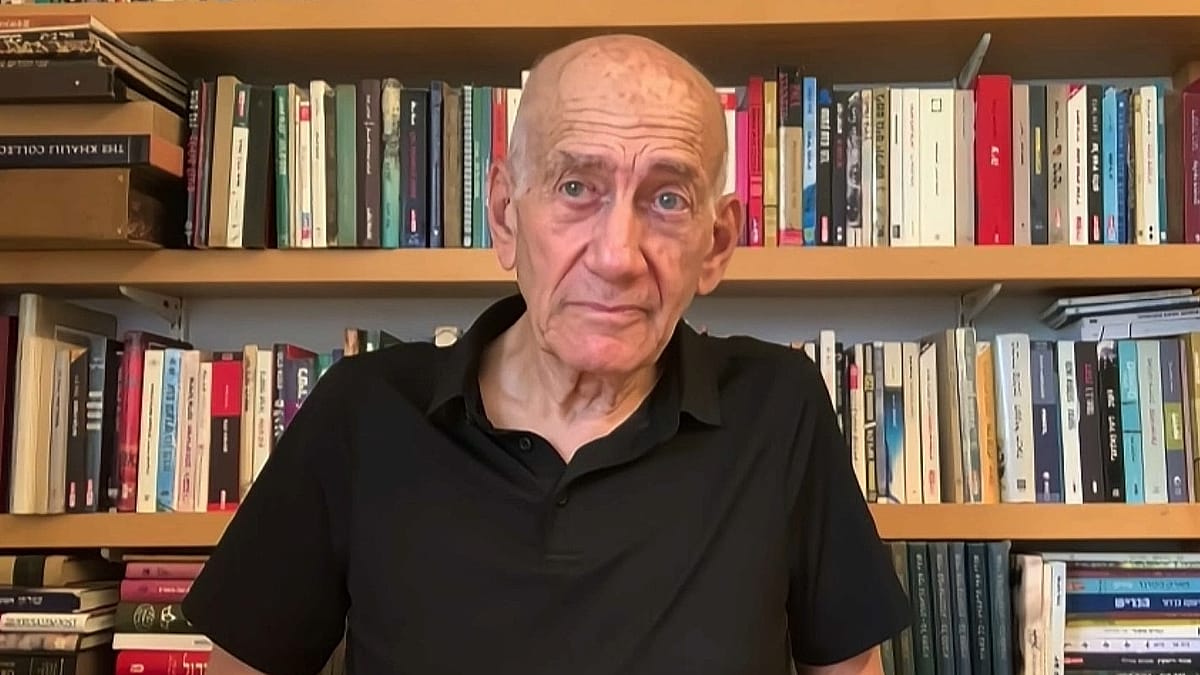
As Israelis prepare to vote in their first general election since the 7 October attacks and the ensuing wars in Gaza and Lebanon, former prime minister Ehud Olmert has framed the contest as an "inevitable battle about the future of Israel." In an interview with European Pulse, Olmert warned that the fate of current prime minister Benjamin Netanyahu "may become the disaster of the state of Israel."
A climate of fear
Olmert, who served as prime minister from 2006 to 2009, accused Netanyahu of "creating an atmosphere of hysteria and fear" among the electorate. He contrasted this with the approach of former military chief Gadi Eisenkot, whom he described as "restrained and responsible." Eisenkot, a member of the National Unity party led by Benny Gantz, has emerged as a key figure in the campaign, appealing to voters seeking a more measured leadership style.
The election comes at a deeply polarised moment for Israel. The 7 October attacks, in which Hamas killed around 1,200 people and took more than 250 hostages, triggered a devastating military campaign in Gaza that has killed tens of thousands of Palestinians, according to local health authorities. The conflict has also spread to Lebanon, where Israeli forces have clashed with Hezbollah, and has drawn international condemnation over civilian casualties and humanitarian conditions.
No policy shift expected
Despite the possibility of Netanyahu's defeat, Olmert does not anticipate a significant change in Israeli policy. "The deep structures of the conflict remain," he said, noting that any new government would still face the same security dilemmas and international pressures. However, he insisted that Israel is "on its way to become normal again," suggesting that a change in leadership could restore a degree of political stability and international credibility.
Olmert's comments come as Israel's election day is marked by heightened security. In a related development, Israeli authorities shut West Bank crossings after a deadly attack near Hebron, underscoring the volatile environment in which the vote is taking place. The attack, which killed two Israeli soldiers, has further inflamed tensions in the occupied territories.
European perspectives
The election is being closely watched across Europe, where leaders have struggled to balance support for Israel's right to self-defence with growing concern over the humanitarian toll in Gaza. The European Union has repeatedly called for a ceasefire and a two-state solution, while individual member states have taken divergent positions. For instance, Spain and Ireland have recognised a Palestinian state, while Germany and Hungary have been more supportive of Israel's actions.
Olmert's remarks also resonate with broader regional shifts. In neighbouring Serbia, a snap election has become a referendum on the decade-long rule of President Aleksandar Vučić, reflecting a wider European trend of polarised votes. Meanwhile, the ongoing conflict has had ripple effects beyond the Middle East, including the detention of Italian activists during the olive harvest in the West Bank, a case that has drawn attention in Rome and Brussels.
As Israelis head to the polls, the outcome remains uncertain. Opinion polls have suggested a tight race, with Netanyahu's Likud party facing a strong challenge from a coalition of centrist and right-wing parties. A defeat for Netanyahu would end his record-breaking tenure, which has been marked by political turmoil, corruption trials, and the most devastating conflict in Israel's recent history.
For Olmert, the election is not just about personalities but about the kind of society Israel wants to be. "This is a moment of choice," he said. "The question is whether we choose fear or responsibility."