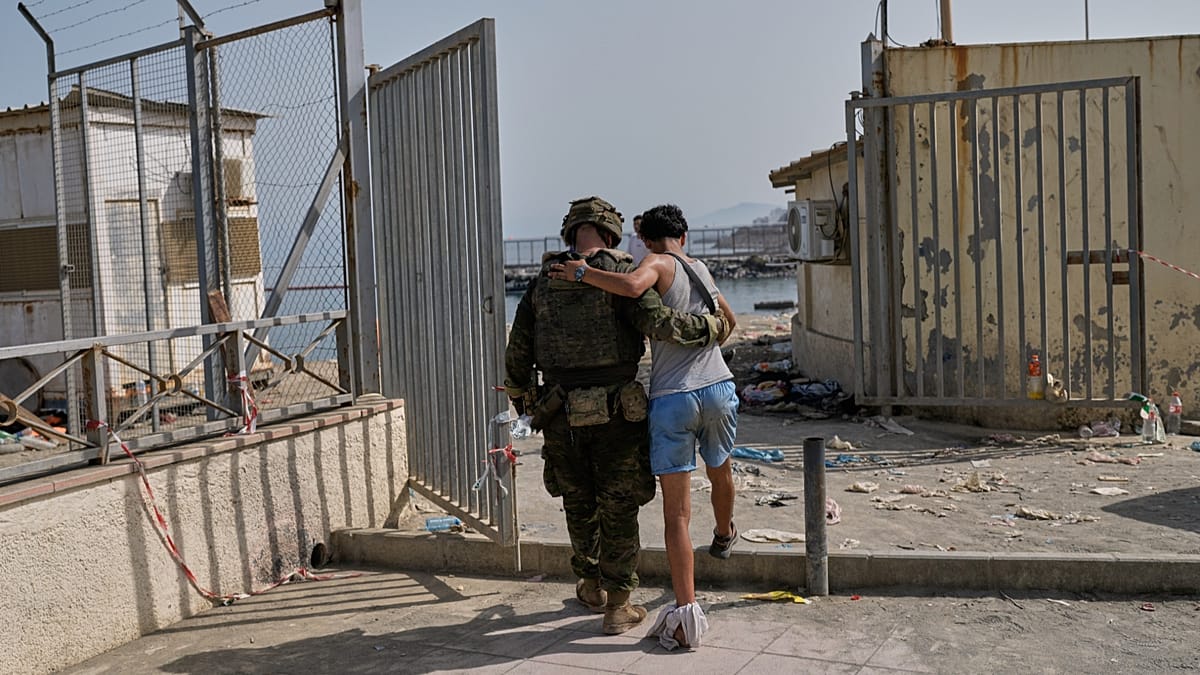
The European Commission is in talks with Spanish authorities over fresh financial support for Ceuta, the Spanish exclave on Morocco's coast, following an unprecedented wave of migrant arrivals last week. A spokesperson confirmed that discussions are moving at "full speed" and that Brussels has received Spain's initial needs assessment.
Speaking on Thursday, Commission spokesperson Guillaume Mercier said the EU executive received the assessment from Spain on Wednesday, following technical talks earlier in the week. "The next step will be for Spain to make an application and submit formally to the Commission," Mercier told reporters, adding that Brussels sees a clear need for additional support "in view of the current situation."
The funding, if approved, could be used for border management equipment and services, as well as humanitarian and medical assistance for those who remain in Ceuta. In practice, that might mean temporary shelters, food, medical care, and emergency personnel, depending on what Spain requests. The amount has not yet been finalised.
Scale of the crisis
Spanish officials said on Monday that around 70,000 people had already returned to Morocco after the deadly episode, which claimed at least 88 lives. But up to 5,000 individuals, including 860 unaccompanied minors, have stayed in Ceuta, according to Juan Vivas, the city's president.
The scale of the influx has overwhelmed local resources. Mustafa Abdelcader, president of the NGO Luna Blanca, which has distributed more than 12,000 meals to migrants in recent days, told Euronews that "the institutions aren't prepared to deal with" such a crisis. "We're talking about an influx of some 60,000 or 70,000 people," he said, noting that this is "almost at the same level as the city's population." A social worker from the organisation described children arriving with heatstroke and suffering from hunger.
Ceuta, a small autonomous city of roughly 85,000 residents, has long been a focal point for migration from North Africa. But last week's surge, which saw thousands swim or wade across the border, was unprecedented in scale and has raised questions about border security and diplomatic tensions with Morocco.
The crisis has also deepened questions over Prime Minister Pedro Sánchez's role in the EU, as critics argue that Spain's handling of the situation reflects broader European weaknesses on migration policy.
EU funding and long-term budget
Following an extraordinary meeting on Tuesday, EU Commissioner for Internal Affairs and Migration Magnus Brunner confirmed that the current long-term budget, the Multiannual Financial Framework, has funds available for Spain and Ceuta. "Spain received an additional €114 million allocation through emergency assistance," Brunner said. "This includes approximately €28 million to further reinforce reception, asylum and return systems in Ceuta, so this is especially used there."
The new funding under discussion would be on top of that allocation. Mercier stressed that the Commission is reviewing Spain's assessment and expects a formal application soon. The speed of the response reflects the urgency of the situation on the ground, where NGOs and local authorities are struggling to cope.
Meanwhile, the crisis has also drawn attention to the broader migration picture across Europe. Greece has reported a 34% drop in migrant arrivals in the first half of 2026, suggesting that pressures are unevenly distributed. The Ceuta surge has also been complicated by AI fakes and old clips muddying coverage of the border crossing, making it harder to verify events in real time.
As Ceuta begins a fragile recovery, the city remains divided between anger and fear, as residents grapple with the aftermath. The EU's financial support, if it materialises, will be a test of solidarity in practice.