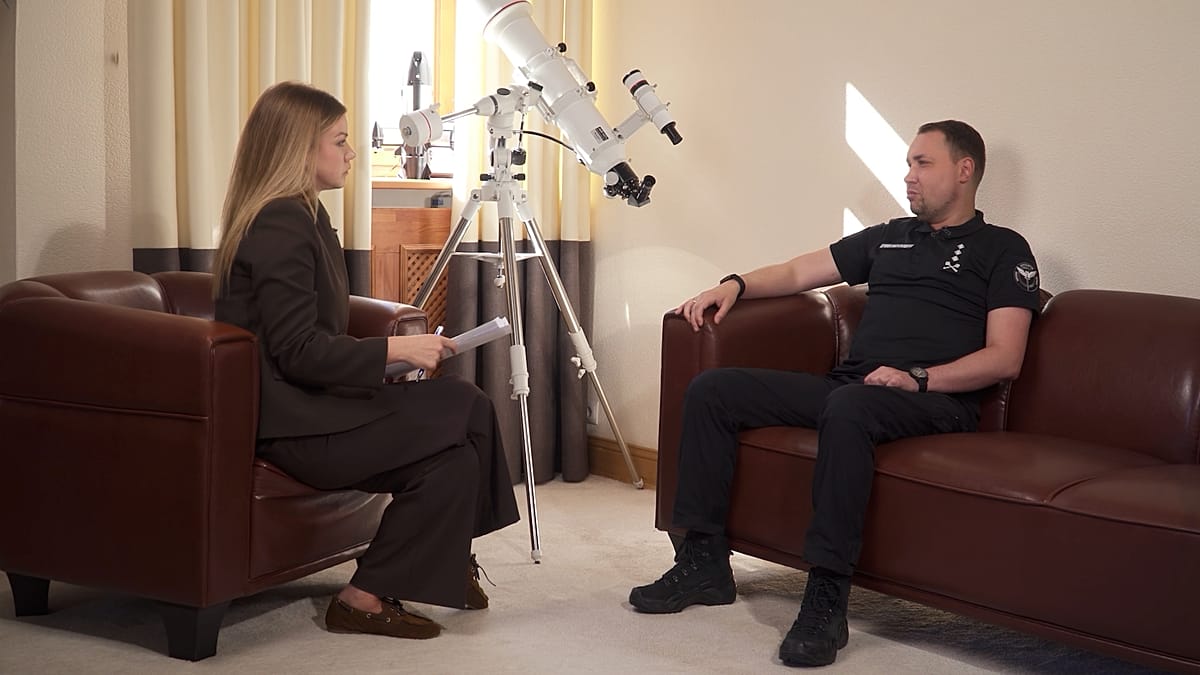
Kyrylo Budanov, who heads the Office of the President of Ukraine, has warned that any future European security architecture that leaves out the United States would be a serious mistake. In an interview with Euronews, he said the planners drafting such a doctrine must weigh radically different scenarios, but that a US-free arrangement struck him as the worst of them.
"It seems to me that this is a bad option. A very bad one, very dangerous for Europe," Budanov said. His remarks land amid a broader debate across the continent about how far Europe can or should reduce its reliance on American military guarantees, a discussion that has intensified as Washington's priorities shift.
Moscow's campaign against civilians
Budanov described Russia's escalating aerial assaults on Ukrainian cities as a deliberate campaign of intimidation rather than a purely military effort. He said the strikes kill women, children, elderly people and even veterans of the Second World War, and characterised the strategy as "classic terrorism" whose aim is to frighten the population and wear down its resolve.
Asked whether the Kremlin believes sustained bombardment can exhaust Ukrainians and push their government toward concessions, he was blunt: "Yes, they do believe that."
He rejected the idea that Russia is innovating faster than Ukraine, despite Moscow's deployment of jet-powered drones, shifting flight paths and complex combined attacks. "I don't believe that Russia, in principle, is adapting faster than we are," he said, adding that shielding civilians remains Kyiv's "number one task".
Interceptors and the race to scale
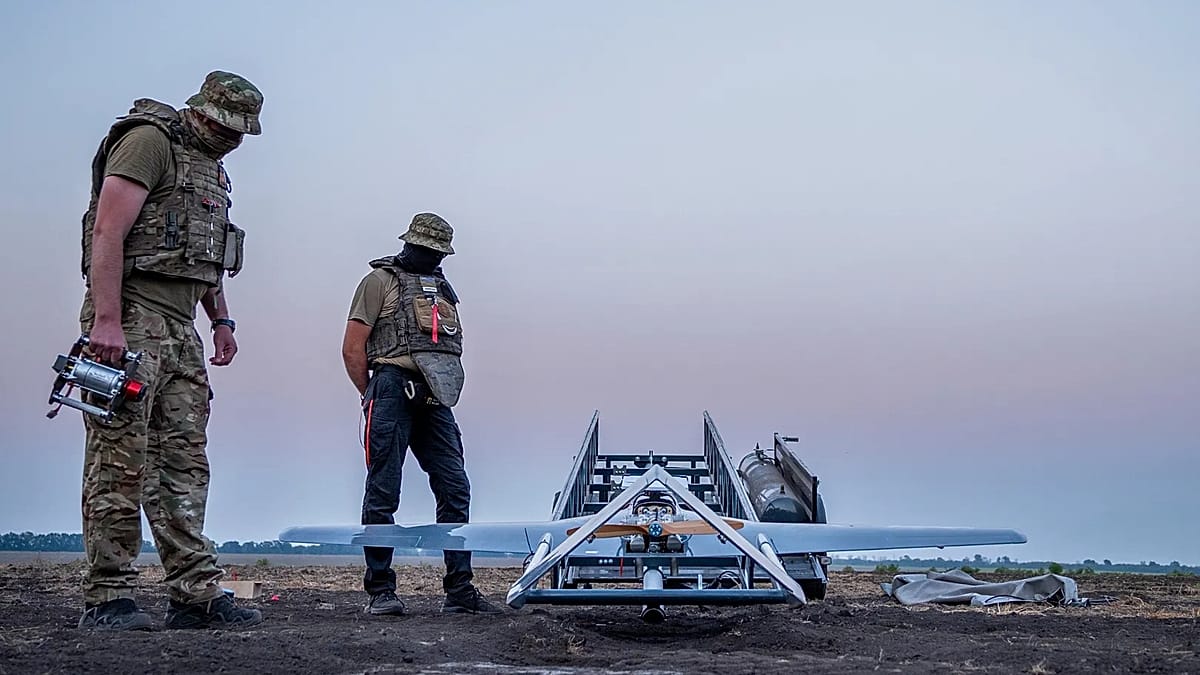
Central to that effort is a new generation of Ukrainian interceptors built to bring down Russia's faster jet-powered drones. Budanov said the systems have moved past conventional testing and are already being used experimentally in combat. The bottleneck, he said, is industrial rather than conceptual.
"The issue is scaling up this technology," he said, noting that engineering refinements continue and that mass production is the next hurdle. He expressed confidence that Ukraine can reach the necessary output before winter, the most demanding period of the year, based on having personally inspected both the technology and the production lines.
"I have seen these developments, and I have seen the production. I am watching how the technological cycle is developing. They will make it in time."
That capacity is also the basis for deeper industrial ties with European partners. Several countries have already signed cooperation agreements under Ukraine's so-called Drone Deal framework, and Kyiv has signalled that allies may gain access to its interceptor technology, as reported in coverage of Ukraine's offer to share interceptor technology. Budanov said partners who have signed such deals have the right to keep negotiating on specific products, but stressed that Ukrainian needs come first.
"We will be able to meet the demand of other countries when, first and foremost, we have met our own country's needs for such products," he said. Future cooperation could take the form of joint ventures or, in some cases, production facilities abroad staffed by Ukrainian engineers with shared ownership. Some critical technologies, he argued, should stay inside Ukraine.
Pressed on what Ukraine brings that its partners cannot develop quickly themselves, Budanov pointed to two things: "The speed of implementing innovation, the speed of scaling production — in other words, mass production."
Financing the war and shaping the peace
On Ukraine's immediate financial needs, Budanov said Kyiv can already see how the greater part of its requirements will be covered, pointing to negotiations with the International Monetary Fund and the European Commission. Those needs will keep shifting as the war evolves, he said, with more required in some areas and less in others.
He drew a clear line between financing the fight and the longer-term shape of Ukraine's economy. Once the shooting stops, he favours a liberal, free-market model with limited state intervention, predictable tax policy and domestic stability. "But right now, we have to survive," he said. "That is our main task — to survive here and now."
Defence exports, he added, will not follow ordinary commercial logic. "In any civilised country in the world, weapons are not simply sold left and right," he said, insisting on strict, transparent and predictable conditions. For now, Ukrainian arms exports remain constrained by the country's own wartime demands.
Budanov's warning about excluding Washington echoes concerns raised elsewhere in Europe, including by NATO's leadership on European defence spending, and is likely to feature in discussions at gatherings such as the Euronews defence summit on rearmament and hybrid threats. For Kyiv, the message is that Europe's security cannot be designed in isolation from its most powerful ally — and that Ukraine intends to be a producer, not just a recipient, in whatever architecture emerges.