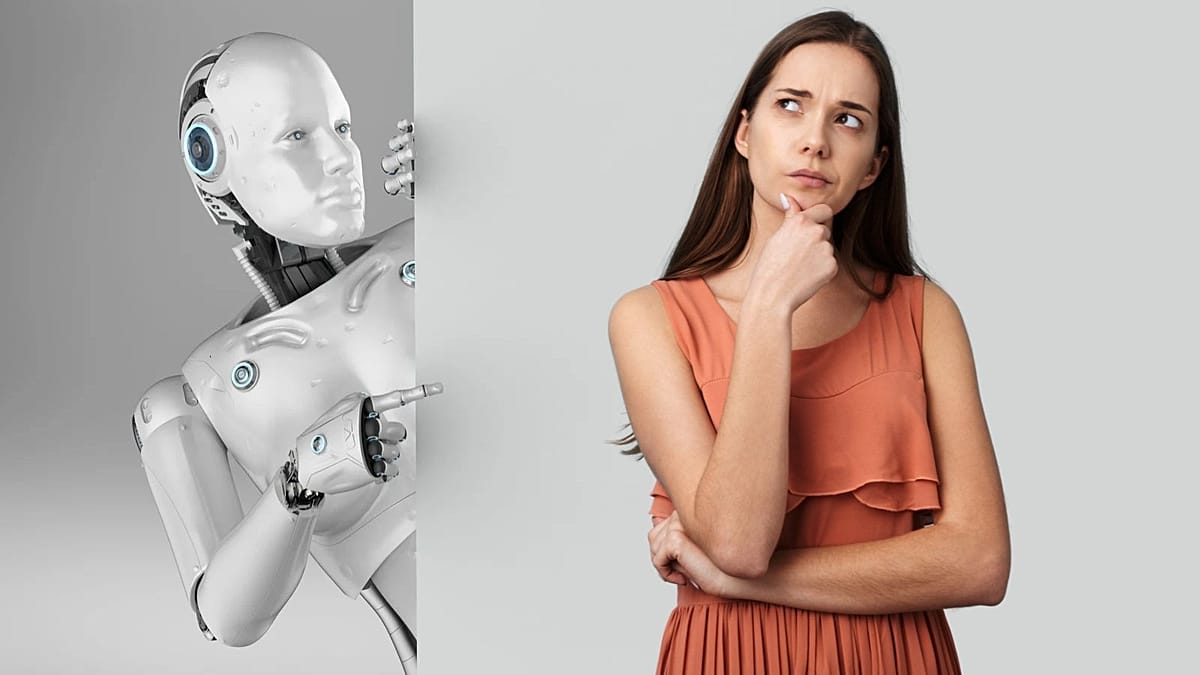
Cambridge Dictionary has crowned “human” as its Word of the Year for 2026, a choice that speaks directly to the continent's—and the world's—growing unease about artificial intelligence. The word, rooted in the Latin humanus, is defined by the dictionary as “having the qualities, faults and feelings that people have, as opposed to gods, animals or machines.”
The selection reflects a broader cultural reckoning with AI's influence on everyday life, from classrooms in Berlin to boardrooms in Paris. As machines increasingly handle tasks once reserved for human intellect, the question of what makes us uniquely human has moved from philosophy seminars to dinner-table conversations.
A word that captures a moment
Colin McIntosh, a lexicographer at Cambridge, explained the choice: “AI is changing how we talk about being human. Fears about what humans may lose when we outsource our thinking have made us reconsider the extent to which we rely on AI: from top mathematicians to teachers of young children.”
The announcement comes amid a wave of high-profile warnings about AI's risks. Geoffrey Hinton, a Nobel laureate and AI pioneer, has been vocal about the dangers, saying: “We're creating alien beings. I'm willing to be selfish and choose humans.” His comments echo a sentiment that has gained traction across Europe, where policymakers and citizens alike are grappling with the technology's rapid advance.
Professor Rachel Adams, an expert on AI governance and human rights at the University of Cambridge, sees the word as a prompt for deeper reflection. “AI brings us back to questions that we've asked for millennia – who are we? What does it mean to be human?” she said. “AI is going to be a profound test for humanity. There's a real risk that it deepens existing inequalities, but it also has the potential to solve them.”
The choice of “human” is not an isolated phenomenon. Dictionaries across the globe have increasingly turned to AI-related terms for their annual honors. Collins Dictionary selected “AI” itself in 2023, the same year Cambridge picked “hallucinate” to describe AI-generated misinformation, and Merriam-Webster chose “authentic.” Last year, Merriam-Webster went with “slop” for low-quality AI content, while Collins opted for “vibe coding,” a term for AI-assisted software development.
This year's shortlist for Cambridge included “agent,” referring to AI systems that operate autonomously, and “analogue,” for experiences that don't involve digital technology. A non-tech contender, “wholesome,” was also in the running, reflecting a desire for things that improve life physically, morally, or emotionally.
The debate over AI's role in society is particularly acute in Europe, where the EU's AI Act—the world's first comprehensive AI regulation—has set a global benchmark. Yet concerns persist, as Carney warns unregulated AI poses 'enormous risk' to global stability. The human cost of the technology's infrastructure is also under scrutiny, with aerial photos exposing the human toll of Europe's green energy minerals.
As AI continues to evolve, the word “human” serves as a reminder of what is at stake. It is a term that carries both anxiety and hope, a linguistic anchor in a sea of technological change. Whether AI will ultimately deepen divides or help bridge them remains an open question, but the choice of “human” suggests that the answer lies in our own hands.