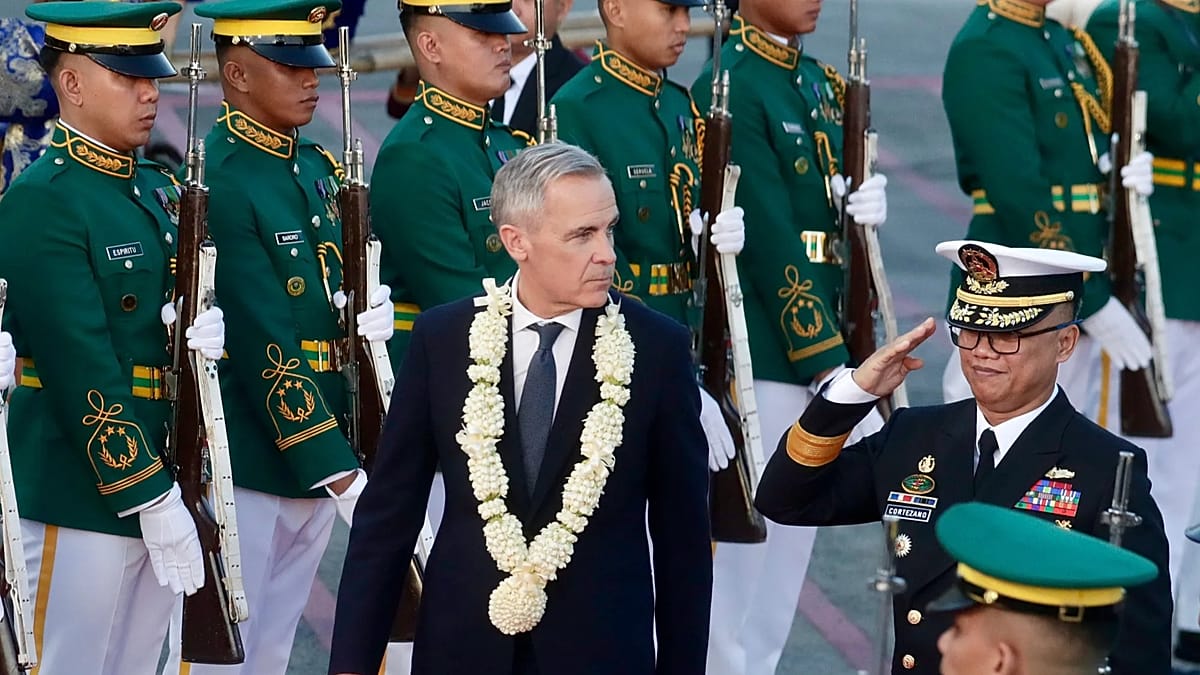
Canadian Prime Minister Mark Carney announced on Saturday that Canada and the Philippines have concluded negotiations on a free trade agreement, marking a significant step in Ottawa's efforts to reduce its economic dependence on the United States.
Speaking from Manila, where he is attending the Association of Southeast Asian Nations (ASEAN) summit, Carney said the deal would be signed within about six months and is expected to enter into force in 2027. He described the agreement as beneficial for Canadian businesses across a range of sectors, including agriculture, aerospace, artificial intelligence, forest products, mining, energy, and services.
"This is good news for Canadians in the agriculture sector, in the aerospace sector, even in AI, and our businesses working across forest products, mining, energy, services and beyond," Carney told reporters on the sidelines of the summit.
The announcement comes as Canada continues to recalibrate its trade strategy following a series of disputes with the administration of US President Donald Trump. Ottawa has set a goal of doubling its non-US exports by 2035 and has been forging closer ties with Europe and other partners as part of that effort.
Broader ASEAN ambitions
Beyond the bilateral deal with the Philippines, Carney indicated that negotiations for a broader trade agreement with the entire 11-member ASEAN bloc have been "substantially completed." Such an arrangement would further integrate Canada into the fast-growing Southeast Asian market.
"We're diversifying our trade partnerships to build a stronger, more resilient Canadian economy," Carney wrote on social media. He framed the announcements as part of a strategy to create "a dense web of reliable partners" that would offer more opportunities for Canadian businesses, more choice for consumers, and better jobs for workers, while reducing reliance on the United States.
The push to diversify comes amid ongoing tensions with Washington, which have prompted Canada to look beyond its southern neighbour. In recent months, Ottawa has also sought to strengthen economic and political ties with Europe, including through initiatives like the Dublin summit where EU leaders have been discussing a unified approach to global affairs.
Analysts note that Canada's move toward Asia and Europe reflects a broader realignment of global trade patterns, as countries seek to hedge against the unpredictability of US trade policy. The Philippines, with its growing economy and strategic location, offers Canadian firms a gateway to the wider ASEAN market.
Carney's visit to Manila underscores the importance Canada places on the region. The prime minister is expected to hold further bilateral meetings on the sidelines of the summit to advance trade and investment ties.
The free trade agreement with the Philippines is seen as a key component of Canada's Indo-Pacific strategy, which aims to deepen engagement with the region. For the Philippines, the deal opens up new opportunities for its agricultural and manufacturing exports to Canada.
While the timeline for implementation is set for 2027, both sides will need to complete domestic ratification processes. Carney expressed confidence that the agreement would proceed smoothly, noting that negotiations had been concluded in just one year, a relatively fast pace for such deals.
As Canada continues to navigate its relationship with the United States, the successful conclusion of these talks sends a clear signal that Ottawa is serious about diversifying its trade portfolio. With Europe and Asia both in focus, Canada is positioning itself as a more globally engaged player.