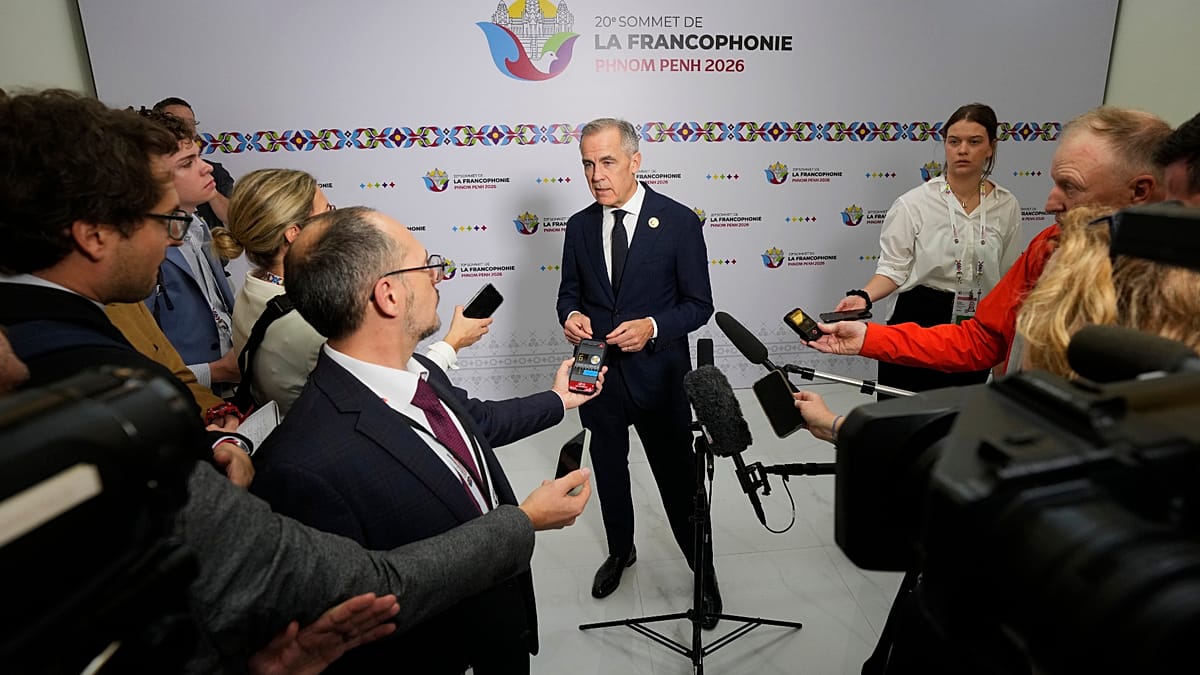
Canadian Prime Minister Mark Carney has cautioned that escalating US tariffs could redirect Canadian automotive production toward China, as Ottawa reassesses its reliance on a North American market that is becoming increasingly fragmented. Speaking to reporters on Monday, Carney framed the issue as a direct consequence of Washington's trade policies under President Donald Trump.
"We have the best auto workers in the world, and we want them fully deployed... in an integrated North American market," Carney said, ahead of his scheduled meeting with Chinese President Xi Jinping at the APEC summit in southern China. "That market has become less integrated because of US trade actions."
The Prime Minister's comments, made at a summit of French-speaking nations in Cambodia, underscored the growing strain on the trilateral auto supply chain that has long linked Canada, the US, and Mexico. Carney argued that the current system remains "the best result for Canadian workers, for Canadian business, and for US consumers," but acknowledged that its future is now uncertain.
"It's part of the trade negotiations, as you know - depending on where that settles, there'll be other options, European options, Asian options, of course, Chinese, Japanese," he added, signalling that Ottawa is actively exploring alternatives beyond North America.
Trade tensions and strategic pivots
Trump's administration has imposed punishing tariffs on Canadian auto exports, with the US President repeatedly insisting that vehicles sold in America should be built exclusively by American workers. That stance has upended decades of cross-border integration, where parts and finished vehicles move freely between the two countries.
Carney walked away from trade talks with Trump in August, but recent weeks have seen cautious optimism from both Ottawa and Washington about the possibility of a deal. Still, the Canadian leader made clear that his government is not waiting idly. "This is not leverage, but action, reaction," he said, describing the potential shift toward China as a natural response to US policy.
The prospect of Canadian carmakers turning to China comes as Beijing aggressively expands its automotive footprint, particularly in electric vehicles. China's advances in electric transport are part of a broader push to dominate next-generation mobility, and Canadian firms could find a willing partner in Chinese manufacturers seeking to diversify their supply chains.
For Europe, the development carries significant implications. German carmakers, which have long relied on North American markets, are already navigating their own trade disputes with Washington. A Canadian pivot toward China could reshape global auto supply chains, potentially affecting European producers that compete in both regions. Recent data shows German carmakers helped lift industrial output in September, but the sector remains vulnerable to trade disruptions.
Carney's remarks also highlight a broader trend of Canada diversifying its economic partnerships. Ottawa recently finalized a trade deal with the Philippines, and there are signs of Canada shifting its trade focus away from the US. The Prime Minister's willingness to engage with China, despite ongoing geopolitical tensions, suggests a pragmatic approach to securing Canadian economic interests.
Analysts note that China's vast market and aggressive investment in EV technology make it an attractive alternative for Canadian automakers, particularly if US tariffs remain in place. However, such a shift would not be without risks, including potential US retaliation and concerns about intellectual property and human rights.
As the APEC summit unfolds, Carney's meeting with Xi will be closely watched. The two leaders are expected to discuss trade, investment, and possibly the trilateral talks involving Trump, Putin, and Xi that have been floated on issues like Iran and denuclearisation. For now, Carney's message is clear: Canada will not be held hostage to US trade policy, and it is prepared to look elsewhere if necessary.
The coming weeks will be critical as Ottawa and Washington resume negotiations. Whether a deal emerges or Canada follows through on its Chinese overtures, the North American auto industry stands at a crossroads, with implications that extend far beyond the continent.