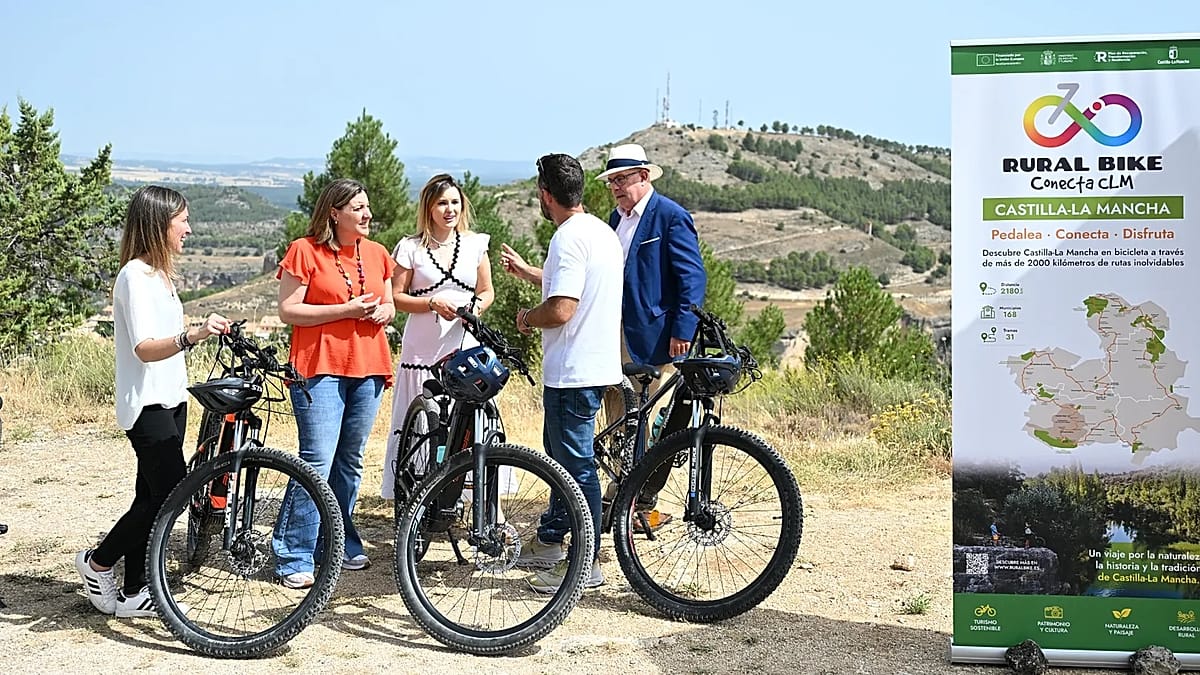
Cycling enthusiasts looking for a new challenge in central Spain now have a compelling option: the Rural Bike Conecta CLM, a 2,180-kilometre network that weaves through 168 municipalities in the autonomous region of Castilla-La Mancha. Launched with €2.4 million from the European Union's Next Generation funds, the route is designed to showcase the region's natural and cultural heritage while promoting sustainable tourism.
A Network of Parks and Geoparks
The network links two national parks — Tablas de Daimiel and Cabañeros — along with seven natural parks and two UNESCO Global Geoparks. Castilla-La Mancha boasts one of Europe's highest concentrations of designated nature reserves, making it a prime destination for eco-tourism. Over 3,200 signposts have been installed along the route, guiding cyclists through provincial capitals and remote rural enclaves alike.
Patricia Franco, the region's minister of economy, business and employment, emphasised the network's role in highlighting sustainable landscapes. "This network is an invitation to those who seek to enjoy nature and active tourism," she said, adding that it "will help us strengthen and consolidate our tourism prospects, which are very positive so far this year."
The launch comes as Castilla-La Mancha experiences a tourism boom. According to the latest Exceltur Barometer, which tracks Spain's tourism performance, the region recorded the highest growth in the sector among all autonomous communities in the second quarter of the year.
Integration with EuroVelo
Plans are already underway to have Rural Bike Conecta CLM included in EuroVelo, the continent-wide network of 17 long-distance cycle routes that connect cities from London to Amsterdam, Brussels to Luxembourg, and beyond to Zagreb, Bucharest, and Athens. Such integration would position the new route as part of a broader European cycling infrastructure, encouraging cross-border travel and deeper exploration of the Iberian Peninsula.
The region's national parks offer additional attractions for visitors. Tablas de Daimiel features three self-guided walking routes, while Cabañeros offers 16 walking routes across its plains and mountain zones, both rich in greenery, birdlife, and other wildlife. The new cycling network complements these existing offerings, providing a low-carbon way to experience the area's biodiversity.
For travellers planning a longer journey, the route can be combined with other European cycling initiatives. For instance, the new 3,500km Wolf Trail linking Poland to Italy demonstrates the growing trend of long-distance cycling routes across the continent. Similarly, the success of hiking trails on the Greek island of Andros, as seen in how hiking trails transformed its tourism, underscores the potential for such infrastructure to reshape local economies.
The Rural Bike Conecta CLM is part of a wider push by Spanish regions to invest in active tourism. While wildfires have occasionally threatened parts of Castilla-La Mancha, as reported in recent blazes that destroyed over 15,400 hectares, the new cycling network represents a long-term commitment to sustainable development and climate resilience.
With its combination of natural beauty, cultural heritage, and EU-backed funding, the route offers a model for how rural areas can leverage cycling tourism to attract visitors year-round. As Franco noted, the network is "a starting point and route throughout our region" — one that could soon connect to a much larger European cycling tapestry.