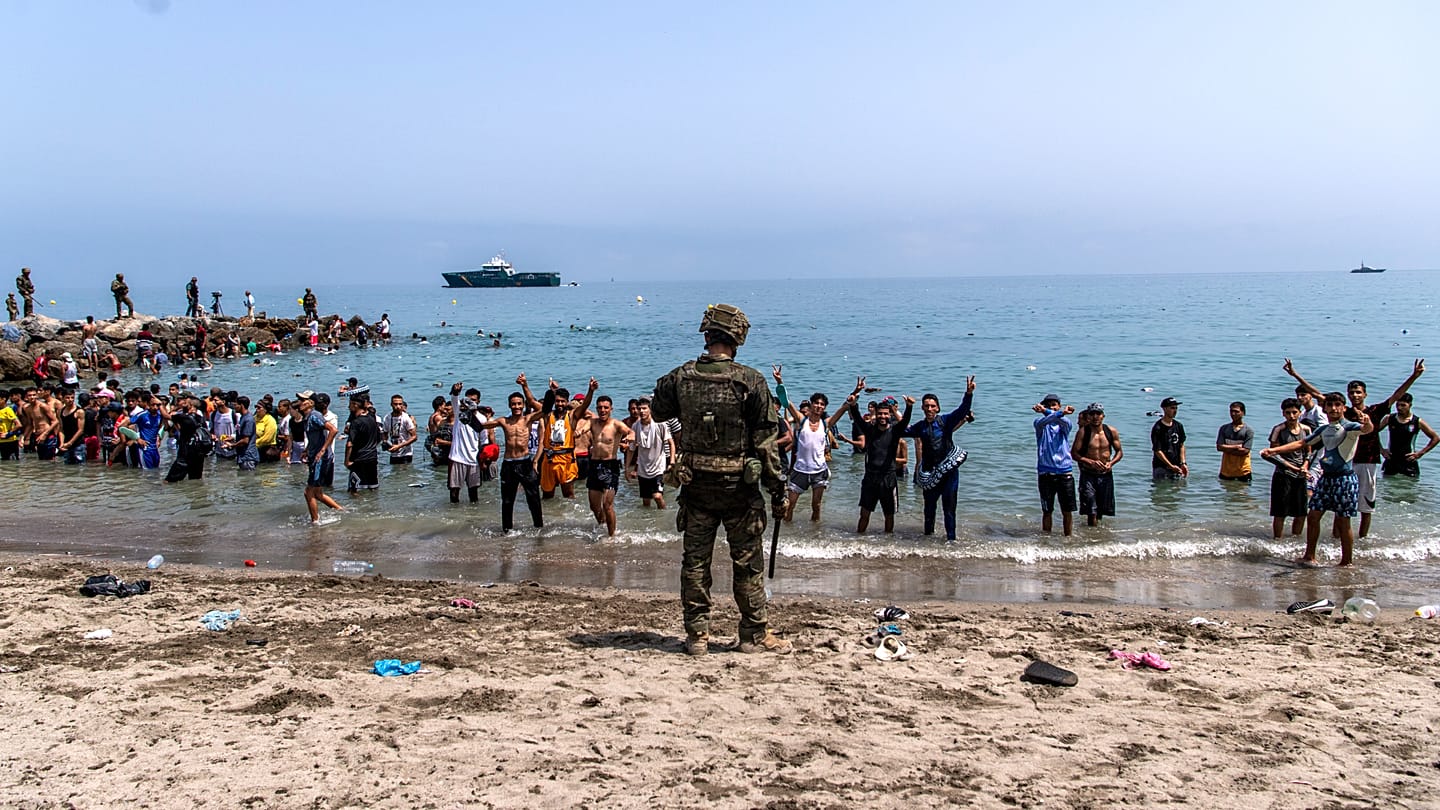
On 17 May 2021, the Spanish enclave of Ceuta, a small territory on the North African coast, witnessed an unprecedented influx of migrants. Within hours, over 70,000 people, including many Moroccans, crossed the border from Morocco, overwhelming Spanish authorities and turning the city into a flashpoint for Europe's migration debate. The event, described by many as Spain's biggest migration crisis, raised urgent questions about border security, diplomatic leverage, and the European Union's ability to respond to sudden pressures.
A border that was never meant to be a wall
Ceuta and its sister enclave Melilla have long been Europe's only land borders with Africa. For decades, the fences and surveillance systems have been a symbol of Fortress Europe, but the events of May 2021 showed how quickly that fortress can be breached. The mass arrival was not a spontaneous movement; it was widely seen as a deliberate act by Morocco to punish Spain for hosting Brahim Ghali, the leader of the Polisario Front, who was receiving medical treatment in a Spanish hospital. Rabat denied any official orchestration, but the timing and scale suggested otherwise.
The Moroccan authorities appeared to withdraw border guards, allowing thousands of people, many of them young men and families, to wade across the shallow waters of the Tarajal beach or climb over the fences. Spanish police, caught off guard, struggled to contain the flow. By the end of the day, over 70,000 people had entered, though many were later returned voluntarily. The crisis highlighted the fragility of Spain's southern border and the complex relationship between Madrid and Rabat, which has always been a mix of cooperation and tension.
Diplomatic fallout and the role of Washington
The crisis quickly escalated beyond a local border incident. Spain's government, led by Prime Minister Pedro Sánchez, accused Morocco of using migration as a political weapon. In response, Spain recalled its ambassador from Rabat and demanded an explanation. The European Union expressed solidarity with Spain, with European Commission President Ursula von der Leyen calling for tougher EU border controls and a unified approach. However, the bloc's response was far from unanimous, with some member states reluctant to commit to a common migration policy.
The crisis also drew in the United States. Washington had recently shifted its stance on Western Sahara, supporting Morocco's autonomy plan, which angered Algeria and the Polisario Front. Some analysts saw the Ceuta incident as a message from Rabat to both Madrid and Washington, reminding them of Morocco's strategic importance in the region. The Strait of Gibraltar, a vital maritime corridor, became a geopolitical chessboard, with migration used as a bargaining chip.
Humanitarian toll and local strain
For the people of Ceuta, the influx was overwhelming. The city's population is around 85,000, and the sudden arrival of thousands of migrants stretched resources to the limit. Shelters were set up in sports halls and warehouses, but conditions were poor. Many migrants, including unaccompanied minors, were left in limbo, unsure whether they would be allowed to stay or forced to return. The Spanish government initially said it would deport all those who entered irregularly, but legal challenges and humanitarian concerns complicated the process.
Human rights organisations criticised the use of force by Spanish police, who fired rubber bullets and used tear gas to push back migrants. At least one person died, and many were injured. The death toll later rose as some migrants drowned while trying to swim around the breakwaters. The tragedy underscored the dangers of irregular migration and the need for a humane and coordinated response.
EU solidarity and internal divisions
The crisis tested the EU's unity on migration. Spain called for EU solidarity, but the response was mixed. While the European Commission offered financial and logistical support, some member states, particularly in Central and Eastern Europe, were reluctant to accept any mandatory relocation of migrants. The debate reignited the long-standing north-south divide within the bloc over how to share responsibility for asylum seekers and economic migrants.
In the weeks that followed, Spain and Morocco worked to restore diplomatic relations, with Sánchez visiting Rabat in April 2022 and reversing Spain's position on Western Sahara to align with Morocco's autonomy plan. This move was seen as a concession to secure Morocco's cooperation on border control, but it angered Algeria and strained Spain's relations with other partners. The Ceuta crisis, therefore, had lasting consequences for Spain's foreign policy and for the EU's approach to its southern neighbourhood.
Lessons for Europe
The Ceuta crisis was a wake-up call for Europe. It showed that border security cannot be taken for granted and that migration is often intertwined with geopolitics. The EU's response, while swift in rhetoric, was slow in action. The bloc has yet to agree on a comprehensive migration pact, and the debate over border checks continues. For Spain, the crisis highlighted the need for better preparedness and for a more nuanced relationship with Morocco, one that balances security with human rights.
As Ceuta slowly returned to normal, the images of thousands of people crossing the border remained etched in the European consciousness. The crisis was not just about Spain or Morocco; it was about the fundamental question of how Europe defines its borders and its values. The answer, as the events showed, is far from clear.