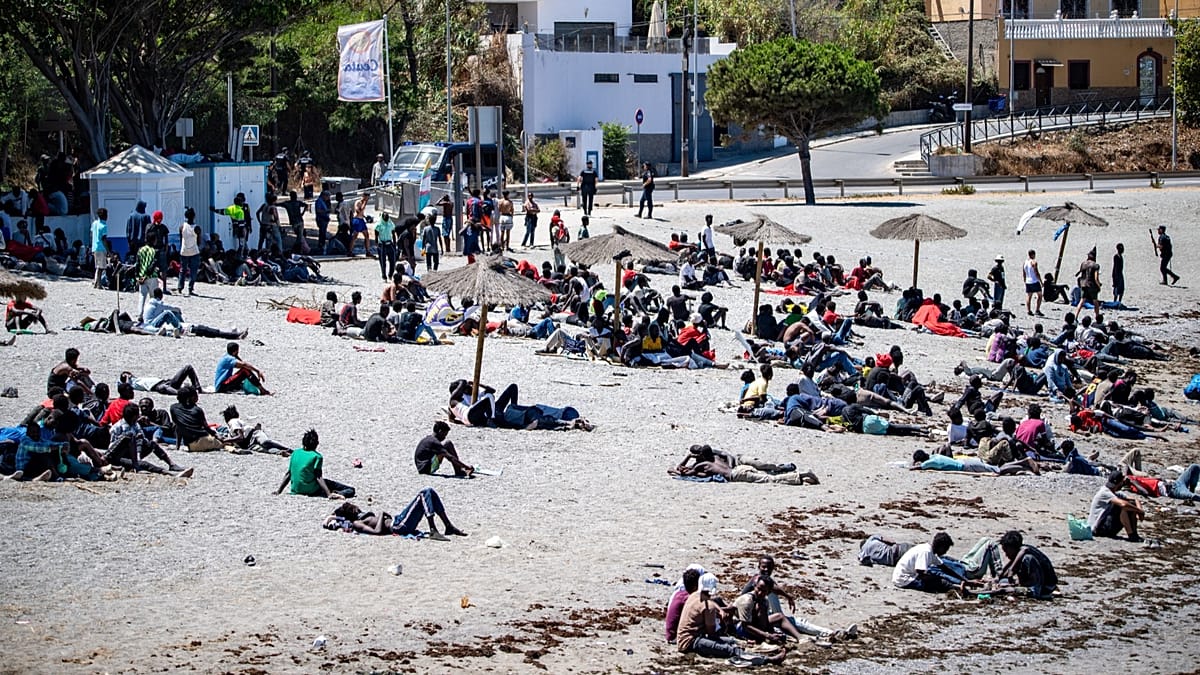
The death toll from the mass migrant crossing into Spain's North African enclave of Ceuta has risen to at least 72, according to Spanish officials. The incident, which saw an estimated 60,000 people attempt to enter the territory—most by swimming from Moroccan beaches—has become one of the largest and deadliest episodes of its kind in recent memory.
Spanish authorities confirmed that the majority of those who crossed have since been returned to Morocco, but the scale of the surge has exposed the fragility of the EU's external border and reignited debates over migration policy across the continent. The tragedy comes as European leaders prepare to hold urgent talks on how to manage uncontrolled crossings and strengthen border enforcement.
A humanitarian crisis at Europe's doorstep
The events in Ceuta unfolded over several days, with thousands of people, including families and unaccompanied minors, converging on the border fence and coastal areas. Many risked the dangerous swim around breakwaters and through strong currents, while others attempted to scale the double fencing that separates the enclave from Moroccan territory. The sheer number of arrivals overwhelmed local reception facilities, leaving many sleeping in the open or in makeshift shelters.
Local officials in Ceuta have described the situation as a humanitarian emergency. The enclave, with a population of around 85,000, was not equipped to handle such a sudden influx. Medical teams worked around the clock to treat injuries, hypothermia, and exhaustion, while volunteers distributed food and water. The death toll, which includes drownings and fatalities from falls and crushing, has shocked the region.
Spain's government has faced criticism over its handling of the crisis, with some accusing it of failing to protect the border and others condemning the rapid returns of migrants to Morocco, which human rights groups say may violate international law. The protests in Ceuta have highlighted the deep divisions within Spain's own political landscape over how to balance border security with humanitarian obligations.
EU response and the push for tougher border controls
The crisis has prompted a renewed push for EU-wide measures. European Commission President Ursula von der Leyen has called for tougher EU border controls, arguing that the bloc must act collectively to prevent such tragedies. The Commission is expected to propose new mechanisms for rapid response at external borders, including enhanced surveillance and faster return procedures.
Spain's Prime Minister has demanded EU solidarity, stressing that no member state can manage such pressures alone. The issue is set to dominate the upcoming European Council meeting, where leaders will discuss a common approach to migration, including the controversial idea of migrant return hubs based on Italy's Albania model. That proposal, which would involve processing asylum claims in third countries, has drawn both support and sharp criticism from human rights organizations.
The Ceuta surge has also revived discussions about the Schengen area's internal border checks. Some member states have already reintroduced temporary controls, and the European Commission is weighing whether to make such measures more permanent. The potential for new border checks has raised concerns about the free movement of people within the EU, a cornerstone of the bloc's integration.
Local impact and the road ahead
In Ceuta, the immediate priority is to provide care for the thousands still present, including over 860 unaccompanied minors who remain in the territory. The Spanish government has pledged to relocate some of these children to the mainland, but the process has been slow, and local authorities are struggling to cope. The ongoing presence of migrants has strained public services and fueled tensions within the community.
Meanwhile, the broader geopolitical implications are significant. Morocco's role in the crisis has been questioned, with some analysts suggesting that the mass crossing was a deliberate pressure tactic by Rabat to assert its claims over the enclaves and to leverage negotiations with Spain and the EU. The Spanish government has sought to de-escalate, but the incident has damaged bilateral relations.
As the EU prepares for talks, the challenge is to find a balance between deterrence and compassion. The deaths in Ceuta are a stark reminder of the human cost of migration, and the decisions taken in the coming weeks will shape the bloc's approach for years to come. For now, the focus remains on preventing further loss of life and addressing the immediate needs of those stranded in the enclave.