The International Union for Conservation of Nature (IUCN) has reclassified the emperor penguin and the Antarctic fur seal as Endangered on its Red List of Threatened Species, underscoring the accelerating impact of climate change on Antarctica's fragile ecosystems. The southern elephant seal has also been moved from Least Concern to Vulnerable, following mass die-offs linked to Highly Pathogenic Avian Influenza (HPAI).
Dr Grethel Aguilar, IUCN Director General, said: “As countries prepare to gather at the Antarctic Treaty Consultative Meeting in May, these assessments provide essential data to inform decisions regarding this majestic continent and its awe-inspiring wildlife. Antarctica’s role as our planet's 'frozen guardian' is irreplaceable – offering untold benefits to humans, stabilising the climate and providing refuge to unique wildlife.”
Emperor penguins: drowning chicks and vanishing ice
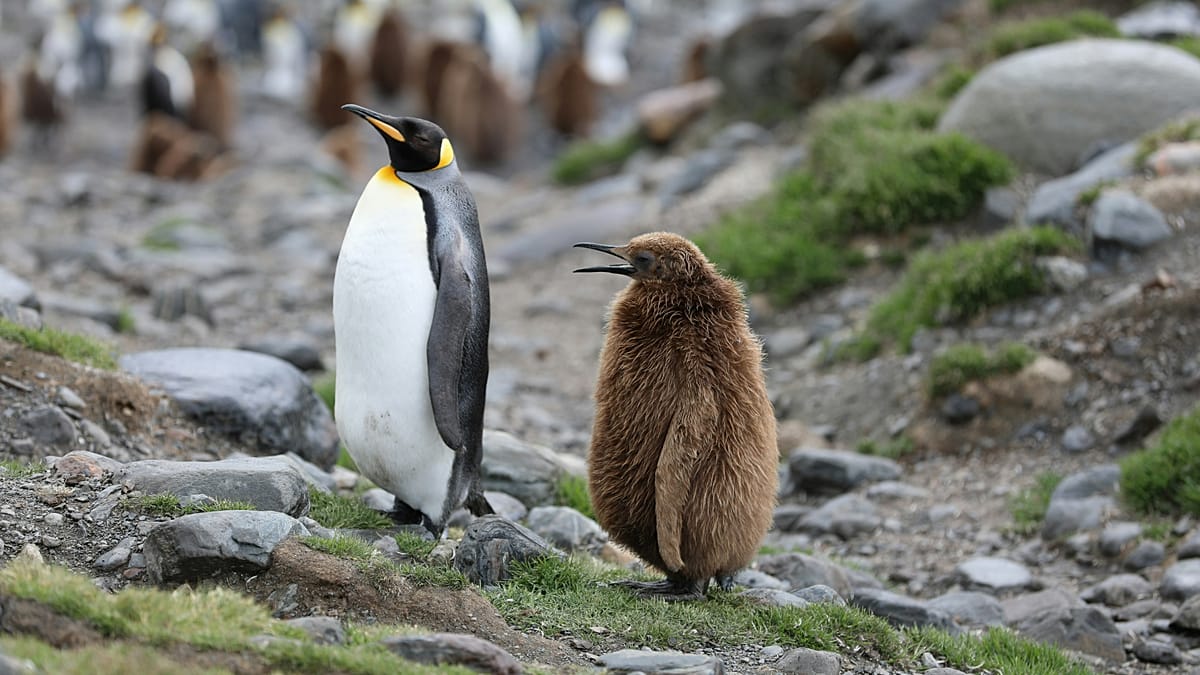
The emperor penguin has been upgraded from Near Threatened to Endangered, based on projections that its population will halve by the 2080s. Satellite imagery already shows a loss of roughly 10% of the adult population – more than 20,000 birds – between 2009 and 2018 alone.
The primary driver is the early breakup and loss of sea ice, which has reached record lows since 2016. Emperor penguins depend on fast ice – sea ice anchored to the coastline, ocean floor or grounded icebergs – as a breeding platform for their chicks and as a safe haven during their moulting season, when they are not waterproof. When the ice breaks up too early, entire colonies can collapse into the sea before the chicks are able to swim.
Martin Harper, CEO of BirdLife International, which coordinated the emperor penguin assessment, warned: “Penguins are already among the most threatened birds on Earth. The emperor penguin’s move to Endangered is a stark warning: climate change is accelerating the extinction crisis before our eyes. Governments must act now to urgently decarbonise our economies.”
Population modelling that accounts for a wide range of future climate scenarios indicates that without abrupt and dramatic reductions in greenhouse gas emissions, emperor penguin numbers will continue to plummet throughout this century. The situation echoes broader concerns about seabird vulnerability; earlier this year, Magellanic Penguins Reveal Global Spread of Replacement PFAS, highlighting how chemical pollution compounds the pressures on these species.
Antarctic fur seals: starving as krill retreats
The Antarctic fur seal has moved from Least Concern to Endangered, with its population declining by more than 50% – from an estimated 2,187,000 mature seals in 1999 to 944,000 in 2025. The IUCN attributes this ongoing decline to climate change, as rising ocean temperatures and shrinking sea ice force krill – the seals' primary food source – to migrate to greater depths in search of colder water.
Krill shortages at South Georgia have dramatically reduced the survival of pups in their first year, leading to an ageing breeding population. Additional threats include predation by killer whales and leopard seals, as well as competition with recovering baleen whale populations that target the same krill stocks.
Avian flu devastates southern elephant seals
The southern elephant seal has been reclassified from Least Concern to Vulnerable after HPAI outbreaks killed more than 90% of newborn pups in some colonies and seriously impacted adult females, which spend more time on beaches than males. The disease has affected four of the five major subpopulations. Scientists are increasingly concerned that global warming will exacerbate disease-related mortalities among marine mammals, particularly in polar regions where animals have had little previous exposure to pathogens.
These reclassifications come as European policymakers and conservationists grapple with similar challenges closer to home. The Top European Chefs Boycott Endangered Eel as EU Policy Lags Behind Science campaign illustrates the growing pressure on EU institutions to align conservation measures with scientific evidence. Meanwhile, the Antarctic Treaty Consultative Meeting in May will provide a crucial forum for nations, including European states such as France, Germany, the United Kingdom, Norway and Italy, to debate stronger protections for the continent's unique wildlife.