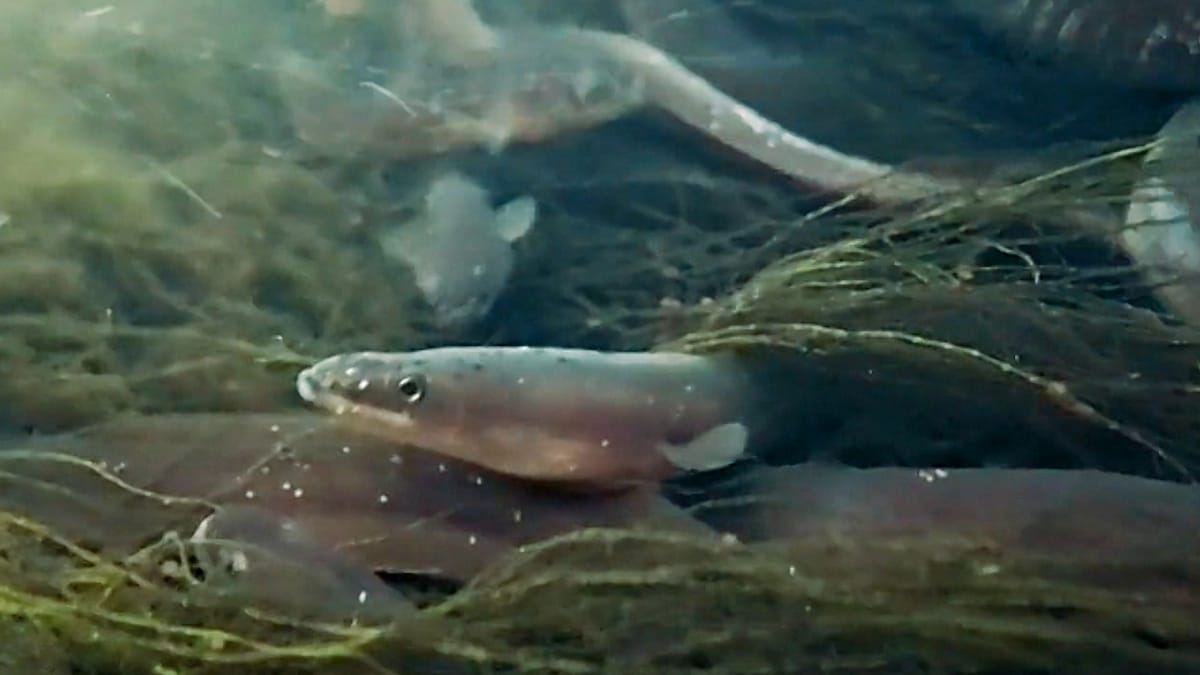
A powerful culinary movement is sweeping Europe's top kitchens, as celebrated chefs remove a traditional delicacy from their menus in a dramatic stand for conservation. The target is the European eel, a species scientists warn is teetering on the brink of extinction.
"Gastronomy cannot endorse the collapse of biodiversity. Would we put pandas on our menus? Well, the eel is more endangered than the panda," former three-Michelin-star French chef Olivier Roellinger told Euronews. His stark comparison underscores a growing ethical reckoning in fine dining.
A Culinary Campaign Gains Momentum
Roellinger has launched the campaign "Anguille, non merci" with the French NGO Ethic Ocean. It has garnered support from thousands of chefs, including culinary luminaries like Thierry Marx and Mauro Colagreco, as well as prestigious associations such as Relais & Châteaux. The movement is pan-European: in Spain, ten Michelin-starred chefs, including Andoni Luis Aduriz and Joan Roca, have recently taken a similar stand.
Their action responds to alarming data. The population of the European eel, once common in rivers from Sweden to Sicily, has plummeted by approximately 90% in recent decades. "From the moment politicians fail to take action, citizens must take responsibility," Roellinger asserted, framing the chefs' boycott as a necessary response to political inertia.
The Policy Lag Behind Science
Despite repeated scientific recommendations for a complete moratorium, eel fishing and trade remain legal within the European Union. A fundamental problem is that eels cannot be commercially bred in captivity; all farmed eels begin their life as wild-caught juveniles, known as glass eels.
The EU has asked member states to implement recovery plans, aiming to let 40% of adult eels reach the sea to spawn. However, national approaches vary sharply. France, the continent's largest glass eel fisher, plans to maintain its quotas until 2027. Spain's government recently proposed a total ban but faces fierce opposition from regions like Asturias, where arguments centre on fighting poaching and improving river habitats instead.
This policy fragmentation occurs alongside broader scrutiny of EU agricultural and environmental governance, highlighting systemic challenges in aligning member state interests with conservation goals.
A Lucrative Black Market
The pressure on eels is compounded by a vast illegal trade. Prized as a delicacy—served as fillets in the Netherlands and Germany or as glass eels in Spain and France—the European eel commands high prices. In 2009, the EU banned all exports of the species to reduce fishing pressure. Yet, Europol estimates that smugglers illegally ship tonnes of glass eels to East Asia each year to supply aquaculture farms.
Furthermore, DNA testing in European shops and restaurants has revealed that banned European eel is still being sold, often mixed with other endangered species like the American or Japanese eel. The scale of this black market, valued in the billions of euros, undermines legal conservation efforts and international agreements.
An International Conservation Struggle
Overfishing is just one threat facing eels; they are also hit by pollution, climate change, habitat loss, and man-made barriers like dams. The European eel is currently the only eel species listed under CITES (the Convention on International Trade in Endangered Species of Wild Fauna and Flora), which mandates annual reporting.
At the CITES COP20 meeting in Samarkand last November, the European Union and Panama proposed listing all 19 eel species under the convention, arguing that declining numbers of one species simply shifts trade pressure to another. The proposal was not adopted, but a resolution was approved to guide long-term international cooperation on traceability, enforcement, and filling scientific knowledge gaps.
"We will consolidate this information and submit it to our scientific committees, which will decide whether there's a need for further recommendations," Thea Carroll, Chief of the Science Unit at the CITES Secretariat, told Euronews. This incremental step highlights the slow pace of global wildlife governance, even as other international crises demand swift EU response.
EU Commissioner for Environment, Jessika Roswall, reaffirmed the bloc's commitment: "The global decline of eel species is scientifically well-documented. We remain convinced that urgent, coordinated international action is needed... We will continue working through multilateral channels to strengthen conservation and combat illegal trade."
For now, Europe's leading chefs are taking matters into their own hands, using their influence to protect a species that EU policy has so far failed to secure. Their campaign poses a poignant question about the limits of gastronomic tradition in an age of ecological crisis.