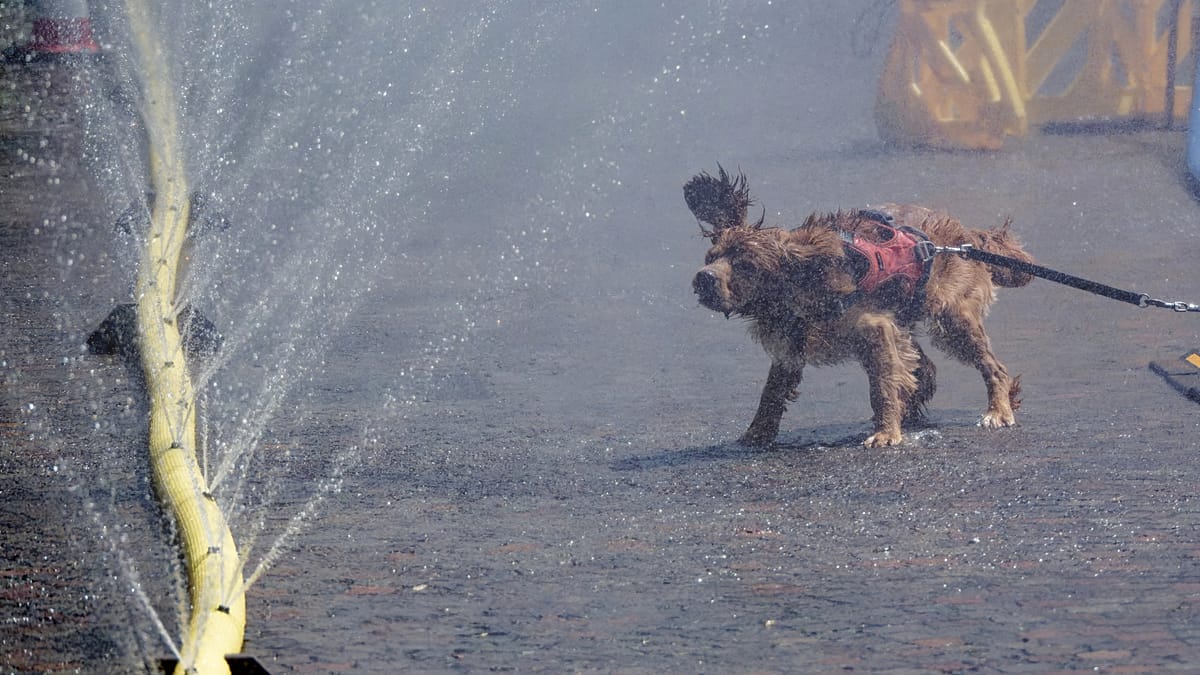
As a late-summer heatwave grips western Germany, residents of Cologne have been seeking relief in public sprinklers set up across the city. With temperatures approaching 35C, the cooling mist has become a welcome escape for locals and visitors alike, offering a brief respite from the unrelenting sun.
The scene in the cathedral city underscores a broader pattern of extreme weather affecting Europe this year. While Cologne's heat is notable, it is part of a wider trend that has seen Spain's Gran Canaria under a red alert and wildfires raging in southern Europe. The continent is grappling with the consequences of a summer that has repeatedly tested infrastructure and daily life.
Rhine levels reflect dry conditions
Beyond the immediate discomfort, the heatwave has exposed deeper concerns. The Rhine, one of Europe's most vital waterways, is running at unusually low levels for this time of year. In Cologne, the river's shrinking width is a visible reminder of the dry summer, raising questions about shipping, agriculture, and energy production that depend on the river's flow.
Low water levels can disrupt the transport of goods, including coal and chemicals, and force barges to reduce their loads. This has implications for industries along the river, from Basel to Rotterdam, and adds to the pressure on supply chains already strained by geopolitical tensions.
The situation echoes other European rivers. Earlier this summer, the Danube hit a record low, prompting emergency energy measures in several central European countries. The Rhine's condition now raises similar concerns, though authorities have not yet announced emergency steps.
Adapting to a hotter continent
For residents, the immediate response is practical. Public sprinklers, installed by the city, have become popular gathering points. Children run through the water while adults stand nearby, fanning themselves. The mist, though temporary, provides a sense of community in the face of shared discomfort.
Yet the heatwave is also prompting longer-term discussions. European cities are increasingly looking at ways to adapt to rising temperatures, from green roofs to shaded public spaces. Some schools are rethinking their summer breaks to avoid the hottest months, a sign that the continent is beginning to adjust its rhythms to a changing climate.
Germany, in particular, is investing in climate resilience, though progress is uneven. The country's smart meter rollout has been slow, partly due to privacy concerns, which complicates efforts to manage energy demand during heatwaves. As air conditioning use rises, the strain on the grid could become a critical issue.
For now, Cologne's residents are making do with what they have. The sprinklers, set up in parks and squares, are a simple but effective measure. They are also a reminder that Europe's response to extreme weather is often local and improvised, even as the broader challenges require coordinated action.
The heatwave is expected to ease in the coming days, but the underlying trends remain. As summers grow hotter and drier, scenes like those in Cologne may become more common across the continent. The question is whether Europe can adapt quickly enough to protect its people, its economy, and its environment.