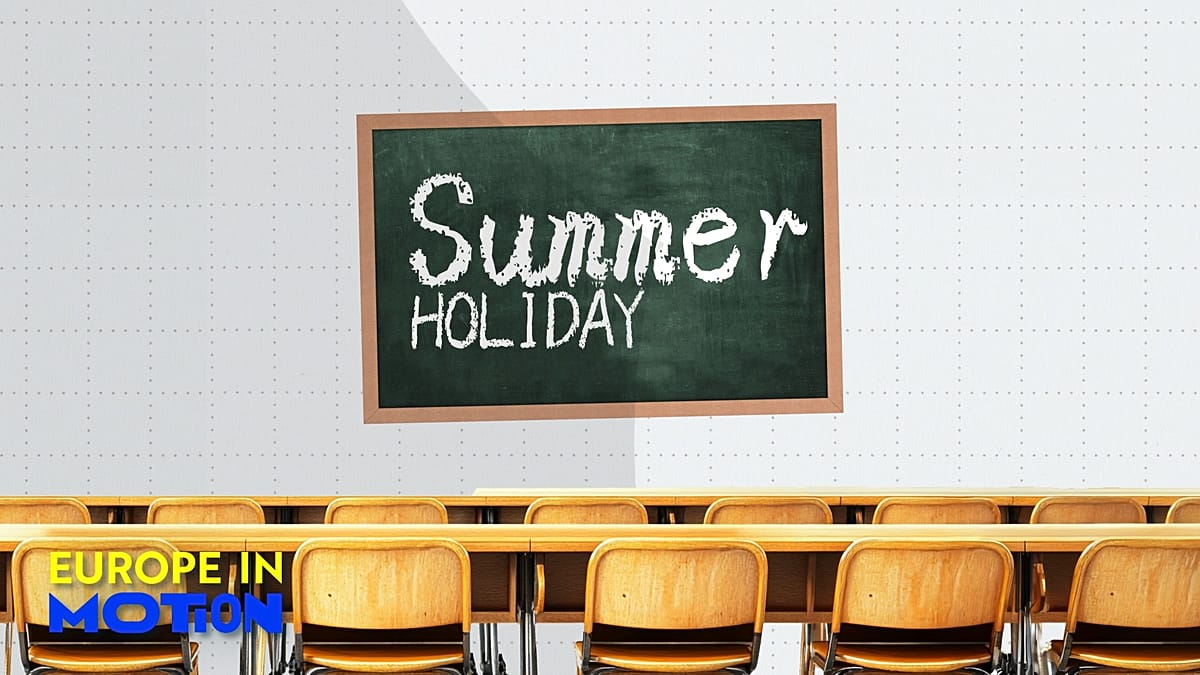
Summer breaks across Europe are as varied as the continent's climates. In Italy, pupils enjoy up to 14 weeks off, while their peers in Denmark, the Netherlands, and Germany get just six, according to the Eurydice network, which tracks education systems in the EU. But as heatwaves become more frequent and intense, these traditional calendars are being questioned.
In 2024, more than 900,000 students in Europe had their schooling disrupted by extreme heat, UNICEF reports. Southern and south-eastern Europe are hit hardest, with schools in Greece, Spain, and parts of the Balkans experiencing the most hot days. The European Climate and Health Observatory (ECHO) estimates that around 16,650 schools across the continent already see temperatures above 30°C during the academic year. Under a high-warming scenario, that number could more than double to 34,400 by 2050.
Adapting to a hotter classroom
Governments and school administrators are exploring ways to keep learning safe and effective. In France and Belgium, some schools have already dismissed students early or closed entirely during heat spikes. Belgian unions have pushed for mandatory thermometers in every classroom and automatic suspension of classes when legal heat limits are exceeded.
Spain has experimented with shifting schedules—starting at 8 a.m. instead of 8:30 and finishing at 3 p.m. rather than 4:30—to avoid the hottest part of the afternoon. Similar ideas are being floated in Italy and Portugal, where afternoon temperatures can make classrooms unbearable.
Some experts argue that extending summer holidays could be counterproductive, as it would widen learning gaps and place a greater burden on working parents. Instead, they suggest investing in better ventilation, shading, and green schoolyards. The health risks of prolonged heat are not limited to discomfort; they also affect concentration and cognitive performance.
According to ECHO, if current trends continue, between 68% and 82% of days exceeding 30°C during the school year will occur before the summer break, with the remainder after. That means the traditional long summer holiday may no longer align with the hottest months.
As the coolcation trend reshapes travel, schools are also looking at how to make buildings more resilient. In Germany, where holidays are staggered across states, some Länder are considering earlier start times and more flexible break scheduling. The Netherlands, with its short summer break, is focusing on retrofitting schools with better insulation and cooling systems.
The debate is not just about comfort—it is about equity. Poorer regions, often in southern Europe, face higher temperatures and have fewer resources to adapt. The European Commission has funded research through Eurydice and other bodies to share best practices across member states.
For now, no EU-wide policy exists on school calendars; education remains a national competence. But as heatwaves become the new normal, the pressure on governments to act is growing. The summer recess in Brussels may be short-lived if climate adaptation becomes a priority on the agenda.
Ultimately, the question is not whether schools will change, but how quickly they can adapt to a warming world. With millions of students affected, the answer will shape the future of education in Europe.