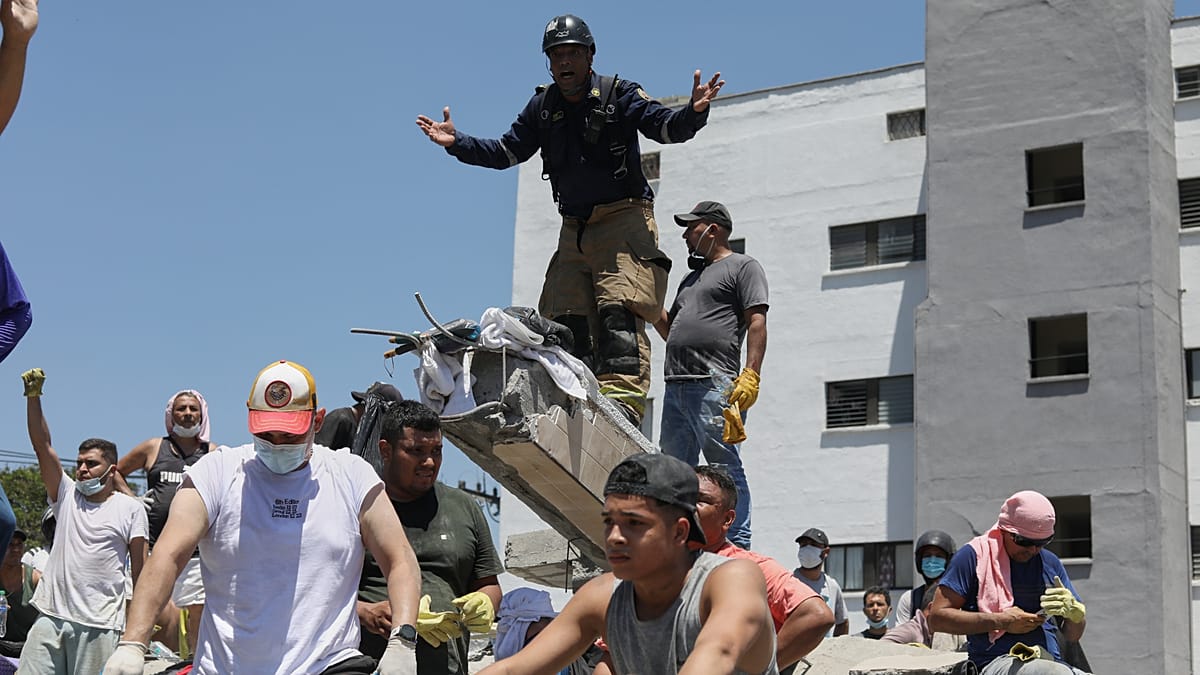
Rescue teams in the southwestern Colombian city of Cali are working through the night, digging through collapsed concrete and twisted metal in search of survivors after the country's most powerful earthquake in decades. The quake, which struck early on [day], has killed at least 132 people, injured hundreds more, and left an unknown number missing, according to national disaster agencies.
The tremor, with a magnitude of [magnitude], was felt as far away as Bogotá and Medellín, but the heaviest destruction is concentrated in Cali, the country's third-largest city, and the surrounding Valle del Cauca region. In the working-class districts of Aguablanca and Siloé, entire blocks of informal housing have collapsed, trapping families under rubble.
A city in shock
In Cali, a city of over two million people, the mood is one of disbelief. "We have never seen anything like this," said María Fernanda López, a resident of the San Nicolás neighborhood, as she watched firefighters pull a child from the debris of a two-story home. "The ground shook like it was alive. Now we are just praying for our neighbors."
Local authorities have imposed a curfew in Cali and the nearby city of Pereira to prevent looting and to keep the streets clear for emergency vehicles. The mayor of Cali, [Mayor's name], declared a state of emergency and urged residents to stay calm. "This is the worst disaster our city has faced in living memory," he said in a televised address. "We are doing everything we can, but we need national and international support."
The quake has also triggered landslides in the surrounding mountains, blocking roads and complicating access to rural communities. In the town of Palmira, a hospital was evacuated after structural damage was reported, and patients were moved to field tents set up in the parking lot.
Rescue efforts and challenges
Colombia's national disaster response agency has deployed over 1,500 rescuers, including firefighters, military personnel, and volunteers from the Red Cross. They are using sniffer dogs, thermal cameras, and heavy machinery to search for survivors. However, the scale of the destruction is overwhelming, and many rescuers are working without adequate rest.
"We are in a race against time," said Colonel Andrés Ramírez, who is coordinating the military's rescue operations. "Every hour that passes reduces the chances of finding people alive. We are focusing on areas where we have heard voices or detected signs of life."
The quake has also damaged critical infrastructure, including water and electricity networks. In Cali, power outages have affected large parts of the city, and water supplies are contaminated in some areas, raising concerns about disease outbreaks. Hospitals are overwhelmed, with many of the injured being treated in corridors and makeshift wards.
Colombia's president, [President's name], has declared three days of national mourning and visited the affected region. In a statement, he promised federal funds for reconstruction and announced that the military would remain in the area to maintain order. The government has also requested international assistance, including search-and-rescue teams and medical supplies.
The earthquake is a stark reminder of the seismic risks that Colombia faces, sitting as it does on the Pacific Ring of Fire. The country has experienced devastating quakes in the past, including the 1999 Armenia earthquake that killed over 1,000 people. But this is the strongest to hit the country in decades, and the damage in Cali is unprecedented in recent memory.
As the sun rises over the city, the scale of the disaster becomes clearer. Families are gathering outside hospitals, waiting for news of loved ones. In the streets, volunteers are distributing water and food to those who have lost their homes. The search for survivors continues, but the mood is increasingly somber.
For the people of Cali, the road to recovery will be long. The city's vibrant culture and economic activity have been dealt a heavy blow. But as the rescue efforts continue, there is a sense of solidarity. "We are Colombians, we are strong," said López. "We will rebuild, but first we must find our people."
This disaster comes at a time when Colombia is already grappling with political and security challenges. The new president has ordered deadly raids against rebel factions, and the United States has pledged $1 billion in security aid. The earthquake will now test the government's ability to respond to a humanitarian crisis while managing these other pressures.
International solidarity has been swift. Neighboring countries, including Ecuador and Peru, have offered assistance, and the European Union has expressed its condolences and pledged support. The EU's humanitarian aid department is in contact with Colombian authorities to assess needs. This is a reminder that natural disasters do not respect borders, and that global cooperation is essential in times of crisis.
As rescue teams continue their painstaking work, the world watches and hopes for more miracles. The coming days will be critical for those still trapped under the rubble. For now, the focus remains on saving lives.