The European Commission has set out its legislative priorities for 2027, framing the closing stretch of the current institutional cycle around four themes: competitiveness, security, the green transition and economic resilience. The announcement in Brussels has reopened a familiar argument among lawmakers about what the EU should actually deliver before voters return to the polls.
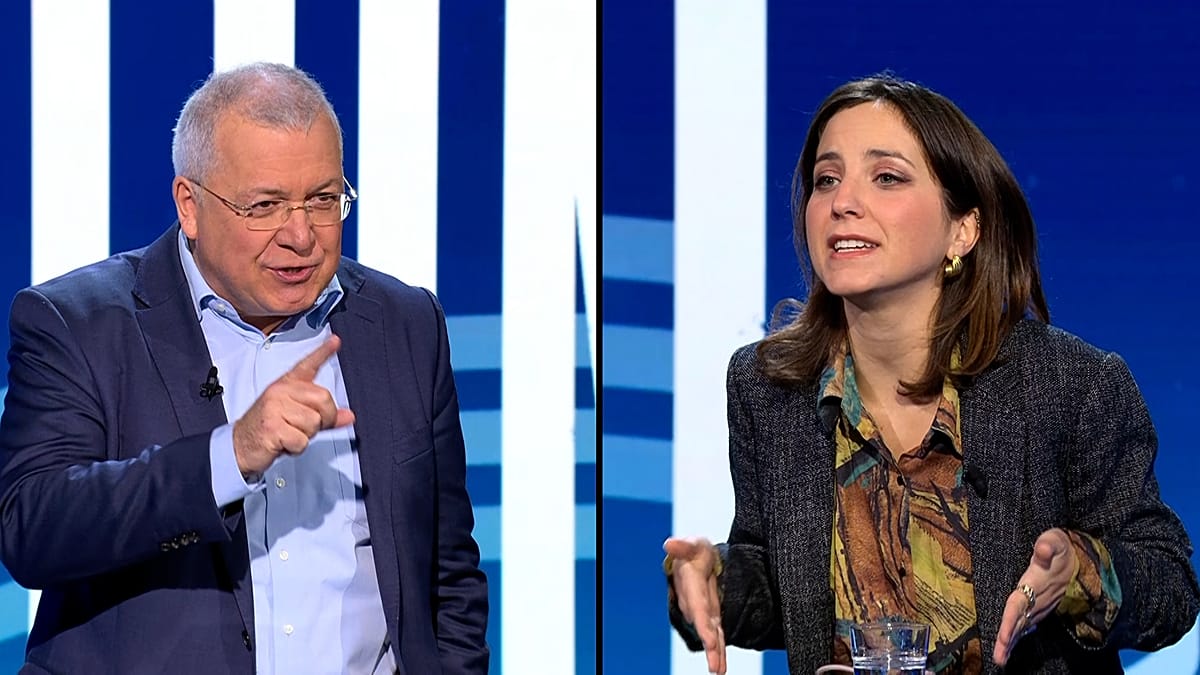
Those tensions were on full display in the European Parliament, where two MEPs went head-to-head in a debate programme. Benedetta Scuderi, an Italian member of the Greens, and Markus Ferber, a German Christian Democrat from the EPP, offered sharply contrasting visions of where Brussels should concentrate its limited political capital.
Two competing prescriptions for Europe's economy
Ferber's case rests on the view that European industry is being squeezed from several directions at once: energy prices that remain well above those in the United States, a regulatory burden that smaller firms in particular struggle to absorb, and intensifying competition from China and elsewhere. For him, the priority is to cut red tape, restrain the size of the EU budget and allow businesses in Germany, Italy and beyond to compete.
Scuderi rejects the premise that environmental ambition and economic strength are in conflict. She argues that the green transition is itself an industrial strategy, and that underfunding it would leave Europe dependent on imported technology and vulnerable to the next energy shock. A larger EU budget, more common investment and stronger social provisions are, in her telling, the conditions for resilience rather than a distraction from it.
The question is not whether Europe needs to compete, but what kind of economy it intends to compete with.
The exchange captures a dilemma that will define the remainder of the mandate. Should the EU spend less, simplify its rulebook and scale back its ambitions? Or should it pool more resources, accept deeper integration and pursue climate and social objectives with greater urgency? Neither camp has a decisive majority, and the arithmetic in the Parliament makes coalition-building slow.
A volatile backdrop
The debate does not take place in a vacuum. Russia's war in Ukraine has forced a rethink of European security and defence spending, while the prospect of reduced American commitment to the continent has added pressure on national budgets. Recent episodes such as the Kraków shooting have sharpened public attention to internal security questions in Poland and across the bloc.
At the same time, enlargement is back on the table, with Montenegro's accession path serving as a test case for how strictly Brussels will apply its own criteria. Each of these files competes for the same political attention and the same money.
There are also unresolved questions about the EU's own regulatory direction. A flagship plan to make it easier for startups to scale across the single market has run into difficulty, with the EU Inc startup plan stalled over disagreements about worker protections. The episode illustrates how difficult it is to simplify rules without reopening sensitive social questions.
What can actually be delivered
Commission officials insist the 2027 programme is realistic and focused. Critics on both sides of the chamber are less convinced. For Ferber and his allies, the test will be whether Brussels genuinely reduces the compliance costs that weigh on manufacturers in Bavaria, Lombardy and the Basque Country. For Scuderi and the Greens, the test is whether the EU holds to its climate targets and protects households from the costs of transition.
With European elections approaching, the debate is as much about political positioning as policy detail. The EPP wants to own the competitiveness agenda; the Greens want to prevent it from becoming a pretext for retreat. Both know that the next Commission will inherit whatever is left unfinished.
What is clear is that the EU cannot pursue every priority at full strength with the resources available. The choice between a leaner budget and a larger one, between deregulation and investment, will shape not only the final year of this mandate but the terms of the campaign that follows.