More than six decades after the first outbreaks of intercommunal violence on Cyprus, and half a century after Turkey's 1974 invasion, the island still bears the scars of a conflict that left hundreds of families without answers. According to the Committee on Missing Persons in Cyprus (CMP), 917 people remain unaccounted for — 745 Greek Cypriots and 172 Turkish Cypriots.
The CMP, established in 1981, is a rare example of cooperation across the island's ethnic divide. Greek Cypriot and Turkish Cypriot scientists work side by side in its laboratories and excavation sites, and so far they have managed to identify more than 1,000 of the missing. Their work is painstaking: every fragment of bone, every personal effect, is treated as a potential key to a name.
Sometimes the clues are remarkably intimate. Alexandra Mouski, deputy coordinator of the CMP laboratory, describes finding wedding rings still on the fingers of the dead. "Sometimes you can see, on the inside, the initials of the fiancé, as well as the date. These details are extremely important for the families," she says.
A race against time
But the passage of time is making the task ever harder. Witnesses to the events of the 1960s and 1970s are dying, memories are fading, and rapid construction across the island is altering the landscape, burying or destroying potential burial sites. The CMP's excavation teams are therefore working at an intense pace, aware that every delay could mean losing a vital testimony or a physical clue.
Leonidas Pantelides, the Greek Cypriot member of the CMP, puts it bluntly: "We are trying to maintain a particularly intensive pace, because we are fighting against time. At this moment, our greatest enemy is time. Witnesses are passing away, families are leaving us, and new buildings are going up everywhere. It is a race against time, but a race we cannot abandon."
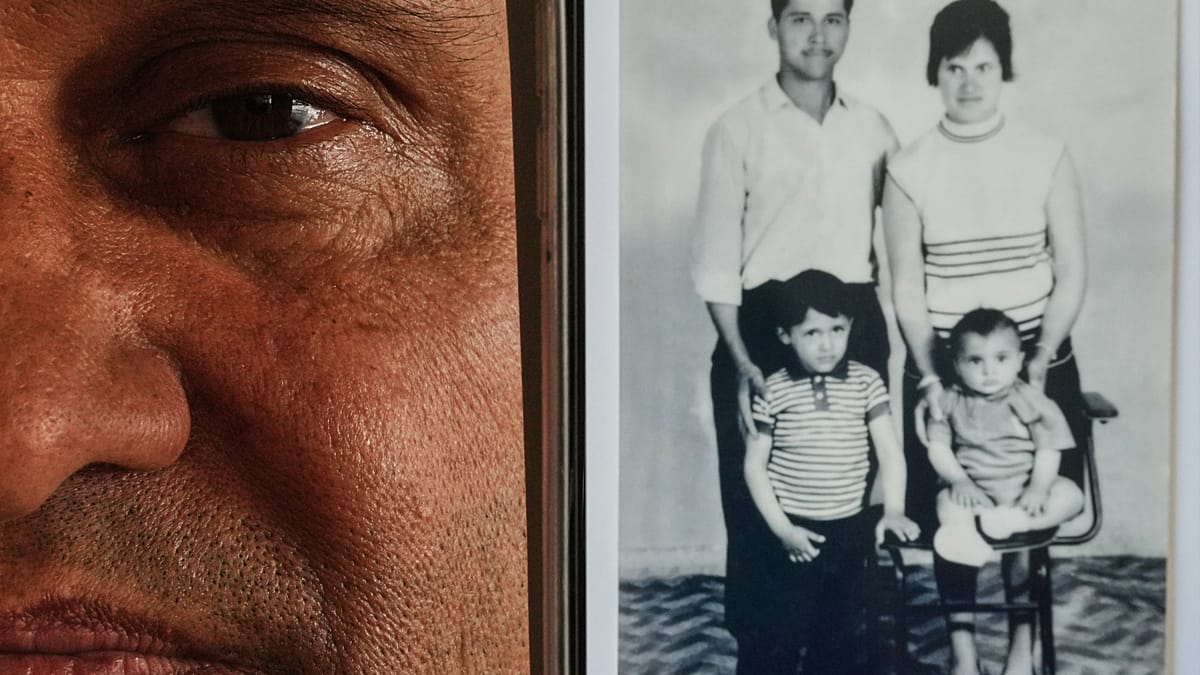
For many of those involved, the mission is deeply personal. Ali Tsoluoglu, who heads the CMP's excavation team, knows the anguish of waiting families because his own relative also disappeared. "My own family also had a missing person. That is why we try to help the families who are still waiting to find their loved ones, their fathers, their brothers and their sisters. We are trying to help both Greek Cypriots and Turkish Cypriots. I hope we will continue the excavations until the last missing person is found, keeping the families' hope alive," he says.
The conflict that created this humanitarian crisis began in the 1960s, when tensions between the island's Greek and Turkish communities erupted into violence. In 1974, a coup backed by the Greek military junta aimed to unite Cyprus with Greece, prompting Turkey to invade the northern part of the island. The island has been divided ever since, with a UN buffer zone separating the Greek Cypriot south and the Turkish Cypriot north.
The CMP's work is not just about forensic science; it is about healing a divided society. By providing answers to families on both sides, the committee hopes to contribute to a broader reconciliation. Yet the challenges are immense. The exact locations of many burial sites are unknown, and some are now under buildings, roads, or military installations.
Despite the obstacles, the teams remain committed. Their efforts have already brought closure to more than a thousand families, and they are determined to continue until the last missing person is found. As Pantelides says, it is a race they cannot abandon.
The broader context of unresolved conflict in the Eastern Mediterranean remains a concern for European stability. The island's division is a long-standing issue within the European Union, as Cyprus has been a member since 2004. The CMP's work, while humanitarian, also serves as a reminder of the costs of unresolved disputes. For more on how European states are grappling with other long-standing challenges, see eight EU states pushing back on carbon market delays.
As the years pass, the urgency grows. Each new excavation could be the last chance to identify a missing person. The families who still wait are aging, and their hope is kept alive by the dedication of the CMP's teams. The race against time continues, but for now, it is a race they are determined to win.