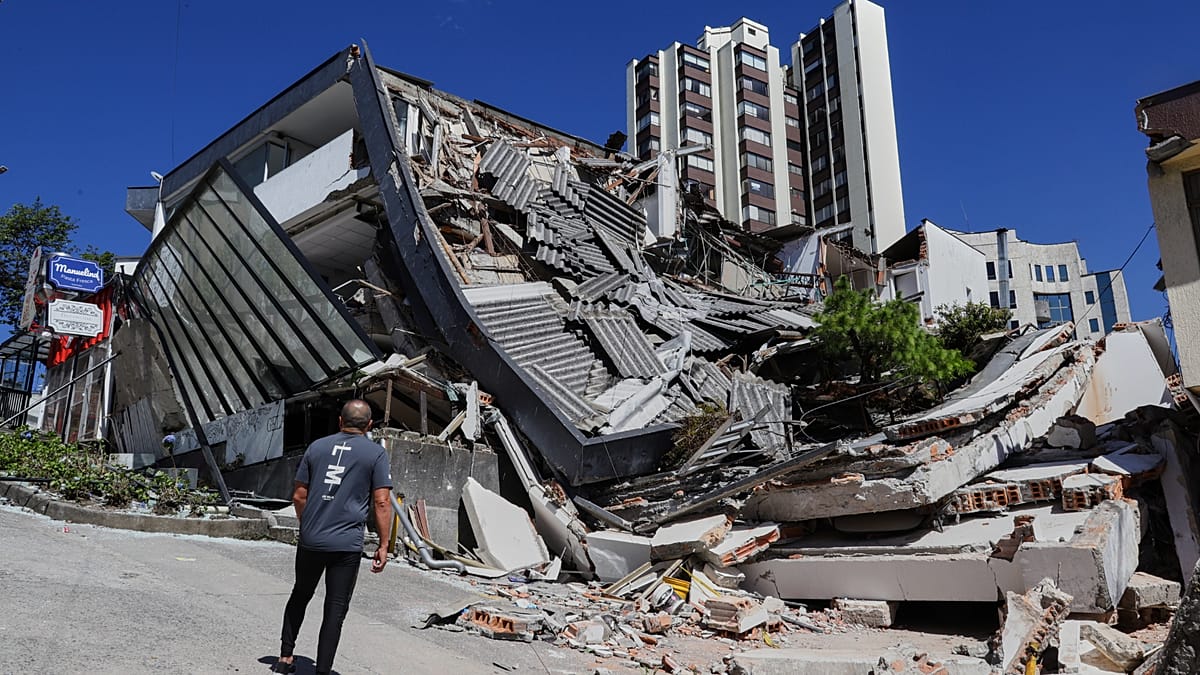
A powerful earthquake of magnitude 7.4 struck western Colombia on Monday, leaving a trail of destruction and claiming dozens of lives. The city of Manizales, capital of the Caldas department, was among the areas hardest hit, with its historic cathedral damaged and numerous homes reduced to rubble.
Rescue teams worked through the night, sifting through debris in the hope of finding survivors. Streets in Manizales were littered with concrete blocks, twisted metal, and personal belongings, as emergency services raced against time. The quake, which struck at a shallow depth, was felt across a wide region, including the major cities of Cali and Pereira.
Cathedral and heritage at risk
Manizales's iconic Catedral Basílica Metropolitana, one of the tallest churches in the Americas, suffered significant structural damage. Its distinctive neo-Gothic towers, visible from across the city, now show cracks and missing sections. Local authorities have cordoned off the area, fearing further collapse. The cathedral is a symbol of the city's heritage and a major tourist attraction, and its damage is a heavy blow to the community.
Beyond the cathedral, the quake damaged hundreds of homes, many of them in the city's steep hillside neighborhoods. Landslides, triggered by the tremors, have blocked roads and complicated rescue efforts. The full extent of the destruction is still being assessed, but early estimates suggest that thousands of people have been displaced.
Regional impact and response
The earthquake's effects were felt far beyond Manizales. In Cali, Colombia's third-largest city, rescue teams are also racing against time to find survivors under collapsed buildings. Authorities in Cali and Pereira have imposed curfews to maintain order and prevent looting, as the death toll has risen to at least 132.
Colombia's new right-wing president has ordered the military to assist in the relief efforts. In a televised address, he pledged federal resources to the affected regions and declared a state of emergency. The government has also faced criticism for its initial response, with some residents complaining of delays in aid delivery.
The quake has also drawn international attention, with offers of support coming from several countries, including the United States, which has pledged $1 billion in security aid to the new administration. However, the focus remains on the humanitarian crisis unfolding on the ground.
European solidarity and lessons
While the earthquake occurred in Latin America, it resonates in Europe, where many countries have deep ties with Colombia through trade, migration, and cultural exchange. European nations, including Spain, France, and Germany, have expressed condolences and offered technical assistance. The European Union's humanitarian aid arm is monitoring the situation and stands ready to provide support if requested.
For European readers, the disaster is a reminder of the fragility of urban infrastructure in seismic zones. Cities like Lisbon, Athens, and Istanbul face similar risks, and the Colombian tragedy underscores the importance of building codes and disaster preparedness. In recent years, European researchers have collaborated with Colombian institutions on earthquake engineering, and these partnerships may now prove vital in the reconstruction effort.
As rescue operations continue, the people of Manizales are showing remarkable resilience. Community members have formed volunteer brigades to help clear debris and provide food and water to those affected. The road to recovery will be long, but the spirit of solidarity, both locally and internationally, offers a glimmer of hope.
For now, the immediate priority is saving lives. The coming days will be critical as rescue teams reach the most isolated areas. The world watches, and Europe stands ready to assist in any way it can.