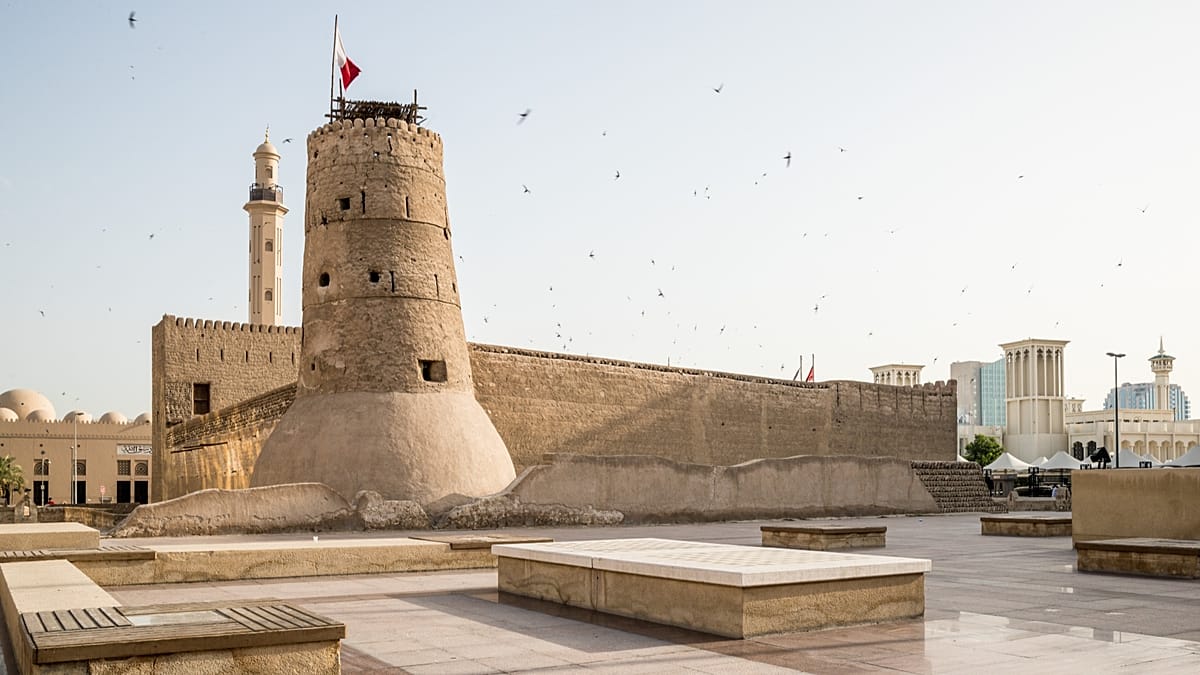
For many, Dubai conjures images of futuristic skyscrapers, sprawling malls, and artificial islands. Yet the city's past is rooted in a quieter, older quarter along the Creek, where the Al Fahidi district preserves the low-rise wind-tower houses and narrow lanes of an earlier era. At its heart stands Al Fahidi Fort, the oldest surviving structure in the emirate, which has been closed since 2021 for a comprehensive renovation. Now, according to Ayisha Khansaheb, Director of Al Fahidi Fort and Specialised Museums at the Dubai Culture & Arts Authority, the fort will welcome visitors again “in the coming weeks or months.”
A witness to Dubai's transformation
Built around 1787 as a defensive stronghold, the fort has served many roles over its 230-year history: a ruler's residence, a seat of governance, a prison, and, since 1971, the city's first museum—the same year the United Arab Emirates was founded. Khansaheb describes the fort as “a witness to Dubai's history,” and the revitalised museum aims to be a “gateway into the story of Dubai itself.” For a destination often associated with the future, this reopening marks a deliberate effort to foreground heritage as a key part of the visitor experience.
Speaking at the Arabian Travel Market, Khansaheb emphasised the importance of cultural heritage not only for tourists but also for residents and local schools. “I think cultural heritage is important as an ecosystem for cultural tourism, but also for residents, for locals, and for schools to educate the students on the cultural history and heritage of the city itself,” she said. “I think we need to have offerings for everyone and I think this is something that you've been seeing more of in Dubai and in the wider region as well. It addresses a growing need to emphasise that there is a soul, there is a culture, and there is history here.”
The new museum experience combines the fort's historic fabric with contemporary galleries housed in a new underground extension. Visitors begin below ground, where exhibitions explore themes such as defence, leadership, and craftsmanship. Highlights include “The Vault,” a light-and-sound installation tracing the evolution of Dubai's military capabilities, and “A Landmark Across the Ages,” which charts the fort's changing roles. A substantial collection of Islamic arms and armour is also on display, alongside interactive learning zones designed for younger visitors.
But perhaps the most powerful exhibit is the fort itself. Visitors can walk through its thick walls, climb its watchtowers, and cross its central courtyard. “You experience history through architecture,” Khansaheb noted. The restoration has carefully preserved the original coral-and-gypsum construction, a reminder of the building techniques that predate the city's modern skyline.
The reopening comes at a time when cultural tourism is gaining momentum across the Gulf. In Dubai, the Al Fahidi Historical Neighbourhood has become a focal point for heritage-minded travellers, and the fort's revival is expected to draw both international visitors and residents eager to connect with the emirate's past. The project also aligns with broader regional trends, as seen in Lisbon's D. Maria II theatre reopening after a decades-long restoration, underscoring a shared European and Middle Eastern commitment to preserving cultural landmarks.
For European travellers, the fort offers a counterpoint to the glossy image of Dubai, revealing a layer of history that is often overshadowed. As the city continues to evolve, the museum serves as a reminder that its identity is not solely defined by glass and steel. With the travel industry's growing focus on authentic experiences, Al Fahidi Fort is poised to become a must-visit for those seeking a deeper understanding of the emirate.
The exact reopening date has not been confirmed, but Khansaheb's comments suggest it is imminent. Once open, the fort will join a network of cultural institutions in the UAE, including the Louvre Abu Dhabi and the upcoming Zayed National Museum, as the country invests in heritage tourism. For now, the fort stands as a quiet sentinel, ready to tell the story of a city that has transformed itself while preserving its roots.