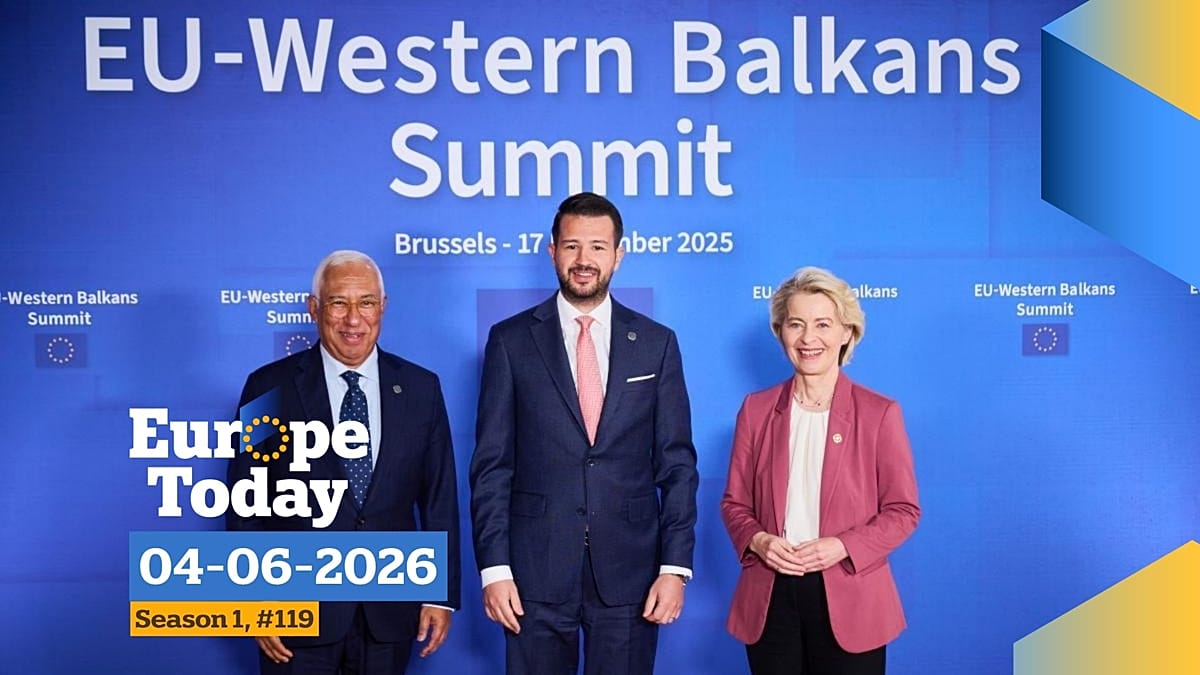
Leaders from the European Union and the Western Balkans convened in Tivat, Montenegro, on Tuesday for a high-level summit that could reshape the continent's political geography. The gathering, hosted by Montenegro—itself a leading candidate for membership—comes at a moment when EU enlargement has regained urgency after years of stagnation.
Montenegro's Path to 2028
Montenegro, a small Adriatic nation of roughly 620,000 people, has emerged as the frontrunner among Western Balkan aspirants. Officials in Podgorica have signaled that the country could complete accession negotiations and join the bloc as early as 2028. The summit in Tivat is seen as a critical opportunity to lock in political commitments from both sides.
“Montenegro has made significant progress in aligning with EU standards, particularly in rule of law and anti-corruption reforms,” said a European diplomat familiar with the negotiations. “But the final stretch requires sustained political will from all parties.”
The summit follows a tour of the region by European Council President António Costa, who visited Belgrade, Pristina, and other capitals earlier this year to revive enlargement hopes. As Costa's Western Balkans tour revives EU enlargement hopes amid Ukraine debate, the Tivat meeting aims to translate that momentum into concrete steps.
Broader Context: Ukraine and the Geopolitical Shift
The renewed focus on the Western Balkans is inseparable from the war in Ukraine. Russia's full-scale invasion in 2022 prompted the EU to fast-track candidate status for Kyiv and Moldova, breaking a decade-long freeze on enlargement. That decision has reopened the question of how—and how quickly—the bloc can absorb new members from the Balkans.
“The EU cannot afford to leave a vacuum in the Western Balkans,” said a senior EU official in Brussels. “If we do not offer a credible path, other actors—Russia, China, Turkey—will fill the gap.”
The summit also comes as EU leaders signal willingness to join Ukraine peace talks, but only after a ceasefire, as reported in EU leaders signal willingness to join Ukraine peace talks, but only after ceasefire. This cautious approach reflects the bloc's desire to maintain unity while navigating a volatile security landscape.
Challenges Ahead: Rule of Law and Regional Rivalries
Despite optimism, significant hurdles remain. The European Commission has repeatedly stressed that enlargement is a merit-based process, with no shortcuts on fundamental reforms. In Montenegro, progress on judicial independence and media freedom has been praised, but critics warn that political polarization could derail momentum.
Elsewhere in the region, bilateral disputes continue to complicate the picture. Serbia and Kosovo have yet to normalize relations, while Bosnia and Herzegovina remains deeply fragmented along ethnic lines. North Macedonia and Albania, both candidates since 2020, have seen their accession talks slowed by Bulgarian vetoes over linguistic and historical issues.
The EU's own internal dynamics also matter. France and the Netherlands have historically been skeptical of rapid enlargement, while newer member states in Central and Eastern Europe advocate for a faster process. The summit in Tivat is an opportunity to bridge these differences, though no breakthrough is expected on the most contentious issues.
Economic and Social Dimensions
Beyond geopolitics, the summit will address practical aspects of integration. The Western Balkans remain among Europe's poorest regions, with average incomes a fraction of the EU average. EU funding under the Instrument for Pre-Accession Assistance (IPA) has helped modernize infrastructure, but the gap in living standards persists.
As Europe's holiday rental price divide: Balkans under €40, Monaco and Iceland over €200 illustrates, the economic disparities within the continent are stark. For many in the region, EU membership is seen as a pathway to higher wages, better public services, and the freedom to work and travel across the bloc.
Cultural and educational exchanges are also on the agenda. The EU's Erasmus+ program has expanded to include Western Balkan universities, fostering people-to-people ties that could ease the political transition.
What to Watch
The summit is expected to produce a joint declaration reaffirming the EU's commitment to enlargement and outlining next steps for each candidate country. Key announcements may include a new financial package for the region and a timeline for opening additional negotiation chapters with Montenegro.
For now, the mood in Tivat is cautiously optimistic. “We are not there yet, but the door is open,” said Montenegro's Prime Minister Milojko Spajić. “Our task is to walk through it.”
The outcome of this summit will be closely watched in Brussels, Washington, and Moscow—a reminder that Europe's future is being shaped not only in its capitals but also on its periphery.