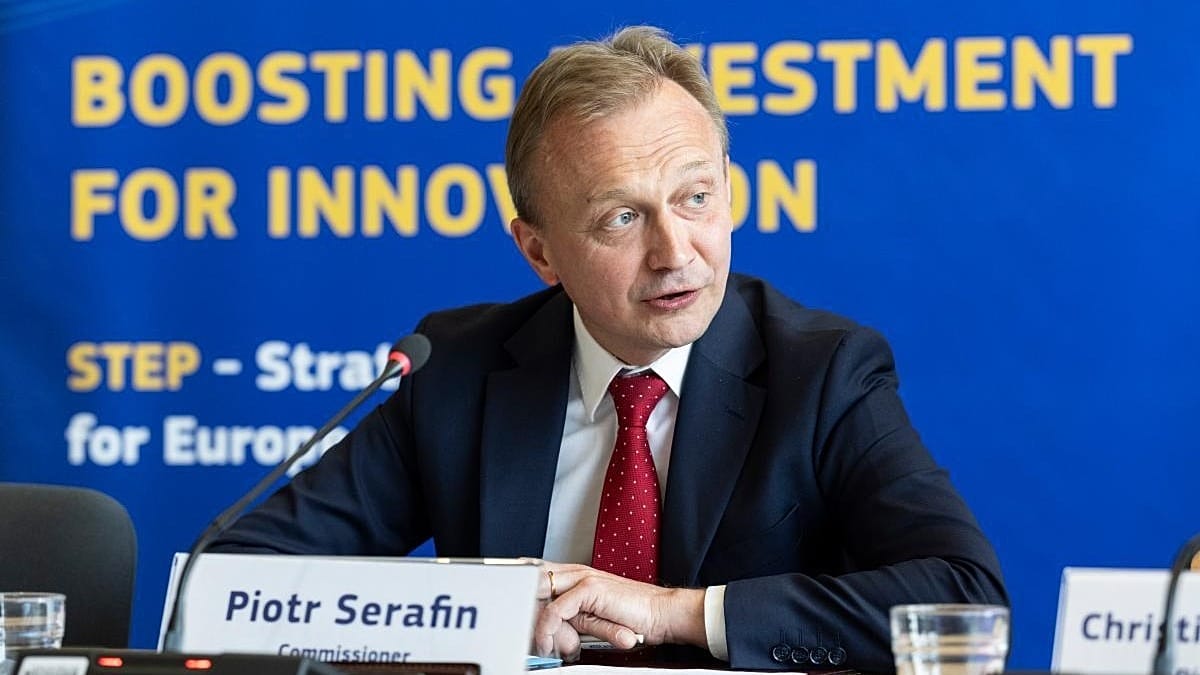
European Commissioner for Budget Piotr Serafin delivered a pointed critique on Thursday against the so-called “frugal” member states, warning that further cuts to the EU’s long-term budget could ultimately cost taxpayers more. Speaking at the annual budget conference in Brussels, Serafin challenged the notion that reducing spending automatically translates into savings for citizens.
The European Commission’s proposed €2 trillion budget for 2028–2034, tabled in July 2025, is now under negotiation among the twenty-seven member states. A coalition of six countries—Germany, the Netherlands, Denmark, Sweden, Finland, and Austria—has taken a firm stance in favour of reducing the proposed expenditure and resisting the introduction of new own resources. These states, which have attempted to rebrand themselves as “modernisers,” face opposition from a group of sixteen southern and eastern European nations calling themselves the “friends of cohesion,” who demand increased funding for agriculture and regional development.
Serafin’s Warning: Frugal Does Not Mean Modern
“We need to be mindful of the link between having a frugal budget and having a modern budget,” Serafin said. “The truth is that a more frugal budget may not necessarily be more modern.” He argued that cutting spending could undermine key modernisation initiatives, particularly in areas like defence and security. “A frugal EU budget may not necessarily be cheaper for EU taxpayers,” he added, noting that strategic investments excluded from the EU budget would simply shift to national budgets, leading to duplication, inefficiencies, and lost economies of scale.
The commissioner’s remarks come as member states reached a draft compromise text in mid-June, which proposed a reduction of €32.8 billion from the Commission’s original plan. According to sources familiar with the negotiations, this text is seen as a preliminary step, with final figures unlikely to emerge before December. The debate underscores a deeper rift over the EU’s fiscal priorities, with the frugals advocating restraint and the friends of cohesion pushing for robust support for traditional spending pillars.
Serafin’s intervention aligns with broader concerns about the EU’s strategic autonomy. As EU Defence Chief Warns Budget Cuts Undermine Security Ambitions, the commissioner stressed that relying on national budgets rather than collective EU funding could weaken the bloc’s ability to respond to shared challenges. “If we don’t invest together, we risk more occasions for duplication and fewer opportunities to scale up,” he said.
The budget battle has also drawn attention to the role of new own resources, such as a digital levy or carbon border adjustment mechanism, which the Commission has proposed to diversify revenue streams. The frugal states remain sceptical, while the friends of cohesion see them as essential to maintaining spending levels. EU Institutions Push for Ambitious Budget with New Own Resources as Member States Remain Divided highlights the ongoing impasse.
As negotiations continue, the outcome will shape the EU’s capacity to fund priorities from climate action to defence. The annual budget conference, which this year coincided with Ireland assuming the Council presidency, has become a focal point for these tensions. EU Budget Battle Takes Center Stage at Annual Conference as Ireland Assumes Council Presidency captures the high stakes involved.
Serafin’s message is clear: short-term frugality could come at a long-term cost. Whether the frugals will heed his warning remains to be seen, but the debate is far from settled.