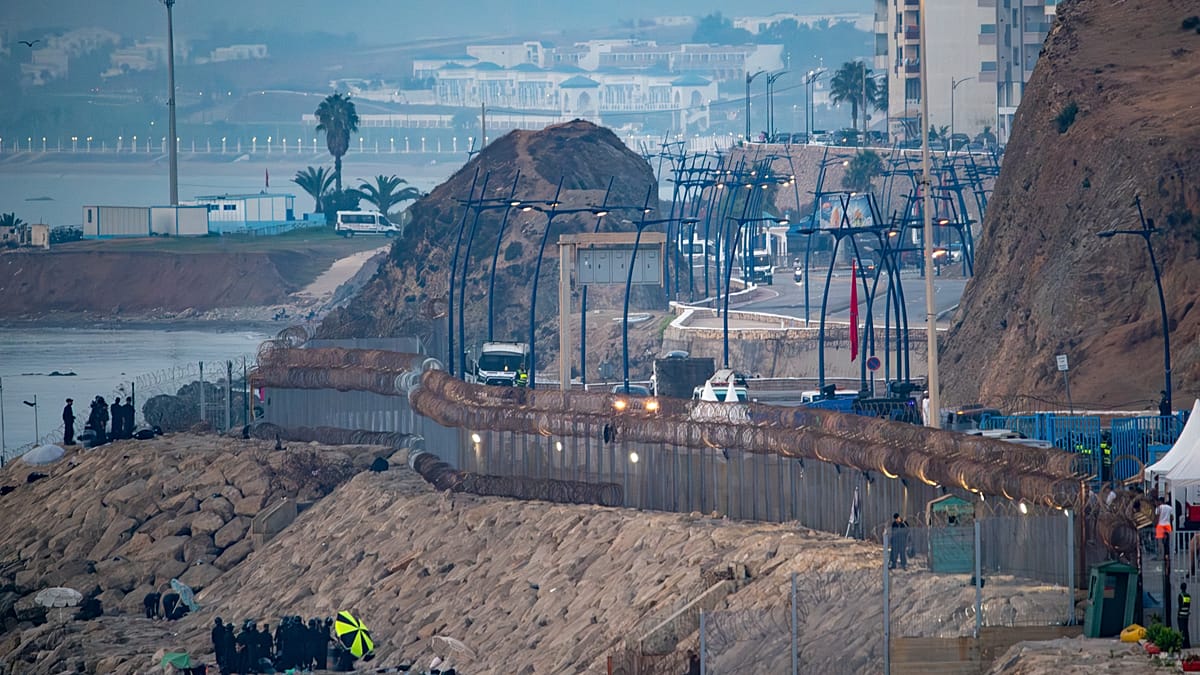
Brussels has moved to tighten its response to online disinformation after false claims helped trigger a deadly surge of migrants into the Spanish enclave of Ceuta. The European Commission announced on Monday that Meta and TikTok have agreed to join a voluntary crisis protocol, working alongside independent fact-checkers to identify and counter harmful content in real time.
The move follows an incident in which tens of thousands of people attempted to cross into Ceuta from Morocco, with around 100 fatalities reported. Spanish authorities blamed human trafficking networks for spreading a misleading interpretation of a recent Supreme Court ruling, which they claimed would grant asylum to anyone entering the enclave.
Henna Virkkunen, the Commission's Executive Vice-President for Tech Sovereignty, Security and Democracy, said on X that the EU executive, Europol and the platforms are now exchanging information daily. “TikTok and Meta have activated crisis protocols and have now put in place an ad-hoc escalation and cooperation mechanism with fact-checkers,” she wrote.
A voluntary but effective tool
The mechanism operates under the EU's code of conduct on disinformation, a voluntary framework that complements the bloc's Digital Services Act (DSA). Because participation is optional, the Commission can encourage platforms to moderate content even beyond the EU's legal jurisdiction, where the DSA does not apply.
Commission spokesperson Balazs Ujvari explained that the cooperation gives platforms better access to fact-checkers' insights. “Through this mechanism, the platforms get better information from the fact-checkers — like any harmful disinformation related to, for example, a potential new mass crossing of the border — and on that basis the platforms can take action,” he said.
The crisis protocol was activated after a meeting organised by the Commission on Friday, during which Meta and TikTok committed to working with fact-checkers. A TikTok spokesperson told Euronews that the company had set up a task force to monitor regional trends and mitigate emerging threats, including deceptive behaviour.
Fact-checking platform Maldita confirmed that social media posts falsely claimed asylum would be granted to anyone entering Ceuta or Melilla, encouraging illegal crossings. Spanish Prime Minister Pedro Sánchez said in a televised address that trafficking mafias had taken a “self-serving interpretation” of the Supreme Court ruling, which “spread like wildfire in recent hours.”
The Commission's President, Ursula von der Leyen, sent a letter to Sánchez outlining a five-point plan to prevent future incidents, including an early-warning system that monitors social media activity. The plan also includes enhanced cooperation with Moroccan authorities and increased surveillance of border areas.
Local leaders have been vocal about the ongoing pressure. Ceuta's regional leader has called for a detention centre to manage the influx, while the mayor has urged the EU to deport migrants who entered illegally. The situation has also sparked protests in the enclave as Madrid faces mounting pressure over unaccompanied minors.
Experts note that the voluntary mechanism is a pragmatic step, but it may not be enough. The EU's anti-smuggling law remains stalled, and the Commission has acknowledged that more robust measures are needed to address the root causes of migration and the criminal networks that exploit them.
“We continue to be vigilant in our work with our agencies and the platforms to stifle criminal networks selling false premises at the cost of lives,” Ujvari added. The Commission has also warned that AI-generated fakes and recycled footage are muddying the coverage of the border crisis, complicating efforts to verify information.
As the EU seeks to balance security with humanitarian concerns, the cooperation with tech giants marks a significant step in acknowledging the role of online platforms in shaping migration dynamics. Whether the voluntary approach will prove effective remains to be seen, but Brussels is clearly determined to avoid a repeat of the Ceuta tragedy.