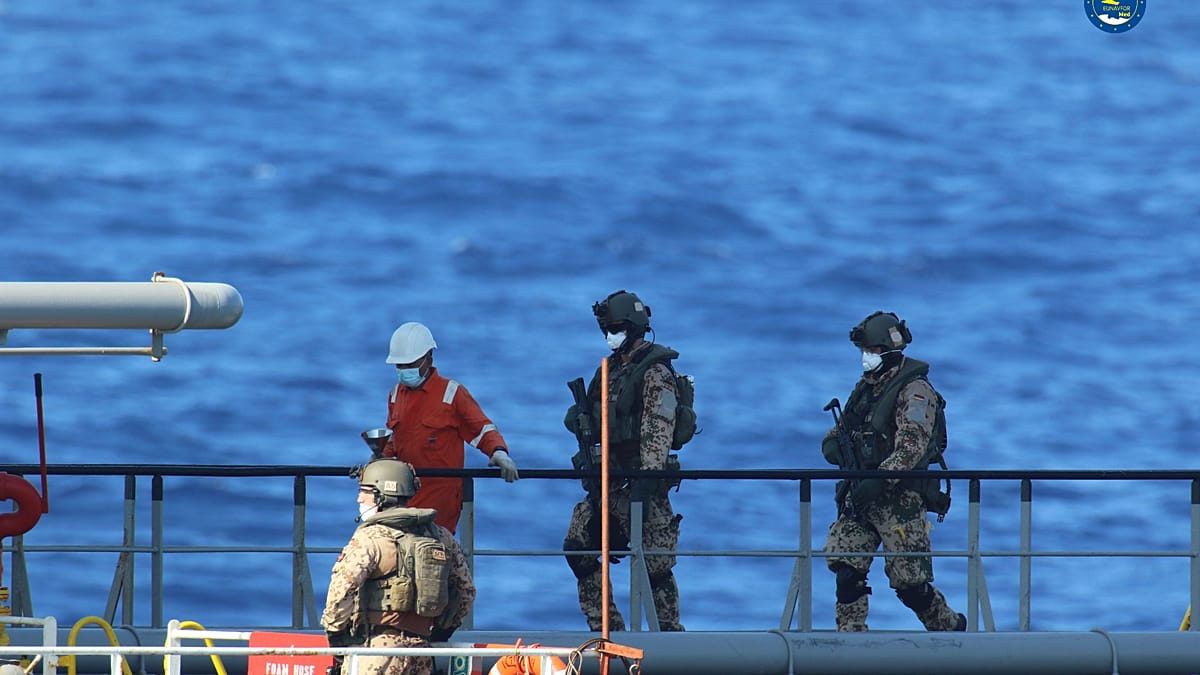
The European Union is preparing to transform its naval mission off the coast of Libya into a broader Mediterranean security operation, with a new focus on countering Russia's shadow fleet and protecting critical underwater infrastructure. The move reflects growing concern in Brussels about Moscow's efforts to circumvent sanctions and its potential to disrupt European energy and communication links.
Under a draft Council decision obtained by Euronews, the operation, known as EUNAVFOR MED IRINI, would be extended until 31 March 2029. Created in 2020 to enforce the United Nations arms embargo on Libya, the mission would take on a wider role, including monitoring illicit activity, safeguarding infrastructure, and combating migrant smuggling. Its current mandate expires in March 2027; the draft would add two more years and a budget of €16.88 million.
The revised mandate explicitly lists limiting Russia's shadow fleet as one of IRINI's core tasks. The operation should contribute to that effort while respecting the UN Convention on the Law of the Sea and other international rules, the text says. In June, the EU's foreign policy chief, Kaja Kallas, said the operation had already changed its rules of engagement and begun boarding ships suspected of belonging to the shadow fleet.
Shadow vessels—often aging tankers with opaque ownership—are used by Russia to transport oil and other goods while evading Western sanctions. They also pose a risk to undersea cables and pipelines, which have become a focal point of European security concerns. The new mandate places greater emphasis on maritime situational awareness, including the detection and monitoring of illicit activities and threats to EU security and economic interests.
IRINI would also support efforts to protect critical maritime infrastructure, such as fibre-optic cables and subsea pipelines, and would be able to test and pilot new technologies for maritime protection. This comes amid a series of incidents in the Baltic Sea and elsewhere that have raised alarms about sabotage and espionage. As Estonia has blamed Russian special services for arson at a defence firm, the EU is increasingly wary of hybrid threats.
Expanding the mission's scope
The operation's existing role includes combating migrant smuggling and human trafficking by helping to disrupt the business model of smuggling and trafficking networks. The revised text specifies that IRINI will support the "detection and monitoring of migrant smuggling and trafficking networks through intelligence gathering and aerial patrols on the high seas" in its approved area of operations.
Enforcing the UN arms embargo on Libya and measures against the country's illicit oil exports would remain part of the mandate. The operation would also continue providing capacity-building and training for Libyan maritime law-enforcement and search-and-rescue institutions.
Beyond Libya, the revised mandate puts greater emphasis on regional maritime-security cooperation. IRINI would act as a platform for cooperation and use naval diplomacy and exercises to explore opportunities with other interested countries, naming Egypt, Tunisia, and Lebanon. This reflects a broader EU effort to build partnerships across the Mediterranean, particularly with North African states that are key to migration management and regional stability.
The expansion comes as the EU faces multiple security challenges, from Russian strikes on Ukraine to the need to protect its own infrastructure. The bloc has also been urged to seize Russian assets to cover a looming funding gap. The new IRINI mandate is part of a wider strategy to assert European presence in the Mediterranean and counter Russian influence.
Critics, however, have questioned the mission's effectiveness, noting that the arms embargo on Libya has been repeatedly violated. The new tasks may stretch IRINI's resources, but EU officials argue that the operation's flexibility and experience make it well-suited to address evolving threats.
The draft decision is expected to be formally adopted by the Council in the coming weeks. Once approved, IRINI will begin implementing its expanded mandate, with a focus on both deterrence and cooperation.