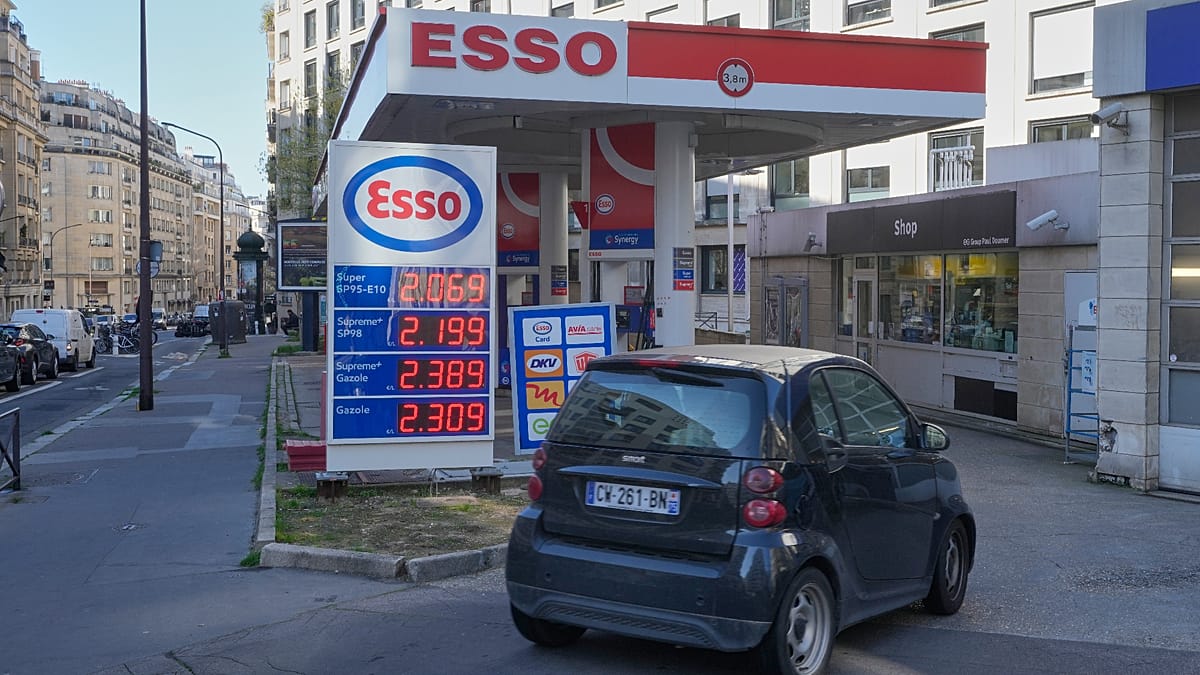
The blockage of the Strait of Hormuz has sent fuel prices soaring across Europe, with Eurostat data showing an average increase of 13.5% across the European Union between February and March 2026. The military operation that began on 28 February has choked off nearly all exports through the strait, through which 20% of the world's traded oil normally passes.
Diesel drivers have been hit particularly hard, facing an average price spike of 19.1% compared to 10.6% for petrol. The disparities between member states are striking, reflecting different energy mixes, tax regimes, and government interventions.
Which countries suffered the worst spikes?
Latvia and Sweden recorded the highest overall fuel price increases, both exceeding 20% from February to March. For diesel specifically, Czechia and Sweden saw the steepest rises at around 27.6%, followed by Estonia (+26.8%), Latvia (+25.4%), Belgium (+25.2%), and the Netherlands (+25.1%).
At the other end of the spectrum, Slovenia registered a modest diesel increase of just 2.9%, while Slovakia and Hungary both saw 7.0% rises. These three countries also fared best for petrol, with increases below 5%, joined by Italy.
Year-on-year comparisons paint a similar picture. Germany experienced the highest annual fuel price rise in the EU at 19.8%, closely followed by Romania at 19.6%. Only two EU countries saw prices fall compared to March 2025: Hungary (-2.7%) and Slovenia (-5.9%).
Hungary, one of the bloc's largest importers of Russian oil, has benefited from its continued reliance on alternative supply routes. Slovenia has implemented price caps on fuel except on highways, a policy that has shielded consumers from the worst of the global price surge.
How long can price caps hold?
Jože Damijan, professor of international economics at the University of Ljubljana, explained the fragility of Slovenia's approach. "Whether Slovenia will be able to keep prices capped depends on Platts oil spot prices (Mediterranean exchange), which are used in the gasoil pricing model. Under the regulatory framework, the model is updated once a week."
He added: "Of course, in the case of a prolonged Hormuz closure, higher Brent oil prices (a global pricing benchmark) would also push up Platts oil prices. In such a scenario, no model can sustain low prices."
The situation has already begun to reshape consumer behaviour. EU electric vehicle sales surged nearly 50% in March as drivers sought alternatives to expensive petrol and diesel.
Across the Channel, British consumers have been hit even harder. UK diesel prices rose by 26% year-on-year, while petrol increased by about 11%, according to the Department for Energy Security and RAC Fuel Watch, resulting in an overall fuel spike of nearly 19%.
The European Commission is closely monitoring the situation. EU Energy Chief warns of prolonged price hikes if the blockade continues, with no immediate diplomatic resolution in sight between Washington and Tehran.
As the standoff drags on, the diverging fortunes of European motorists underscore the continent's uneven vulnerability to external energy shocks. Countries with diversified supply sources, strategic reserves, or the fiscal space to cap prices have fared better, but the longer the crisis persists, the harder it will be for any government to insulate its citizens from global market forces.