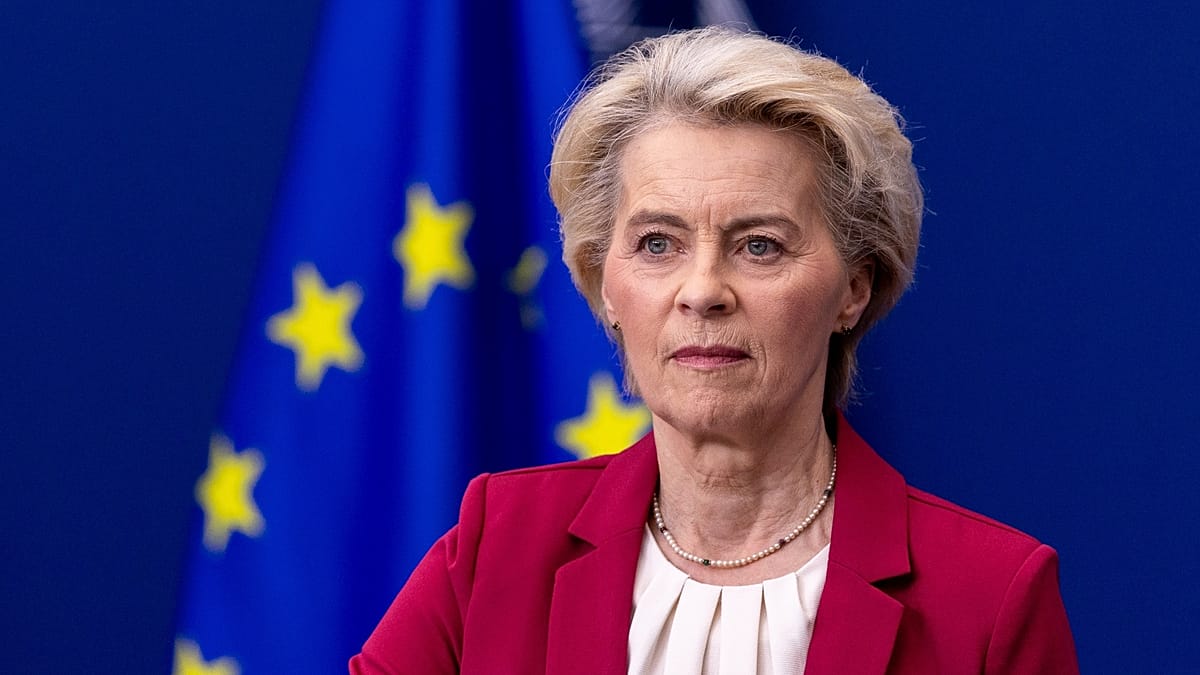
The European Union has put forward a new €45 billion loan to help Ukraine close a widening budget gap as Russia's war grinds on. Commission President Ursula von der Leyen presented the plan on Wednesday, saying it would give Kyiv "a strong hand at the negotiation table." Ukrainian President Volodymyr Zelenskyy responded with gratitude, arguing that "strong support for Ukraine is the best signal to Russia that this war must end."
The proposal still needs the backing of all 27 member states, and that is far from guaranteed. With energy bills high, public finances stretched, and voter fatigue over the war, several governments are wary of signing off on more money for Kyiv. The loan would ultimately be repaid by European taxpayers, though the EU plans to subsidise the interest.
Why the urgency now?
In December, EU leaders agreed to a €90 billion loan covering Ukraine's needs for 2026 and 2027, based on the assumption that the war might end in 2026. Instead, Moscow has escalated its attacks, targeting Ukraine's energy grid and infrastructure to make the winter as harsh as possible. The relentless strikes have disrupted business activity, crippled the power system, and reduced Kyiv's ability to collect taxes. The blockade in the Black Sea, vital for Ukrainian grain exports, has made things worse.
The result is a €70 billion hole in Ukraine's 2027 budget. At their October summit, leaders heard from Zelenskyy and agreed to address the shortfall. The new loan is the Commission's answer.
Why €45 billion?
The figure follows the same logic as the earlier loan. Last year, the EU committed to covering two-thirds of Ukraine's estimated €135 billion needs, producing the €90 billion loan. Now, the €45 billion represents two-thirds of the €70 billion gap. The remaining €25 billion is expected to come from allies like the UK, Norway, Canada, Japan and Australia.
The Commission has offered two ways for those partners to contribute: a €5 billion top-up through AAA-rated guarantees, or an extension of the existing G7 loan backed by windfall profits from immobilised Russian assets. There is little expectation that the United States will chip in, despite the Democratic Party's sweeping victory in the midterm elections. "It would not be wise to budget on hope alone," a senior Commission official quipped.
How the money would be raised
The €45 billion would be raised through joint EU debt, the same method used for the €90 billion loan. The Commission, which holds a triple-A rating, would issue bonds of various maturities and borrow gradually on behalf of all member states. Combined, the EU would raise €135 billion for Ukraine in 2026 and 2027.
But joint borrowing is not cheap, and costs have risen sharply. Global interest rates have climbed due to energy turmoil, geopolitical instability, high debt levels, and the race for AI dominance. Commission officials estimate the annual interest bill at roughly €6 billion: about €3.5 billion for the €90 billion loan (up from €3 billion when it was set up) and between €2 billion and €2.5 billion for the new one.
To avoid burdening Ukraine, member states would subsidise the interest. The current plan is to fund these payments from the €100 billion special envelope Brussels has set aside for Ukraine in the next seven-year budget. That would reduce the envelope by €42 billion, cutting into fungible support for Kyiv. An alternative would be to create a separate financial instrument to keep the €100 billion intact.
The question adds another layer to the already explosive link between Ukraine and the EU budget, both of which require unanimity.
Four countries want out
Slovakia, the Czech Republic, Hungary and Bulgaria have indicated they will not take part in the new scheme. Slovak Prime Minister Robert Fico declared: "I say a clear no to war, weapons and war loans, and a yes to peace." Slovakia, Czechia and Hungary were already exempt from the €90 billion loan and want to continue their opt-out. Bulgarian Prime Minister Rumen Radev, a vocal critic of arms deliveries to Ukraine, wants to join them.
Their stance has infuriated German Chancellor Friedrich Merz, who argues that "supporting Ukraine is a matter of our indivisible European security, and so must be the burden sharing for that support." Merz has threatened to veto the next EU budget, which contains billions in cohesion funds that these four countries rely on, unless they back the loan. Von der Leyen has sided with Merz, saying she is "very confident we will agree by 27."
The Commission has offered the four countries a partial opt-in: they could join the budget strand (€20 billion) while skipping the military strand (€25 billion). But that is unlikely to sway them, as their opposition is fundamentally political.
The loan is part of a broader European effort to keep Ukraine afloat. As the war enters a critical phase, the EU's ability to act as one will be tested. The outcome will shape not only Ukraine's finances but also the bloc's credibility as a geopolitical actor. For more on the diplomatic backdrop, see the Shenzhen summit and Brussels' unveiling of the loan.