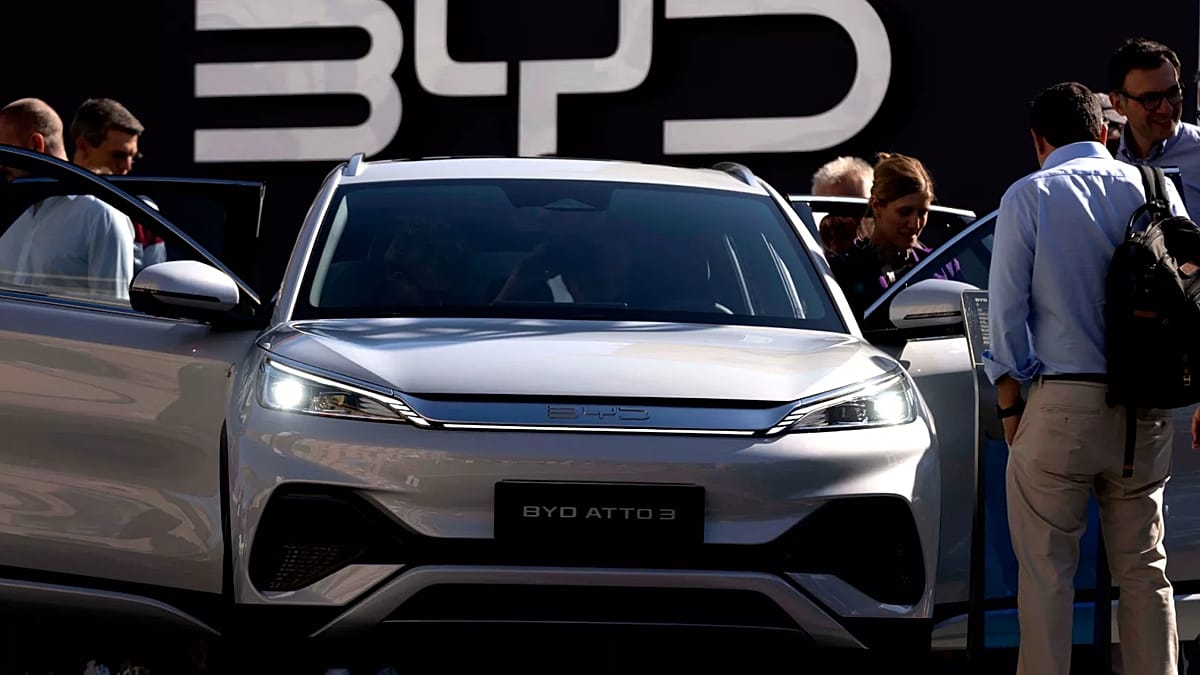
Bernd Lange, the German Social Democrat who chairs the European Parliament's trade committee, has dismissed the European Commission's October deadline for achieving “tangible results” in trade negotiations with China as wholly unrealistic if the goal is a legally binding accord. Speaking to Euronews on Friday, Lange argued that the timeline set by EU Trade Commissioner Maroš Šefčovič might yield a political framework but cannot produce a formal agreement with enforceable legal text by autumn.
The European Union is grappling with a trade deficit with China that exceeds €1 billion per day, a gap that threatens hundreds of thousands of jobs across the bloc. In response, EU leaders have tasked Commission President Ursula von der Leyen with pursuing dialogue while simultaneously reviewing the bloc's trade defence instruments. Yet tensions remain high: Beijing has repeatedly warned it will retaliate if Brussels adopts protectionist measures to shield its market from Chinese goods.
“Discussions are good, agreements are better,” Lange said. “The deadline should be met with some kind of framework where we agree on the main points. Then a dedicated agreement has to be negotiated with a legal text, which is not realistic at all by October.”
Unfair subsidies at the core
Lange emphasised that restoring a level playing field must be the top priority. He pointed to China's extensive use of state subsidies, which he estimated at roughly 4.5 percent of its GDP, much of it directed at exports. “This gives an unfair competition advantage,” he said. “Investigations are on their way, but we have to find a broader solution on that.”
European industries have increasingly filed complaints about dumping and illegal subsidies, prohibited under EU rules. In the steel sector alone, the Commission has adopted 80 measures against low-cost Chinese imports. The broader challenge, however, is that the EU has limited leverage due to its heavy dependence on Chinese rare earths, which are critical for green technology, automotive manufacturing, and defence. Last year, Europe experienced shortages after China restricted exports during its trade war with the United States.
Lange downplayed the threat, noting that the blockade was a reaction to Washington, not Brussels. “Now the licencing system for European companies is not optimal, but much better than some months ago,” he said. He added that the EU's vulnerability stems from European firms having moved processing operations to China to cut costs. “You can find a lot of these materials all over the world. But the real issue is in their processing and refining. That's where we need to find at least a second supplier quite quickly.”
The Commission's negotiations with Beijing began last Monday, with Šefčovič setting October as a deadline for “tangible” outcomes. The European Parliament's trade committee chair is not alone in his scepticism. The EPP chief has also warned that the EU faces a trade conflict with China unless a deal is reached by autumn, as reported in EU Faces Trade Conflict with China Unless Deal Reached by Autumn, EPP Chief Warns. Meanwhile, the Commission has prepared contingency plans for retaliation if China fails to meet the deadline, as detailed in EU Prepares Retaliation if China Fails to Meet October Trade Deadline, von der Leyen Warns.
The EU auto sector remains split over local content rules designed to counter Chinese competition, as explored in EU Auto Sector Split Over Local Content Rules to Counter China. These divisions underscore the complexity of forging a unified European response to Beijing's industrial policies.