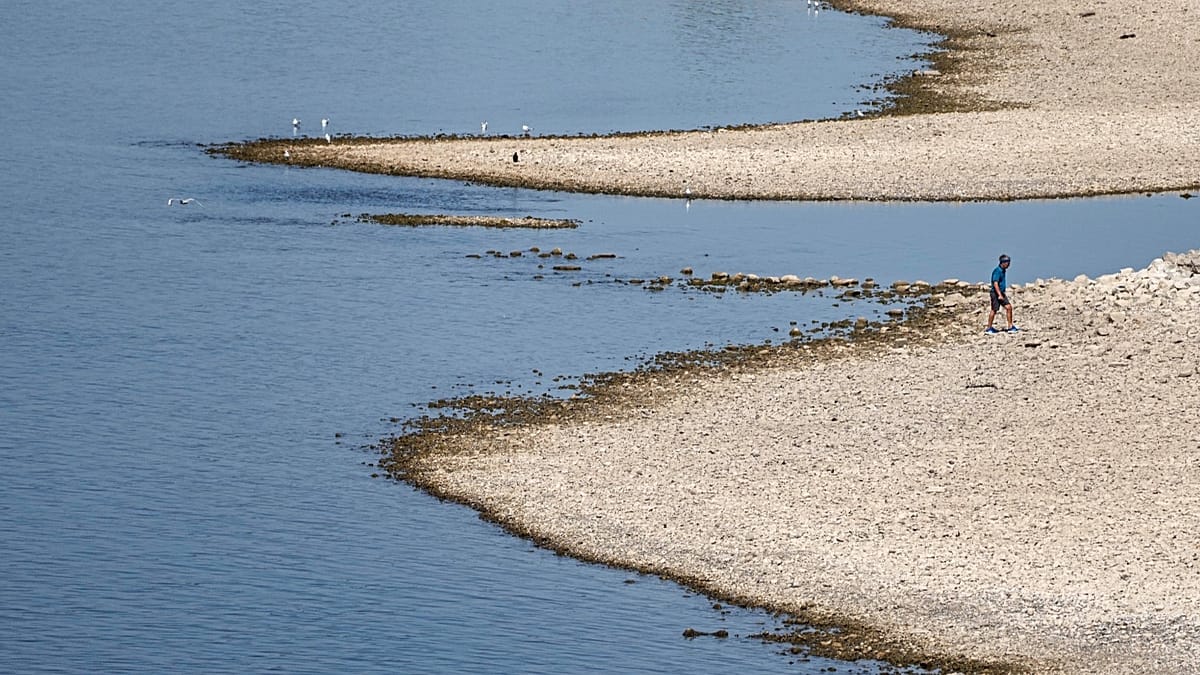
Deep beneath the surface of the Upper Rhine Valley lies a hidden treasure: Europe's largest groundwater reserve, stretching some 300 kilometres from Frankfurt am Main through Alsace to Basel. This vast underground basin holds 150 billion cubic metres of water — roughly equivalent to three interconnected Lake Constances. It supplies drinking water to nearly five million people and feeds the Upper Rhine River and numerous wetlands.
But a comprehensive study published in June 2026, known as the Ermes II project, has revealed alarming levels of pollution. Researchers analysed 1,500 monitoring sites across southern Germany, northern Switzerland, and eastern France. They found that 96% of these sites are contaminated with at least one micro-pollutant, including pesticides, pharmaceutical residues, and per- and polyfluoroalkyl substances (PFAS), often called 'forever chemicals'.
Pollution Sources and the Cocktail Effect
The primary culprits are agricultural pesticides, but urban runoff, industrial facilities, and wastewater treatment plants also contribute significantly. At 59% of the monitoring sites, at least one drinking-water limit value was exceeded. One of the most widespread substances is trifluoroacetic acid (TFA), which scientists describe as the 'ultimate PFAS' due to its persistence and ubiquity in the environment.
The study highlights a 'cocktail effect': when multiple pollutants occur together, their combined toxic impact can increase, even at low individual concentrations. The long-term health and environmental consequences remain largely unknown, but the findings underscore the urgency of addressing groundwater quality.
Dr Dirk Grünhoff, president of the state environment agency in Rhineland-Palatinate, stated: 'The findings show that groundwater protection continues to face major challenges. The data provide a solid basis for meeting these challenges and devising concrete measures.'
An Invisible River Under Pressure
The aquifer is not a single underground lake but a complex system of water-bearing layers within the Upper Rhine Graben, a geological rift formed millions of years ago. In some places, groundwater flows just a metre below the surface; in others, such as the Heidelberger Loch, it lies more than 500 metres deep. The deepest borehole in the region, 'Frankenthal 10' near Mannheim, reached 3,335 metres. Researchers note that parts of this system remain as poorly understood as the deep sea.
Despite the pollution, drinking water is not drawn directly from the aquifer. It undergoes treatment before distribution, but the extent of contamination determines the level of treatment required. The study aims to identify the causes of deterioration and develop preventive measures. Regular monitoring has been in place since 1991.
Nature itself provides some remediation. The aquifer hosts unique species, such as the groundwater crayfish Parabathynella baden-wuerttembergensis, which helps filter impurities. However, the scale of human-made pollution threatens to overwhelm these natural processes.
The findings come as Europe grapples with broader water security issues. Similar challenges are emerging across the continent, from the Kniepsand region to the revival of waterways with electric ferries. The Upper Rhine aquifer's plight serves as a stark reminder that even the largest underground reserves are not immune to human impact.