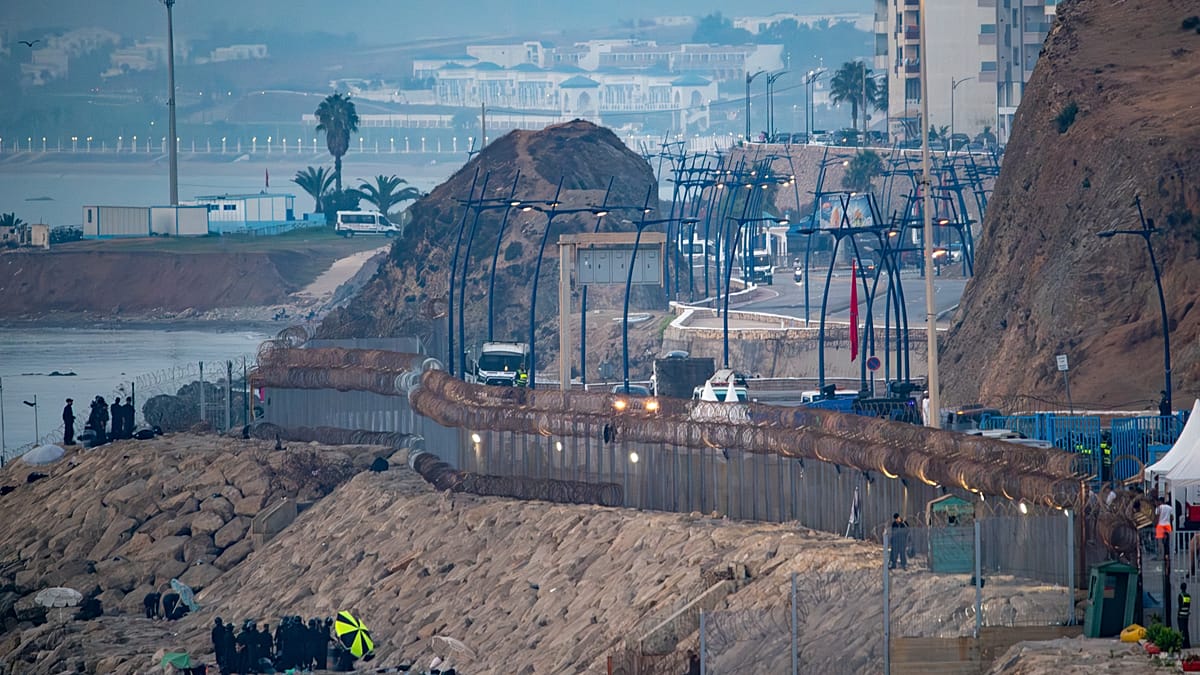
The Party of European Socialists (PES) is heading for an internal confrontation as national delegations clash over migration policy in the aftermath of the Ceuta crisis, when more than 72,000 people crossed irregularly into the Spanish enclave from Morocco in late July.
During the emergency, Denmark's centre-left Prime Minister Mette Frederiksen joined Italy, Germany, Finland and Sweden in criticising the Spanish government's handling of the situation. She told Danish news agency Ritzau: "These are violent images from Ceuta. We will not accept a repeat of 2015. It goes without saying that the EU must immediately take all necessary steps and consider all options, including a suspension of Schengen cooperation."
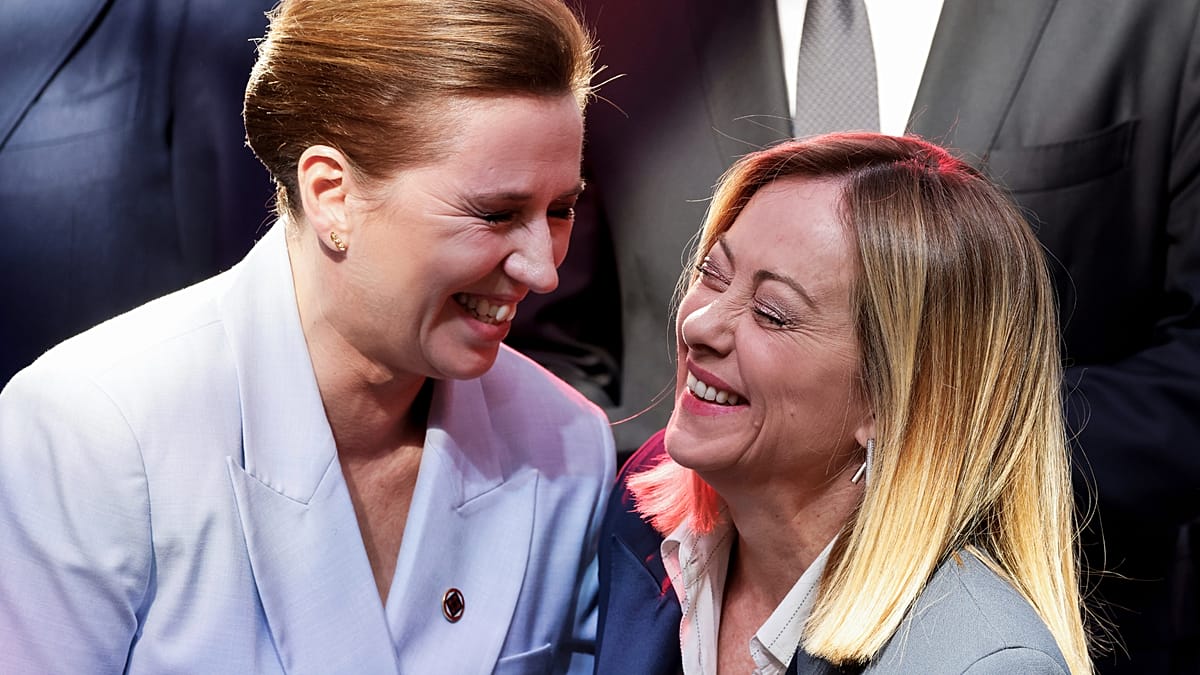
Frederiksen co-led, with Italy's far-right leader Giorgia Meloni, a letter signed by 22 member states that criticised Spain's recent regularisation of around half a million migrants as a so-called "pull factor" behind the crisis. She went further by co-signing a joint statement with Meloni vowing to oppose uncontrolled migration and accelerate the creation of repatriation centres in third countries.
Accusations of 'selective solidarity'
In a letter sent to PES president Stefan Löfven earlier this week, MEPs Peppe Provenzano (Italy/S&D) and Javi López (Spain/S&D) — two heavyweights of the centre-left group — accused Frederiksen of "selective solidarity." The letter, an extract of which was shared with the press, reads: "It is unacceptable that, whilst another European partner was facing exceptional pressure, a member of our own political family chose to align itself, in a coordinated manner, with the Italian Prime Minister, Giorgia Meloni, who had just decided to suspend Schengen in a purely propagandistic move, given that there is no freedom of movement from Ceuta to the EU."
The Italian and Spanish delegations point out that Denmark enjoyed European solidarity during repeated violations of its airspace and open threats from US President Donald Trump to seize the autonomous territory of Greenland. Yet Frederiksen, they argue, adopted "the narrative of the radical right, which portrays migration as a permanent emergency, even as irregular arrivals in Europe have fallen dramatically – by around 40 per cent – since the start of the year, fuelling a politically opportunistic climate of alarm and fear."
By contrast, the Danish party's spokesperson and MP, Rasmus Stoklund, did not back down, insisting the Social Democrats' strict line on migration remains unchanged as the party will keep pushing for stronger external EU borders and return hubs outside Europe.
Deepening rift within the S&D group
The rift between the Danish socialists and the rest of the group is not new: the national delegation, made up of three MEPs, has repeatedly voted against the group's line on migration files. But for the Spanish and Italian delegations, diverging from the group, as often happens on other policy issues, is one thing; openly aligning with a leader of the European hard right like Meloni is another.
MEP Juan Fernando López Aguilar (Spain/S&D) told Euronews: "Denmark holds a position, when it comes to migration and asylum issues, which clearly puts tensions into the position held by, and the voting line of, the S&D group in the European Parliament." He added: "In this particular situation, the challenge has grown bigger because it doesn't only affect migration and asylum-related issues – it affects solidarity with an individual member state."
Denmark's Social Democrats' membership of the European socialist party, of which it is a founding member, is not in question, Euronews understands; the aim is rather to find common ground on this sensitive topic. To that end, the letter calls for a discussion at the party presidency's next meeting, due to take place just ahead of the European Council summit on 15-16 October.
The dispute comes as Europe's border pressures remain a contentious issue, with Latvia's eastern border also seeing heightened activity. The outcome of the PES meeting could shape the centre-left's stance on migration ahead of the summit, where leaders will debate the bloc's asylum reforms.