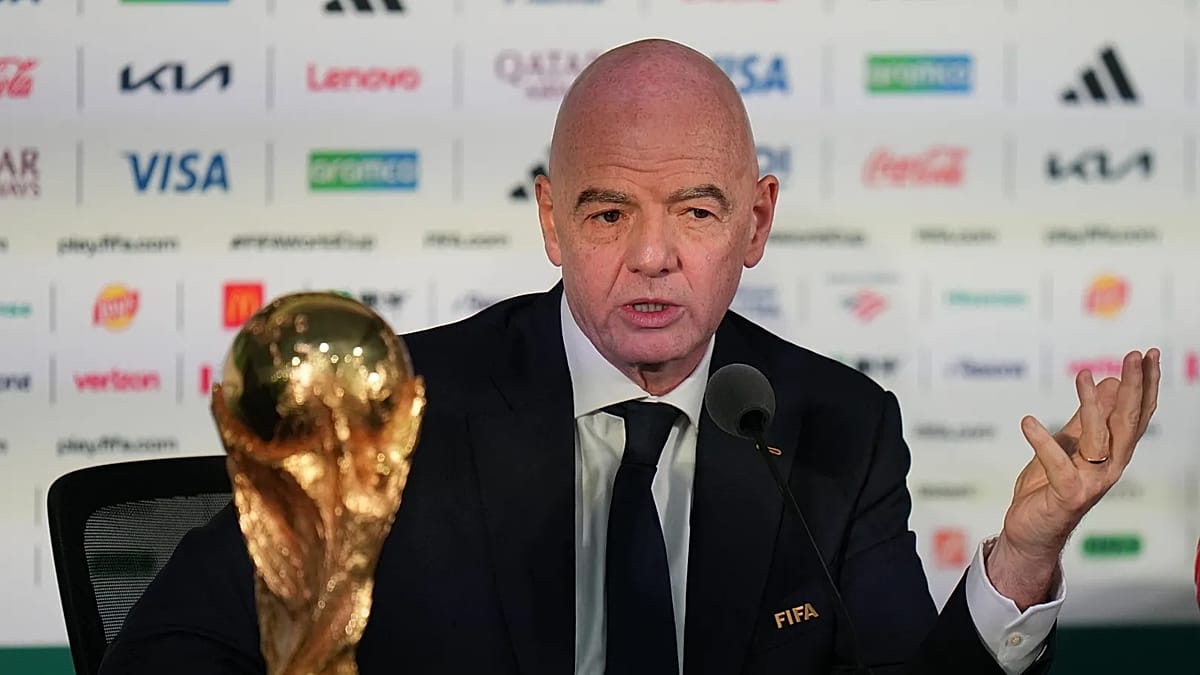
FIFA has formally abandoned its proposal to allow private investors to buy minority stakes in its major competitions, following weeks of intense criticism from European football authorities and beyond. The decision, announced on Thursday, marks a significant retreat for President Gianni Infantino, who had championed the plan as a way to unlock the sport's commercial potential.
In a statement, Infantino said the project had "created divisions" that were "no longer in the interest of the objective set out in the first place." He added: "Our purpose has always been - and will always be - to unite and improve. As a result, this proposal will not proceed."
The plan, first floated in late July, would have created a new subsidiary called FIFA Forward Enterprise (FFE) to run the organisation's commercial operations and events, including the men's and women's World Cups. FIFA estimated that FFE could raise up to $4.2 billion based on an initial equity valuation of $20 billion, with third parties taking minority, non-controlling stakes.
Infantino had described the sport's "remarkable commercial value" as the basis for the venture, but the proposal drew immediate fire from across the footballing world. UEFA, the governing body for European football, and its 55 member associations were particularly vocal, warning that the World Cup "cannot be treated as an investment product."
In a statement issued on Thursday, UEFA said: "No UEFA national teams will participate in any FIFA competition for so long as these proposals remain alive, unless this proposal has been abandoned in its entirety and binding assurances have been given that FIFA will never again open its governance or competitions to private ownership."
The threat of a boycott was a direct challenge to FIFA's authority, and it appears to have been effective. CONCACAF, the confederation for North and Central America and the Caribbean, also rejected the plan and called for "greater transparency and proper governance" in the wake of the controversy.
Pressure on Infantino mounts
The episode has put Infantino, who has led FIFA since 2016, under renewed scrutiny. His handling of the proposal prompted the resignation of one of his senior advisors, Carlos Cordeiro, and drew criticism from within FIFA's own ranks. Kevin Lamour, FIFA's chief operating officer, described the investment plan as "the project of one person" and said in a statement to the Associated Press: "Not only must this project not go ahead … but the time has now come for football political leaders to ask themselves the right questions and make the right decisions."
The collapse of the plan is a victory for European football's governing bodies, which had mobilised quickly against what they saw as an attempt to commercialise the sport's crown jewels. It also raises questions about Infantino's leadership style and his willingness to listen to the sport's stakeholders.
For European fans and officials, the episode is a reminder of the delicate balance between football's commercial growth and its traditional values. As UEFA's boycott threat showed, the prospect of private ownership of World Cup rights was a red line for many.
The decision to scrap the plan is likely to be welcomed across the continent, but it may not fully restore trust. Infantino's decade at FIFA has been marked by repeated controversies, and this latest episode will add to the narrative of a president who often appears to act unilaterally.
In the coming months, FIFA will need to rebuild relationships with European federations and demonstrate that it can govern with greater transparency and accountability. The backlash from European football bodies has been unambiguous, and the message to Zurich is clear: the World Cup is not for sale.