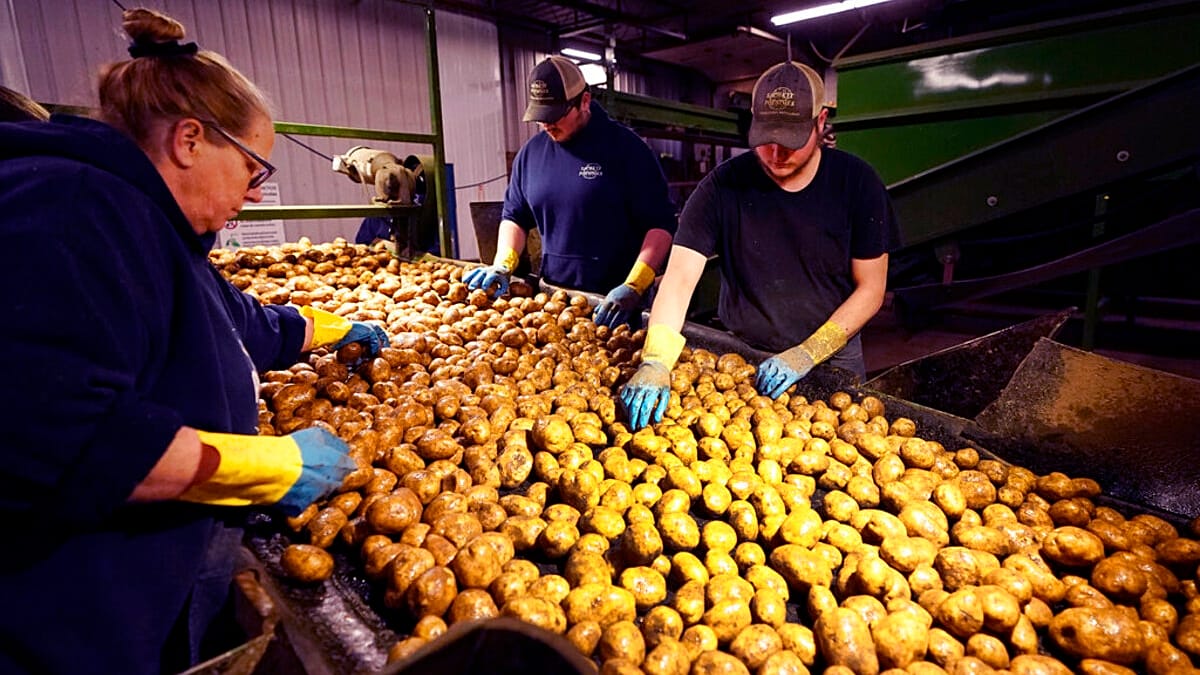
French potato growers are bracing for one of the most difficult harvests in recent memory. After a summer marked by five heatwaves and months of severe drought, the sector is predicting a dramatic fall in output that could reshape the market for one of Europe's staple crops.
According to the National Union of Potato Producers (UNPT), national production could drop by roughly 23% compared with last year. If confirmed, this would rank among the worst seasons ever recorded for French potatoes. The organisation said in a statement: "This season could mark one of the largest production slumps ever recorded for French potatoes."
The average yield of table potatoes is expected to reach just 37.4 tonnes per hectare, down from 43.5 tonnes in 2025. The UNPT describes this as "the lowest yield seen in more than 30 years", surpassing even the historic drought of 2022, which had already caused significant damage to the sector.
Economic strain on farms
The combination of extreme heat and water scarcity is hitting individual farms hard. On many holdings, the cumulative effects could lead to substantial losses and threaten the long-term viability of operations. The UNPT warns that "the disastrous economic consequences of this exceptional situation" cannot be borne by farmers alone.
Beyond the immediate harvest, the shortfall is creating contractual headaches. Many producers fear they will be unable to meet the volumes agreed with processors, who rely on a steady supply of potatoes for frozen products, crisps, and other goods. The industry is calling for "contracted volumes to be adjusted to reflect the reality of the harvest", a move that would ease pressure on growers facing penalties for underdelivery.
The situation is not unique to France. Across Europe, drought conditions have strained agricultural production, from Hungary's lakes and rivers hitting record lows to record rockfalls in the Alps triggered by this summer's heatwave. These events underscore the broader climate challenges facing the continent's food systems.
Demands for government intervention
In response, producers are demanding "exceptional" support from the French government. They want Paris to engage in "determined dialogue" with its European partners, aiming to secure relief measures that could include financial aid, tax deferrals, or adjustments to the Common Agricultural Policy. The goal is to avoid a "double whammy": substantial agricultural losses compounded by commercial difficulties.
The UNPT's call comes as France's political landscape shifts, with Raphaël Glucksmann set to enter the presidential race, adding another layer of complexity to agricultural policy debates. Growers hope that the urgency of the situation will prompt swift action, not just in Paris but across the EU.
For now, the outlook remains bleak. As harvests continue, the full extent of the damage will become clearer, but the early signs point to a season that will be remembered for years. The sector's resilience will be tested, and the outcome may influence how Europe adapts its farming practices to a warming climate.