Nearly two million people joined the ranks of the world's millionaires in 2025, pushing the global high-net-worth individual (HNWI) population to 25.3 million, according to Capgemini's latest World Wealth Report. Their combined wealth hit a record $98.3 trillion (€86.2 trillion), an 8.7% increase — the largest annual jump since 2018.
But the headline numbers mask stark regional disparities. Europe, home to roughly six million HNWIs, saw its millionaire population grow by 6.5% in 2024, a sharp rebound from the previous year's sluggish 0.7% wealth growth. Yet the gains were anything but uniform across the continent's twenty-seven member states and beyond.
Where Europe's millionaires are multiplying
Luxembourg posted the highest growth rate among European markets, with a 13.5% rise in its HNWI population — a predictable outcome given the Grand Duchy's low effective tax rates, generous exemptions on investment income, and absence of a wealth tax. Germany followed closely with an 11.1% increase, while Belgium recorded 9% growth.
France and the United Kingdom, by contrast, saw more modest gains of 2.7% and 2.6%, respectively. The divergence reflects broader economic and policy trends: Germany's DAX index rose nearly 22% in 2025, buoyed by defence and energy stocks such as Rheinmetall and Siemens Energy, while the UK's FTSE 100 climbed 21.5%, supported by mining and defence companies. France's slower growth may also be linked to ongoing tax and political uncertainty, a dynamic explored in our analysis of capital flight from the country.
Gareth Wilson, Executive Vice-President at Capgemini, told European Pulse that the European Central Bank's interest rate policy has created "more stability to enable investment." He added that "significant focus on innovation" in sectors like defence — "obviously for differing reasons" — is generating growth within local economies and contributing to equity performance.
What the super-rich are doing with their money
The report also reveals a shift in how millionaires allocate their assets. "We've seen a move towards equities, stocks and shares, we've seen a move toward fixed income assets and we've seen a reduction in terms of the cash holdings," Wilson explained. This pivot from cash — traditionally seen as a conservative asset class — toward higher-return, higher-risk investments may sound alarming, but Wilson argues it is broadly positive.
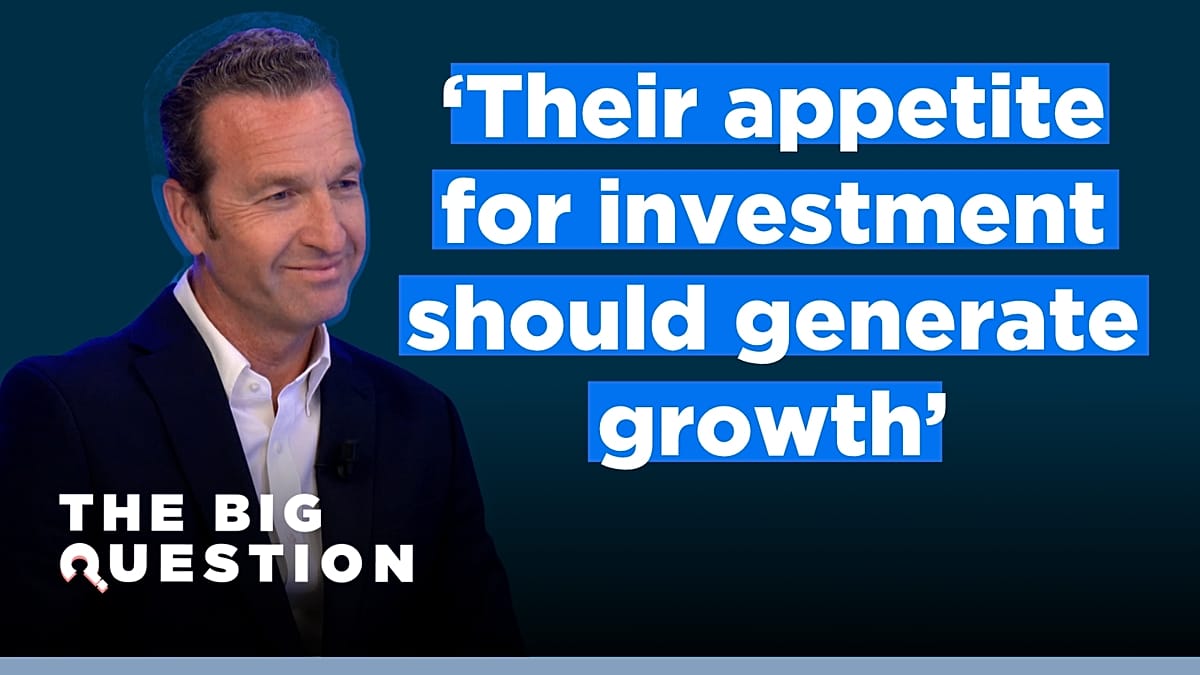
"Because of their assets and their appetite for investment, this should generate growth. This should generate economic value across the globe," he said. The sectors benefiting most — defence and energy — are precisely those at the top of the European agenda, as the continent grapples with security challenges and the green transition.
Yet the concentration of wealth remains extreme. Ultra-high-net-worth individuals — those with investable assets exceeding $30 million — make up just 1% of the global HNWI population but control 34.8% of total wealth. That disparity raises questions about whether rising millionaire numbers translate into broader economic benefits for ordinary Europeans.
For the average citizen in cities like Madrid, Milan, or Warsaw, the link between stock market gains and daily life is indirect at best. While rising equity markets can boost pension funds and create jobs in high-growth sectors, the benefits are unevenly distributed. A Eurofound report recently found that one in five jobs in the EU is vulnerable, with Spain leading the bloc in precarious employment — a reminder that wealth creation at the top does not automatically lift all boats.
The report's findings also underscore the importance of policy choices. Countries with favourable tax regimes and stable investment climates, like Luxembourg and Germany, are attracting and retaining capital, while others risk seeing their wealthy citizens move elsewhere. As Europe debates tax harmonisation and wealth redistribution, the geography of millionaire growth offers a clear, if uncomfortable, map of winners and losers.