Greece’s enduring appeal as a holiday destination has been quantified in new Eurostat data, showing that its island regions are now more crowded with visitors than anywhere else in the European Union. The figures, analysed by the Greek Reporter, reveal that the South Aegean and Ionian islands recorded the highest tourism saturation in 2024, with tourists spending more nights per resident than in any other EU region.
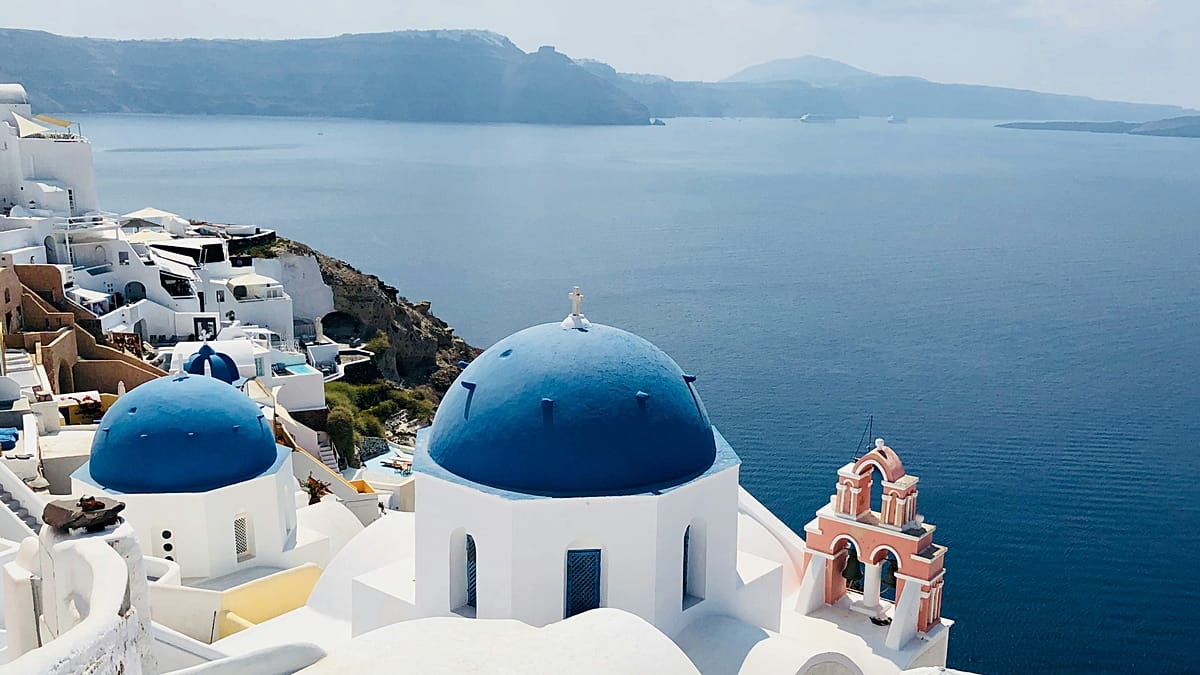
The South Aegean, which includes the popular islands of Santorini, Rhodes, and Kos, logged 127.2 tourist nights for every resident last year. With over 41.5 million overnight stays against a population of roughly 326,000, the gap between visitors and locals is the widest in the entire EU. The Ionian islands—home to Corfu and Zakynthos—came second, with 102.6 nights per resident and 20.5 million overnight stays compared to a population of about 200,000. No other region came close to these figures.
Other hotspots across the continent
Beyond Greece, several other European destinations show significant tourist pressure. The Italian province of Bolzano, known as the gateway to the Dolomites, recorded 68.9 nights per resident. Croatia’s Adriatic coast, which includes the bustling cities of Dubrovnik and Split, followed closely with 67.5 nights per resident. The Spanish Balearic islands—Ibiza, Mallorca, and Menorca—registered 60 nights per resident.
Greece’s largest island, Crete, ranked sixth with 55.6 nights per resident. Across the EU, most regions reported fewer than 15 tourist nights per resident, highlighting the extreme concentration of tourism in a handful of areas. Even Greece’s North Aegean region, which came in 24th place, recorded just 14.9 nights per resident.
At the other end of the scale, the Mazowieckie region around Warsaw in Poland saw only 0.7 tourist nights per resident, while Mayotte—a French island in the Indian Ocean that is an EU territory—recorded just 0.5 nights per resident, the lowest in the bloc.
The data underscores the challenges facing popular destinations as they grapple with overtourism. Greece, in particular, has seen a tourism surge expected to last through 2027, as Europeans return in large numbers. This influx brings economic benefits but also strains infrastructure and local communities.
In response, some regions are exploring measures to manage visitor numbers. For example, Paris has seen a bike boom that reshapes how tourists see the capital, offering a more sustainable way to explore. Meanwhile, Greece has opened 126 ancient sites free for the August full moon, aiming to spread visitors across less crowded attractions.
The environmental impact of mass tourism is also a concern. Sea rescues in Greece have been necessary as wildfires strain Europe's firefighting capacity, highlighting the vulnerability of these regions. The new data serves as a reminder that the balance between welcoming visitors and preserving local life is a delicate one, and one that will require careful planning in the years ahead.