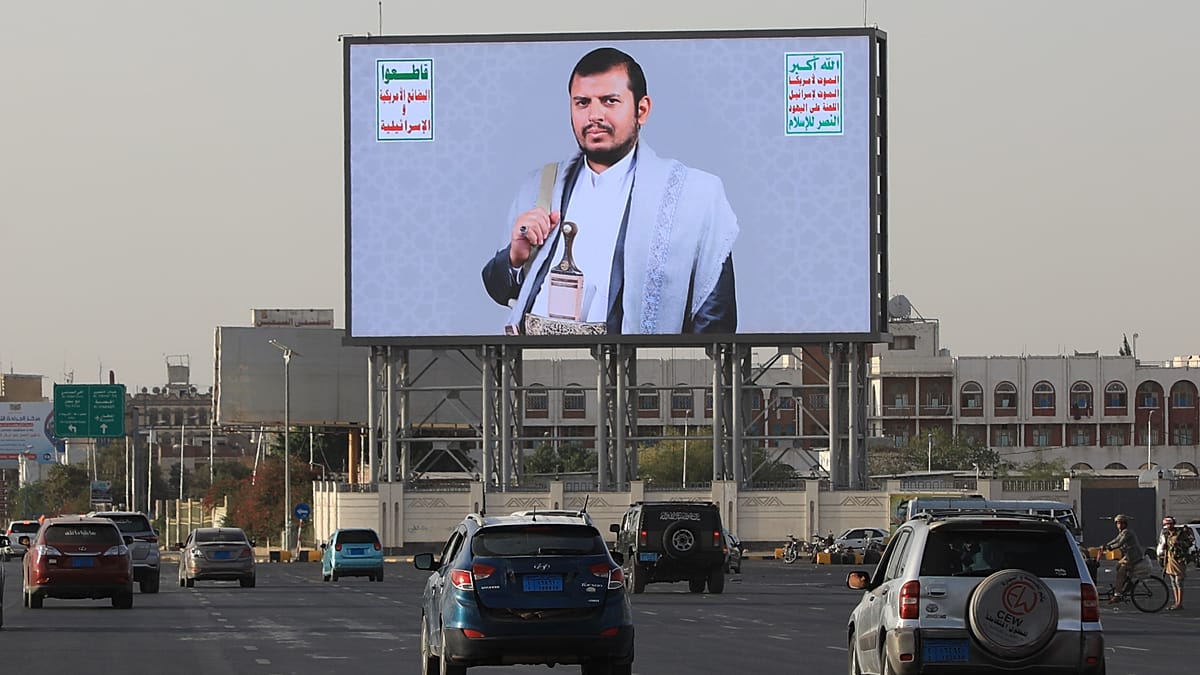
Yemen's Houthi leader Abdul-Malik al-Houthi has warned Saudi Arabia of an all-out response, just hours before Riyadh unveiled a new multinational maritime defence coalition aimed at countering the Iran-backed group's escalating attacks on Red Sea shipping.
In a televised address on Thursday, al-Houthi said: "The indicators show that the Saudi side is heading towards full escalation, and we will respond to its full escalation with full escalation." He also cautioned that Turkish-made aircraft sold to Saudi Arabia would "turn into unsellable stock once they are shot down in Yemen," referencing previous losses of American MQ-9 drones and Chinese-supplied aircraft in the conflict.
Al-Houthi accused Saudi Arabia of perpetuating a cycle of economic and political crisis in Yemen, describing what he called "US-Saudi aggression" that has continued since the Saudi-led coalition intervened in 2015. He claimed that the recent de-escalation period came only after "a clear Saudi-American failure" to break Yemeni resistance.
Denying that the Houthi movement, formally known as Ansar Allah, acts as a proxy for Iran, al-Houthi insisted it operates solely in defence of Yemeni sovereignty and resources. "Our people are not disputing the Saudi regime over anything that belongs to it, but over our land, our resources, our freedom and our dignity," he said.
The Houthis, who seized Sana'a in late 2014 and forced the internationally recognised government into exile, are part of Tehran's so-called Axis of Resistance, a loose network of militant groups including Hezbollah in Lebanon, Hamas in Gaza, and Iraqi militias, all backed to varying degrees by Iran's Islamic Revolutionary Guard Corps.
Saudi-led maritime coalition
Saudi Arabia's institutional response to the Houthi maritime campaign took shape on Thursday, when Riyadh hosted representatives from 43 countries—out of 51 invited—plus the European Union, to discuss the creation of a new Multinational Maritime Defence Coalition. Fourteen countries, including Pakistan, Turkey, Egypt, Jordan, and Djibouti, signed a founding statement.
The coalition aims to protect freedom of navigation and energy supply routes through the Bab al-Mandeb Strait, the Red Sea, and the Gulf of Aden. Saudi Arabia will serve as the founding and leading state, hosting the coalition's permanent headquarters, joint command, and operational centre. The Saudi defence ministry said additional countries could join after completing their national procedures.
The EU, which already operates the Aspides naval protection mission in the Red Sea, sent a delegation but did not sign the deal. It remains unclear how the new Saudi-led coalition will coordinate with the existing EU mission. This development comes amid broader regional tensions, including US and Saudi strikes on Iran-backed militias in Iraq and Iran's rejection of a Hormuz deal.
Blockade and tanker attack
The Houthis announced a naval blockade against Saudi Arabia on 20 July and claimed responsibility for an attack on a Saudi oil tanker off the port of Jazan on the kingdom's southern Red Sea coast. Riyadh has since launched air strikes on Houthi military positions and infrastructure in Hodeidah, Yemen's main Red Sea port.
On Wednesday, a drone attack on the US-owned LNG terminal at Egypt's Damietta port caused a fire, according to Egyptian authorities. The Houthis flatly denied involvement, with their Saba news agency quoting an official saying reports of the attack were "incorrect" and that their operations were "limited to targeting Saudi Arabia in response to the siege and ongoing aggression against the Yemeni people." No group has claimed responsibility for the Damietta incident.
The Bab al-Mandeb Strait, which connects the southern Red Sea to the Gulf of Aden and the Indian Ocean, carries roughly 12% of global maritime trade. The Houthis severely disrupted shipping during the Israel-Hamas war in Gaza, claiming solidarity with Palestinians. Their campaign has also included missile and drone attacks on Saudi oil tankers, and there are reports of plans for a Red Sea toll system with Iranian help.
European navies, including Greek and other NATO assets, have been involved in intercepting Houthi attacks, as seen with a Greek Patriot battery in Saudi Arabia. The new Saudi-led coalition adds another layer to the complex security architecture in the region, with implications for European energy supplies and trade routes.