Last Sunday, while most Europeans were enjoying a quiet weekend, French and British naval forces intercepted a sanctioned Russian oil tanker in the Atlantic. The vessel, part of Moscow's so-called shadow fleet, was attempting to bypass international restrictions on oil sales. French President Emmanuel Macron condemned the operation, calling it completely unacceptable for ships to circumvent sanctions and fund Russia's war in Ukraine.
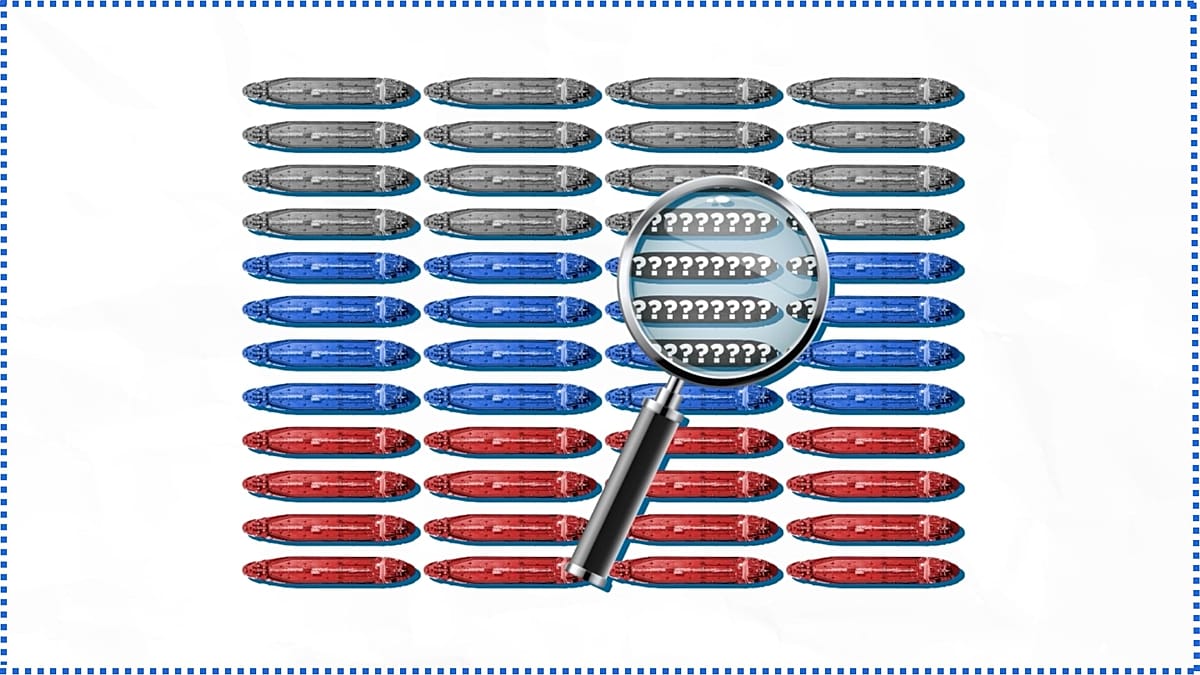
Russia's shadow fleet is a clandestine armada of aging tankers that the Kremlin has assembled to evade the G7 price cap on Russian oil. Moscow has spent billions acquiring dilapidated vessels with opaque ownership, often lacking proper insurance, which allows them to operate outside Western oversight. But insurance is just one layer of a sophisticated evasion strategy.
How the Shadow Fleet Hides
These ghost ships employ multiple tactics to avoid global tracking. They frequently change their registration, switching flags from one jurisdiction to another to exploit regulatory loopholes. They transmit falsified GPS data, making their location appear elsewhere, and routinely turn off their transponders, rendering themselves invisible to maritime surveillance systems. The oldest trick in the book, however, remains ship-to-ship cargo transfers: oil is moved between vessels at sea to mask its true origin before reaching port.
The European Union, through successive sanctions packages, has blacklisted over 600 of these shadow vessels. But the crackdown has become a frustrating game of whack-a-mole. As soon as one ship is designated, another emerges from the dark. For Europeans, this is not just a financial cat-and-mouse game.
These vessels are in extremely poor condition, making them an environmental ticking time bomb. A catastrophic oil spill on European shores is a real risk. Additionally, a tanker believed to be part of the fleet was recently caught dragging its anchor in the Baltic Sea, damaging critical undersea cables. Such incidents highlight the broader security threat beyond sanctions evasion.
Ultimately, global maritime laws were designed to protect free trade under the principle of innocent passage. But there is nothing innocent about how Russia uses these rules as a shield to fund its war machine. The interception by French and UK forces underscores the ongoing challenge for European navies in policing these waters.
For more on Russia's aggression, see our coverage of the Russian drone barrage hitting Kharkiv and the Ukrainian strike on a Russian oil refinery. The shadow fleet's activities are part of a broader pattern of Russian efforts to sustain its war economy, as also seen in protests against Russia's return to the Venice Biennale.