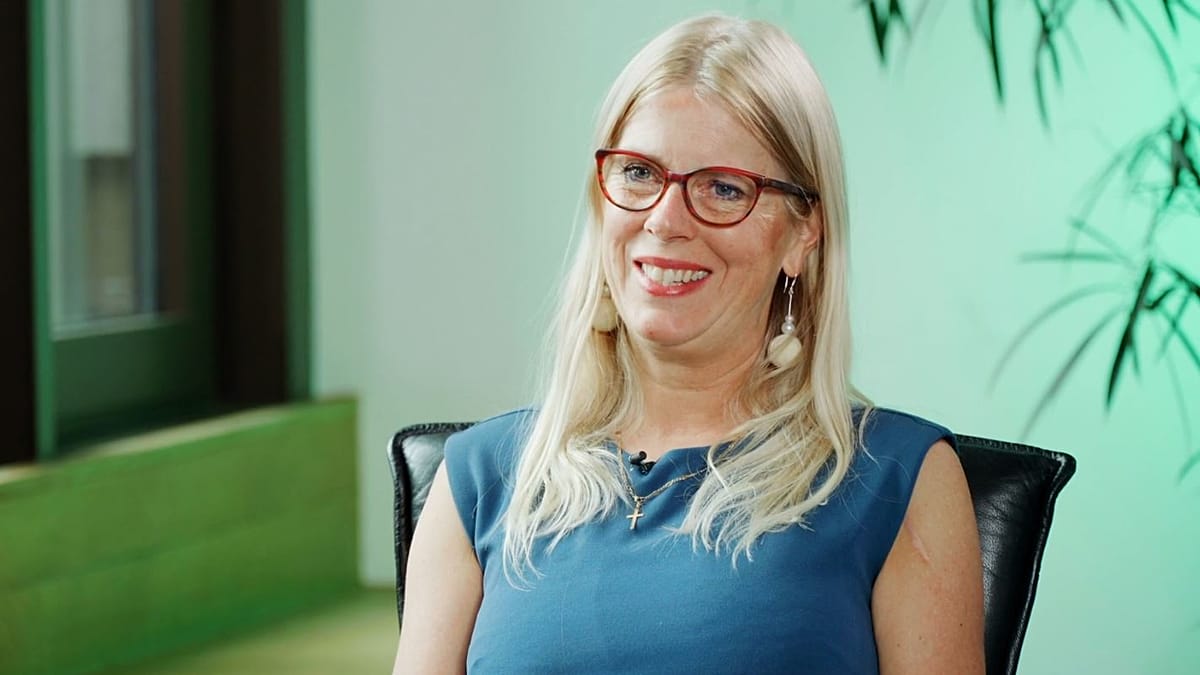
Hungary's April election of Péter Magyar's Tisza Party raised hopes for a renewed environmental agenda. The new government has already established a Ministry for the Living Environment, elevating environmental protection, nature conservation, and animal welfare after a 16-year hiatus. Hungarian physicist and IPCC vice-chair Diána Ürge-Vorsatz, a professor at CEU in Vienna, told European Pulse that the scientific community welcomed the move with enthusiasm, though she cautioned that restoring soil health, wetlands, and forests still requires urgent action.
Europe's Energy Crisis and the Case for Renewables
Soaring energy prices linked to geopolitical tensions in Iran have once again exposed Europe's vulnerability to fossil fuel shocks. This is the third energy crisis in a decade, following the post-pandemic rebound and Russia's invasion of Ukraine. Ürge-Vorsatz argues that this should be a clear signal: it is not worth relying on highly centralised regions for energy supply when alternatives exist. Alternatives are available for oil-based transport and gas-based heating, though industry remains harder to decarbonise.
The deeper problem, she says, is how governments respond when crisis hits. Rather than insulating buildings or reducing demand for natural gas, they adopt quick, temporary measures that lock in dependency. Fossil fuel companies, meanwhile, have little incentive to change course: when oil prices are high, they reap huge profits. As Christian groups have urged the EU to tax fossil fuel profits, the pattern persists.
Stemming Europe's Record Temperature Rise
New heat records are expected in Budapest again this summer. The city's chief landscape architect has warned that young trees may not survive the combined stress of heat and water shortage. Copernicus data shows Europe is the fastest-warming continent, heating at twice the global average, with Hungary warming even faster. Ürge-Vorsatz predicts: "Budapest will also hit 50°C. The question is not whether that will happen, but when."
Air-conditioned public spaces, known as climate shelters, are one response adopted across European cities, but they address symptoms rather than causes. The real culprit is planet-warming emissions from burning fossil fuels, compounded by the urban heat island effect, which can make cities up to 10°C hotter than surrounding green spaces. Trees, Ürge-Vorsatz says, are the most powerful tool to combat this: they actively cool through transpiration. Combined with better architecture and insulation, greening cities could reduce dependence on energy-intensive air conditioning and buy time against worsening heatwaves.
But adaptation has hard limits. "We are not only able to slow emissions down, we are able to halt them – and we must," she warns. "If we do not bring emissions down to zero, warming will continue."
Leading Change Requires Bravery
The fossil fuel sector's political influence makes transformation difficult. It employs large numbers of people, generates significant tax revenues, and forms a central pillar of many national economies. Ürge-Vorsatz acknowledges that governments do not easily part ways with this industry. "That requires a very brave decision." A gradual transition would be manageable, but political and business cycles work against it: governments plan over four to five years, companies even shorter. Voters and shareholders want visible results within a year or two.
Unless this circle can be squared, it will be difficult not only to protect the environment but also to carry out crucial energy transitions – for reasons of energy dependence, energy poverty, and economic competitiveness. As deals like TotalEnergies-EPH highlight the risk of fossil fuel lock-in, the stakes are high.
How Changing Behaviour Can Drive Policy Change
Individual behaviour change also matters – not because one person giving up a plastic straw saves the planet, but because collective action sends signals to policymakers. Ürge-Vorsatz argues that when citizens demand clean energy and sustainable practices, governments are more likely to act. The recent Amsterdam ban on meat and fossil fuel ads shows how local initiatives can shift norms. Ultimately, the choice is clear: Europe can continue its pattern of crisis-driven dependency, or it can make the brave decisions needed to halt warming.