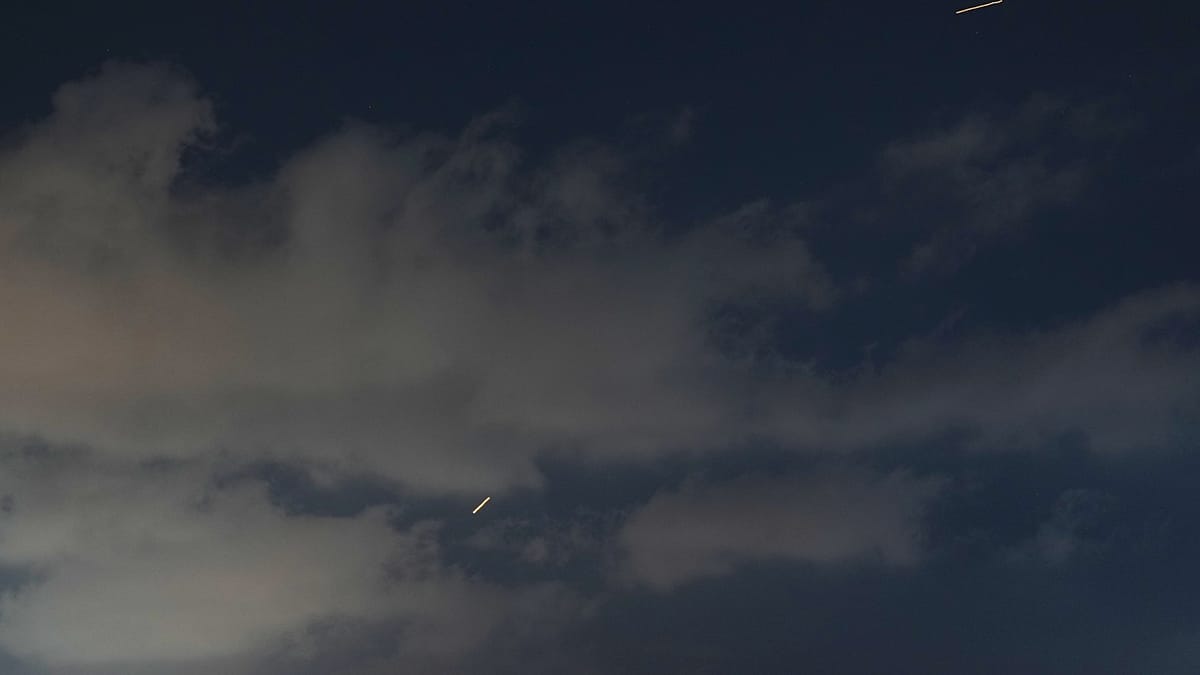
Iran launched a barrage of missiles at Israel on Sunday, marking the first direct bombardment from Tehran since a ceasefire took effect on 8 April. Israeli air defence systems intercepted the incoming projectiles, and there were no immediate reports of injuries or damage.
The Israeli military confirmed that sirens sounded in several areas across the country, particularly in the north, after the missiles were identified. “A short while ago, sirens were sounded in several areas across the country, following the identification of missiles launched from Iran toward the State of Israel,” the military said in a statement.
Retaliation for Israeli Strikes on Beirut
The attack comes after Iran’s Revolutionary Guard announced earlier on Sunday that it was prepared to strike Israel. According to Iranian state television, Supreme Leader Mojtaba Khamenei authorised the operation in response to Israeli strikes on Beirut. A commander of Iran’s Khatam al-Anbiya military headquarters said that Israel had crossed “all red lines” by attacking the Lebanese capital and expanding its offensive in southern Lebanon, as reported by the Tasnim news agency.
“We had previously warned that if the crime in the suburbs of Beirut spreads, we will attack targets in the occupied territories,” the Iranian military statement said. It added that Israel “must stop its attacks on southern Lebanon and the suburbs, and if it expands its attacks on that region or responds to Iran’s actions, it will face more crushing and regrettable blows and destructive attacks will begin against the regime and its supporters.”
The escalation threatens to unravel the fragile ceasefire that had held since April, which had already been strained by repeated violations. Lebanese MP: No Real Ceasefire Exists as Hezbollah Disarmament Looms highlights the persistent tensions on the ground.
European capitals have watched the situation with growing concern. The conflict has already drawn in actors beyond the immediate region, with US-Iran Military Exchanges Threaten Fragile Middle East Ceasefire and Strait of Hormuz Shipping, a development that could have significant implications for global energy markets and European supply chains.
The Iranian missile attack also comes amid a broader escalation along the Israel-Lebanon border. Israeli Airstrike Kills Three Lebanese Soldiers, Strains Fragile Ceasefire underscores the fragility of the current situation, while Serbian UN Peacekeeper Killed in Southern Lebanon Shelling Amid Intensified Hezbollah-Israel Clashes demonstrates the direct human cost for European nations involved in peacekeeping missions.
For European policymakers, the crisis presents a dual challenge: preventing a wider regional war that could trigger refugee flows and disrupt energy supplies, while also managing the diplomatic fallout with both Iran and Israel. The European Union has repeatedly called for de-escalation, but its leverage remains limited. The coming hours will be critical in determining whether this attack remains a one-off retaliation or spirals into a broader confrontation.