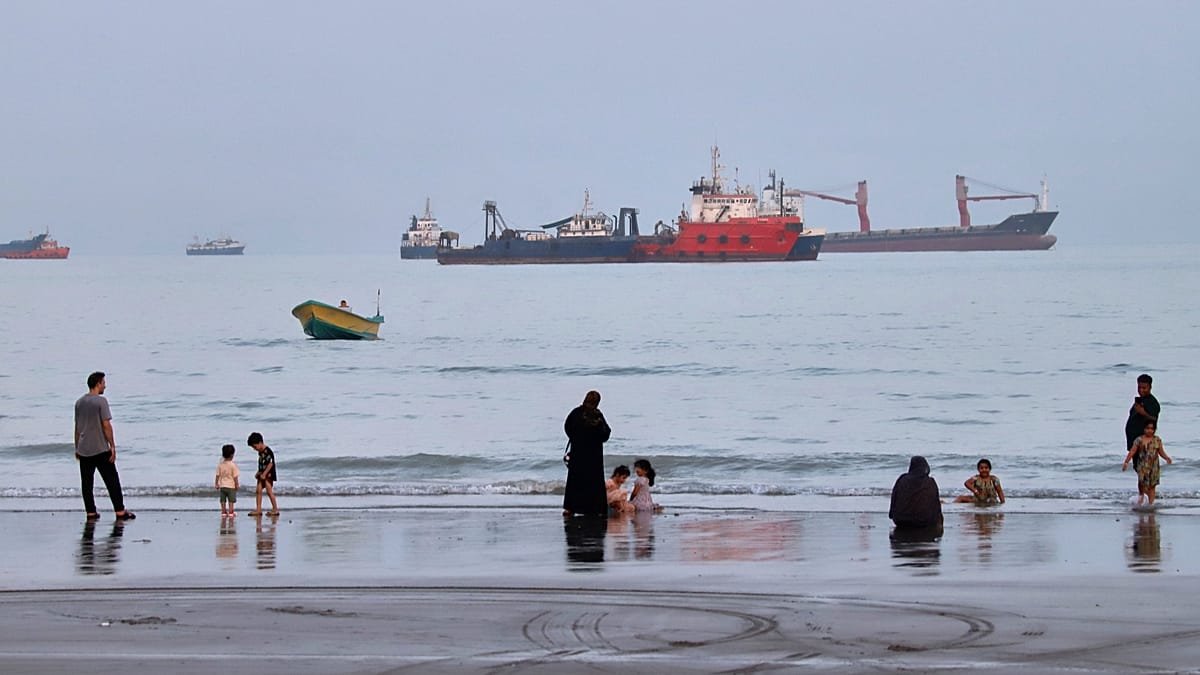
Tehran has pushed back sharply against President Donald Trump's claim that the United States holds sway over the Strait of Hormuz, with Iran's military calling the assertion a fabrication. The exchange highlights the fragile state of the strategic waterway, through which a fifth of global oil supplies normally passes.
In a video statement carried by Iranian state television, Brigadier General Ebrahim Zolfaghari, spokesperson for Iran's central military command, said: "The false claims of the United States that ships are passing through the Strait of Hormuz normally...are nothing more than lies and fabrications." He added that the strait remains "under the complete management and control of the Islamic Republic of Iran," and that no commercial vessel or tanker can transit without permission from the Iranian armed forces.
Since the outbreak of the war on 28 February, Iran has enforced its own rules on the waterway, requiring ships to obtain permits and pay fees. This has effectively closed the strait to most international traffic, a situation that has sent shockwaves through global energy markets. The International Energy Agency and OPEC have diverged sharply on 2026 oil demand as the strait remains shut.
Trump's 'wall of steel'
President Trump, in a post on his Truth Social platform on Wednesday, declared that the US "has total control over the Strait of Hormuz. I THINK WE WILL KEEP IT!" He went on to describe the US naval presence as "A WALL OF STEEL," adding that "there is nothing Iran can do about it."
Iranian officials were quick to counter that narrative. Hossein Taeb, head of the Basij paramilitary force under the Revolutionary Guards, told state television that the strait is under Iranian management and that the country "continues on its path in complete security."
Foreign Minister Abbas Araghchi took to X to accuse Washington of repeated miscalculations. "The US has long miscalculated due to intelligence failures. Case in point: The war on Iran. Now, an even bigger miscalculation on the Strait of Hormuz," he wrote.
Behnam Saeedi, a member of Iran's parliament and its national security commission, went further, telling state TV that ships belonging to Israel and the United States would be barred from the strait "under any circumstances, whether in war or peacetime."
The standoff has drawn in regional mediators. Iran and Oman have been in talks to establish an alternative route through the strait, though negotiations have yet to be concluded. Iranian Foreign Ministry spokesman Esmaeil Baghaei said earlier this month that Tehran and Muscat were preparing a joint statement covering technical, legal, security, and environmental aspects. Qatar has also seen progress in those talks, according to reports.
Iranian media, citing official sources, have indicated that reopening the strait would depend on the US ending its naval blockade of Iranian ports. That condition appears to set the stage for a prolonged standoff, with no immediate resolution in sight.
For Europe, the stakes are considerable. The closure of Hormuz has already disrupted energy supplies and contributed to price volatility, affecting economies from Berlin to Madrid. The dispute also complicates diplomatic efforts to de-escalate tensions in the Gulf, a region where European nations have significant security and economic interests.
As the rhetoric intensifies, the risk of miscalculation grows. Iran's insistence on its control over the strait, and Washington's equally firm claims, leave little room for compromise. The coming weeks will test whether either side is willing to step back from the brink.