Tehran has abruptly halted all indirect exchanges with Washington via mediators, according to the IRGC-affiliated news agency Tasnim, as the fragile ceasefire between the two countries faces renewed strain. The decision, announced on Monday, was justified by what the agency described as Israel's "continuing crimes" in Lebanon, a key precondition of the original truce.
"Considering that Lebanon was one of the preconditions for the ceasefire and that this ceasefire has now been violated on all fronts, including Lebanon, the Iranian negotiating team is suspending dialogues and exchange of texts through mediators," Tasnim reported. The agency further stated that Iran and its Axis of Resistance—a network of armed groups including Hezbollah, Hamas, and the Houthis—have resolved to pursue the complete closure of the Strait of Hormuz and activate other fronts, such as the Bab al-Mandab Strait, as part of efforts to punish Israel and its supporters.
Iranian Foreign Minister Abbas Araghchi reinforced this stance on social media, writing that a violation on one front of the ceasefire is a violation "on all fronts" and that the US-Iran ceasefire is "unequivocally a ceasefire on all fronts, including in Lebanon." He added, "Its violation on one front is a violation of the ceasefire on all fronts. The US and Israel are responsible for the consequences of any violation."
Background of the Conflict
The current crisis stems from a broader conflict that erupted in late February, when US-Israeli strikes on Iran resulted in the death of Ayatollah Ali Khamenei. Hezbollah, the Lebanese Shia militant group and a key component of Iran's Axis of Resistance, responded with missile attacks against Israel, triggering an ongoing military intervention. A ceasefire brokered on 8 April, with Pakistan serving as the primary mediator, has since been tested by multiple incidents, including exchanges of fire in the Persian Gulf near Bandar Abbas and competing claims over drones and tankers.
The talks had been progressing toward a 60-day memorandum of understanding that would extend the ceasefire and open nuclear negotiations. Draft terms, as reported by US sources, included unrestricted shipping through the Strait of Hormuz, Iran removing mines from the strait within 30 days, proportional lifting of the US naval blockade, and sanctions waivers allowing Iran to sell oil. The deal awaited final approval from both US President Donald Trump and Ayatollah Mojtaba Khamenei.
Trump expressed optimism on his Truth Social platform early Monday, writing, "Iran really wants to make a deal, and it will be a good one for the USA and those that are with us. Just sit back and relax, it will all work out well in the end — it always does." However, he also warned last week that Iran must make a deal happen or "we'll have to finish the job," after the White House dismissed an Iranian state-run television report of a draft agreement as a "complete fabrication." The US president has previously described the ceasefire as having a "one percent chance" of surviving.
The European Union has closely monitored these developments, given the potential impact on global energy markets and maritime security. The Strait of Hormuz, a critical chokepoint for oil shipments, has been largely closed to international shipping since the war began. Iran's newly established Persian Gulf Strait Authority, which had been charging vessels $2 million per passage, was sanctioned by the US Treasury Department last week. For context on broader regional dynamics, see our analysis of US strikes on Iranian military sites and the evolving draft deal terms.
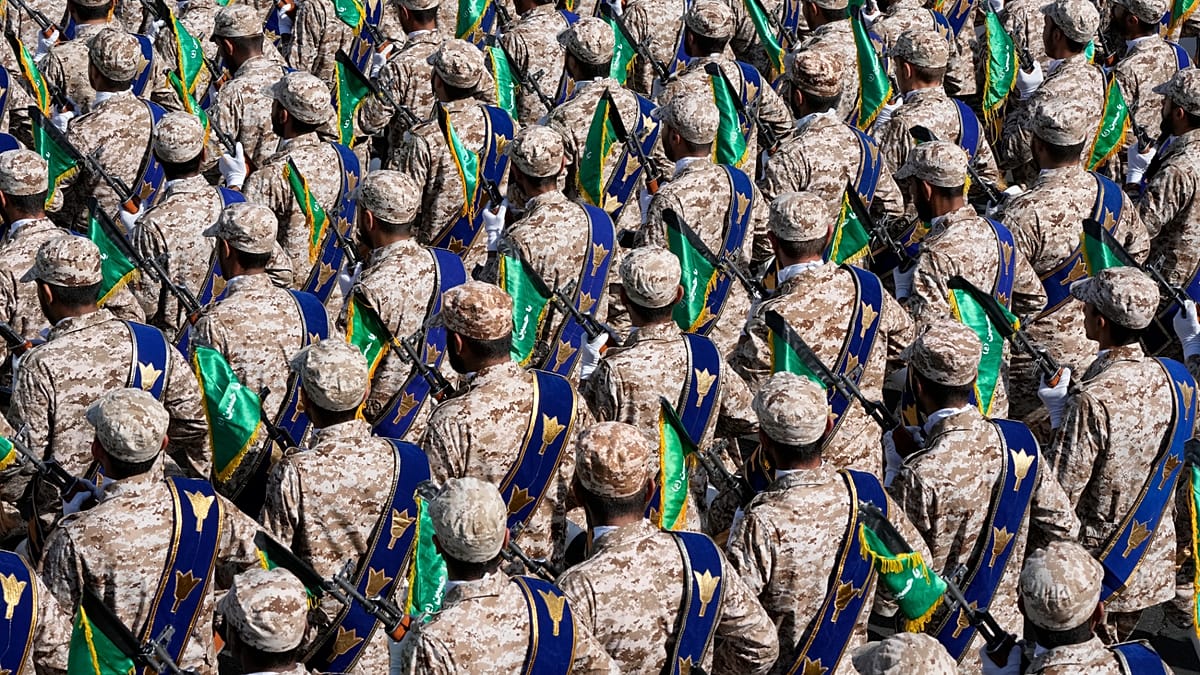
The suspension of talks raises questions about the viability of the ceasefire and the potential for further escalation. Iran's demand for a full withdrawal of Israeli forces from Lebanon, as reported by Tasnim, adds another layer of complexity. The Axis of Resistance, built over decades by the IRGC's Quds Force, remains Iran's primary instrument of regional influence, and its activation of multiple fronts could destabilize the wider Middle East.
European policymakers, particularly in Brussels and national capitals like Berlin and Paris, are likely to intensify diplomatic efforts to de-escalate the situation. The EU has previously called for restraint and dialogue, but its ability to mediate remains limited, as highlighted by recent debates over the bloc's role in international conflicts—similar to the challenges seen in EU mediation in Ukraine-Russia talks.
As the situation unfolds, the international community watches closely. The coming days will be critical in determining whether the ceasefire can be salvaged or if the region slides into a broader confrontation with far-reaching consequences for global security and energy supplies.