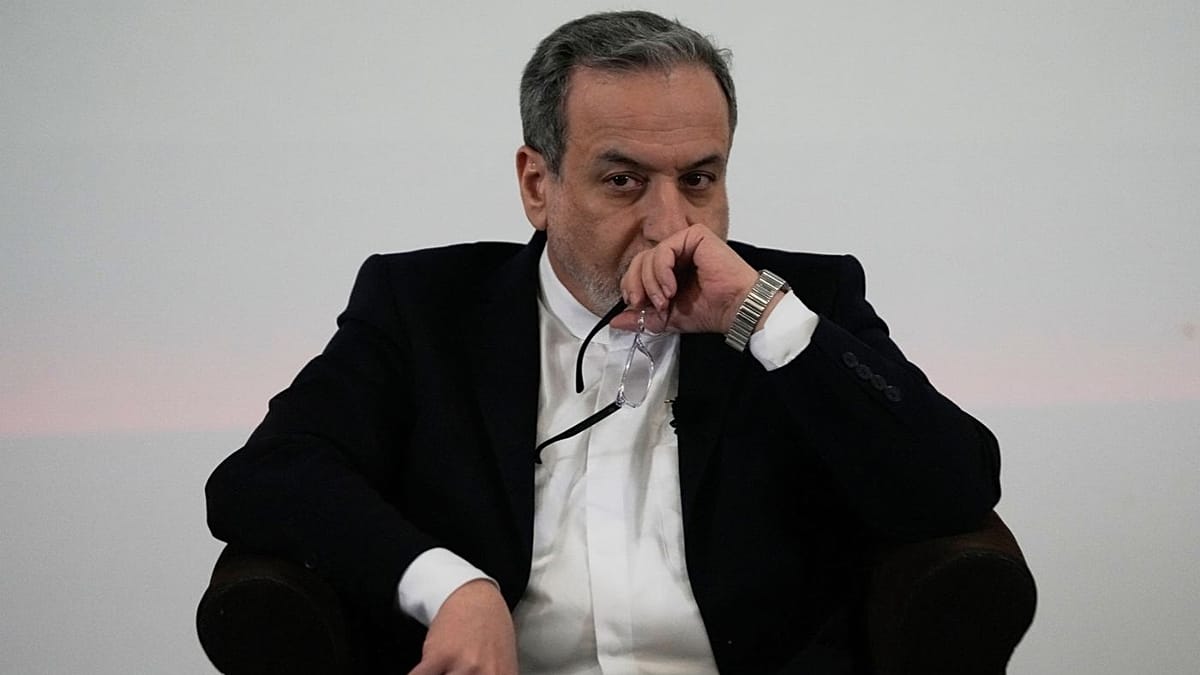
A group of hardline Iranian parliamentarians has formally moved to impeach Foreign Minister Abbas Araghchi over his talks with US special envoy Steve Witkoff on the sidelines of the UN General Assembly last month. The motion, filed by MPs aligned with the Paydari Front, accuses Araghchi of meeting the American official without proper authorisation, a claim that has been directly contradicted by the secretary of Iran's Supreme National Security Council.
Mohammad Rashidi, a member of parliament's presiding board, confirmed on Tuesday that the request had been registered in the parliamentary system but had not yet been referred to the board or placed on the agenda. The move comes as Iran's leadership weighs how — and whether — to pursue negotiations with Washington to end the war that began in late February.
Accusations and counter-claims
The impeachment motion, led by Amirhossein Sabeti of the hardline Paydari Front, argues that Araghchi's meeting with Witkoff on 22 September was conducted without authorisation from Ayatollah Mojtaba Khamenei or coordination with the Supreme National Security Council. The talks, mediated by Qatar, focused on conditions for reopening the Strait of Hormuz, a key sticking point in negotiations between Tehran and Washington.
But Mohsen Rezaei, secretary of the Supreme National Security Council, directly rejected the accusation. "It was agreed that Mr Araghchi, during his trip to New York, would convey Iran's conditions to the intermediaries," Rezaei said, indicating the talks had prior approval from Iran's higher authorities.
Araghchi used the New York meeting to set out Tehran's conditions, including the immediate lifting of the US naval blockade, the immediate transfer of frozen Iranian assets, and an end to the war on all fronts. US President Donald Trump rejected the proposal.
Political pressure mounts
MP Hosseinali Hajideligani, another signatory, accused Araghchi of "repeatedly, through targeted interviews, helping to lower oil prices for the United States." Sabeti listed "crossing red lines" during negotiations, "serious miscalculations" in political analysis, and mishandling of the US file as the main grounds for impeachment.
Araghchi's name has appeared on impeachment lists drawn up by hardline MPs several times over the past two years. In August, Hajideligani said they were gathering documentation for a formal motion. The current motion was filed while parliament speaker Mohammad Bagher Ghalibaf, one of Iran's main negotiators with the US side, holds the chair.
Alireza Salimi, a signatory and member of the presiding board, told Mehr news agency that filing an impeachment motion does not mean the speaker supports it or that it will reach the floor.
Opposition within parliament
Some MPs oppose the move. Ruhollah Lak Aliabadi said "impeachment proceedings, especially impeaching the foreign minister in this wartime situation, are definitely not in the country's interest" and could send "a negative signal and a sign of weakness to the enemy." Aliabadi noted that a recent parliamentary meeting with Araghchi lasted four and a half hours, during which the IRGC commander called Araghchi by phone at least three times — evidence, he said, of coordination between diplomacy and the military.
Conservative political figure Mansour Haghighatpour also pushed back. "You do not change saddles in wartime," he said.
Araghchi's position appears secure for now. After he returned to Tehran following the New York trip — during which social media speculation circulated that he had sought asylum abroad — the foreign ministry formally described him as a member of Iran's six-person decision-making team, a signal that he retained the regime's confidence.
The impeachment push highlights the fragility of Iran's internal consensus on diplomacy, a dynamic with implications for European security. As Charles Michel has argued, Europe's absence from Iran war talks is a failure that leaves the continent exposed to the consequences of any escalation. Meanwhile, the broader geopolitical jockeying continues, with US-led NATO subgroup talks in Poland raising fears of an alliance rift, and EU emergency energy talks underway as Washington presses for diesel stock releases.