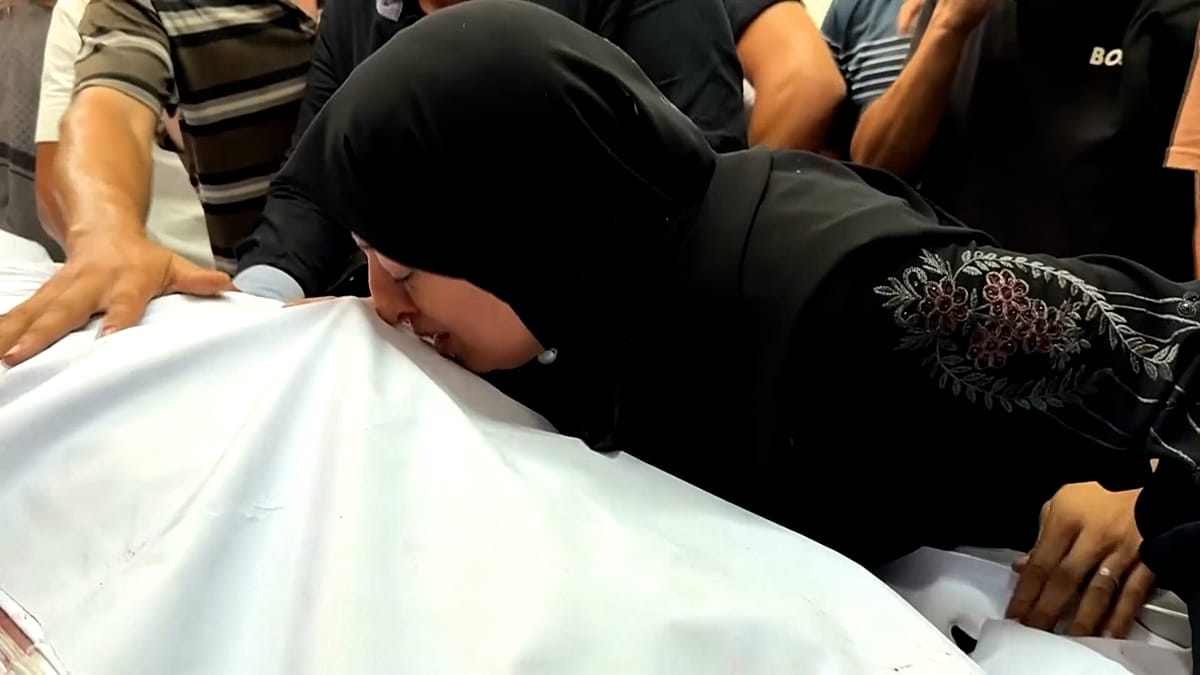
At least five Palestinians were killed in Israeli airstrikes on Gaza City on Monday, according to hospital officials and rescue workers. The strikes targeted residential neighborhoods, further escalating the violence that has gripped the region for months.
The casualties were confirmed by staff at Al-Shifa Hospital and emergency responders, who reported that several others were wounded in the attacks. The exact locations of the strikes were not immediately disclosed, but witnesses described intense explosions in the early hours.
Escalating toll in Gaza
Monday's deaths bring the total number of Palestinians killed in Gaza since the conflict intensified to over 1,500, according to local health authorities. The United Nations has repeatedly called for a ceasefire, warning of a humanitarian catastrophe as food, water, and medical supplies dwindle.
The Israeli military said the strikes targeted militant infrastructure, including rocket-launching sites and command centers. However, residents and human rights groups have accused Israel of disproportionate force, citing the high civilian death toll.
In a related development, Israeli airstrikes on Gaza shelters killed four people earlier this week, as conditions in overcrowded camps deteriorate. The UN Relief and Works Agency (UNRWA) has warned that its facilities are overwhelmed, with thousands of displaced families seeking refuge.
European reactions and diplomatic efforts
European governments have expressed alarm over the escalating violence. The European Union's foreign policy chief, Josep Borrell, called for an immediate de-escalation and urged both sides to respect international humanitarian law. Several EU member states, including France and Germany, have backed a UN Security Council resolution demanding a ceasefire.
Meanwhile, Israeli activists in Jerusalem have urged the EU to take a stronger stance, arguing that silence amounts to complicity. Their plea highlights the growing pressure on European leaders to act, as public opinion in many countries turns against the continued violence.
The conflict has also sparked protests across European capitals, from Berlin to Paris, with demonstrators calling for an end to arms sales to Israel and for greater protection of Palestinian civilians.
Humanitarian concerns
The humanitarian situation in Gaza remains dire. Hospitals are running low on fuel and essential medicines, and power outages are frequent. The World Health Organization has reported outbreaks of disease in overcrowded shelters, raising fears of a public health emergency.
In a separate incident, Russian overnight strikes on Kyiv killed at least eight people, including railway workers, underscoring the broader instability in the region. While the two conflicts are distinct, both highlight the fragility of security in Europe's neighborhood.
As the international community watches, the need for a coordinated European response has never been more urgent. The EU's role as a mediator and humanitarian donor is critical, but many argue that more decisive action is required to end the bloodshed.
For now, the people of Gaza continue to endure the daily reality of airstrikes and shortages. The latest deaths are a grim reminder of the human cost of a conflict that shows no signs of abating.